What is the Manaslu Tsum Valley Trek?
The valley, influenced by Tibetan culture, is surrounded by breathtaking mountains. TheManaslu Tsum Valley trek follows the restricted trails located in Nepal's Gorkha District. The Manaslu Tsum Valley trek guide joins two adventurous journeys. Trekkers will cross the Larkya La Pass, the highest point of the Manaslu Circuit trek (5,106 m above sea level), and explore the hidden Tsum Valley. The best trekking adventure to understand the Himalayan culture and tradition while enjoying the trails of the world's eight tallest mountains.
Overview of the Trekking Route
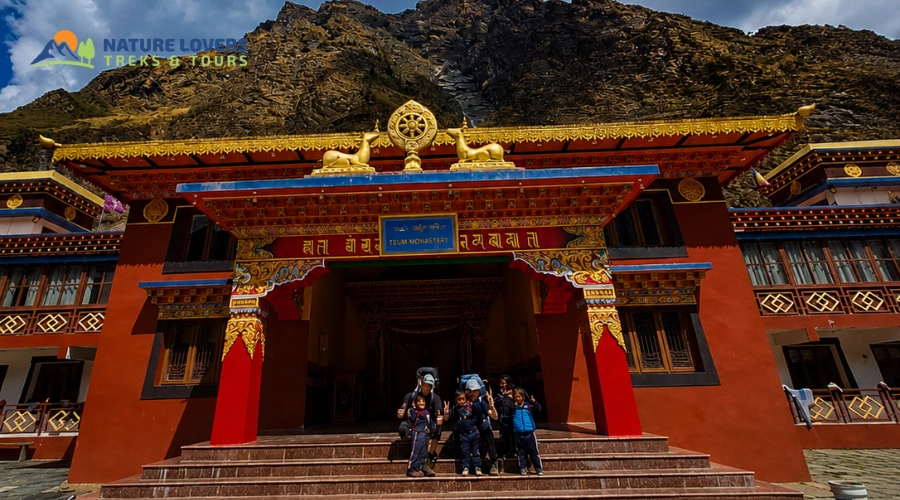
The Budhi Gandaki River is the starting point of your Manaslu Tsum Valley trek, and climbing up to Jagat involves walking the trails that lead to Tsum Valley. Then trekkers will walk north, following the Shiar Khola river until they reach the highest monastery, Mu Gompa, of Tsum Valley, at 3,700 m. Trekkers will then join the classic Manaslu Circuit Trek trail, climbing Deng, Namrung, Lho village, and Samagaon to cross the Larkya La Pass. The trail will also connect the Annapurna region at Dharapani before finishing the adventurous journey.
Where is Tsum Valley located?
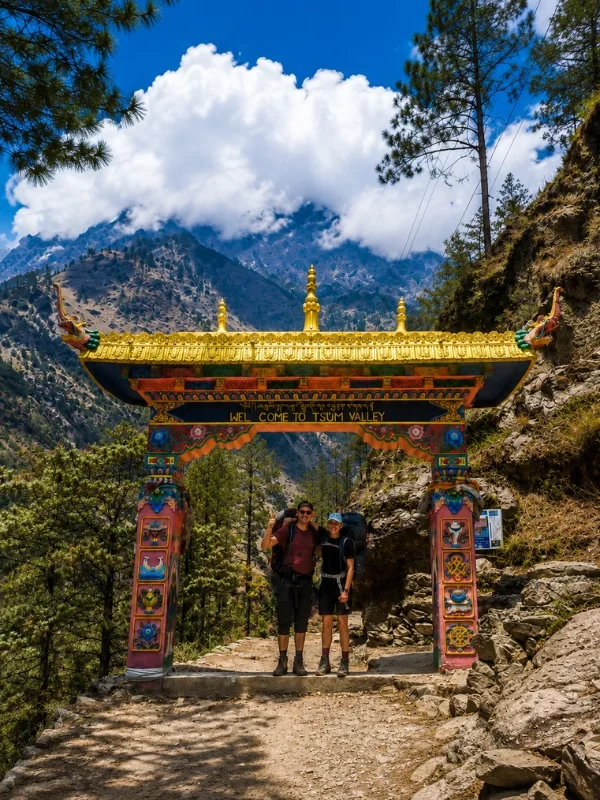
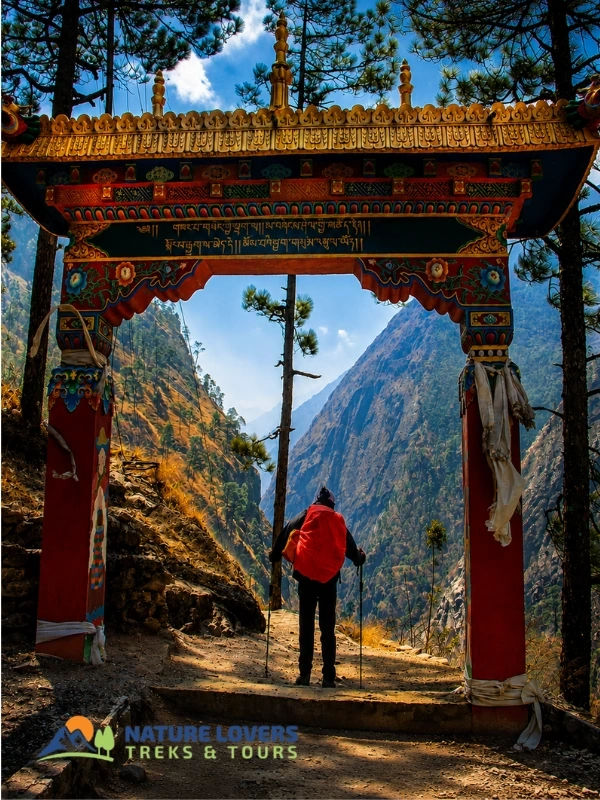
The hidden Tsum Valley is located north of the Manaslu region of the Gorkha district, squeezed between the Ganesh Himal and Shringi Himal. The valley also preserves the Tibetan Buddhist culture while bordering the Tibet Autonomous Region of China. The name of the valley came from the Tibetan word "Tsombo," meaning "vivid" or "bright" in the local language. The restricted rules to control the flow of travelers and the isolated land hidden by mountains on three sides helped it to protect its culture for centuries.
Why is the Manaslu Tsum Valley Trek unique?
Most Himalayan treks pass near the monasteries, but the Manaslu Tsum Valley trek guide takes you through a living one. Daily life in Tsum revolves around the gompa bell schedule, not tourist demand. The valley has followed a formal nonviolence tradition and the Shyagya code since the 1920s. Any activities like hunting and animal slaughter are banned within its boundaries following Tibetan Buddhist culture and traditions. In the second half of your journey, trekkers will cross the highest point, Larkya La Pass, of the Manaslu Circuit Trek, combining two unique adventures together.
Highlights of the Mansalu Tsum Valley Trek
The Manaslu Tsum Valley trek guide will tell you about the everyday journey and all the highlighted parts of your adventure. Trekkers will enjoy the majestic view of mountains, monasteries, villages, and many other important destinations. These are the highlights of the Manaslu Tsum Valley trek route.
Stunning Views of Mount Manaslu
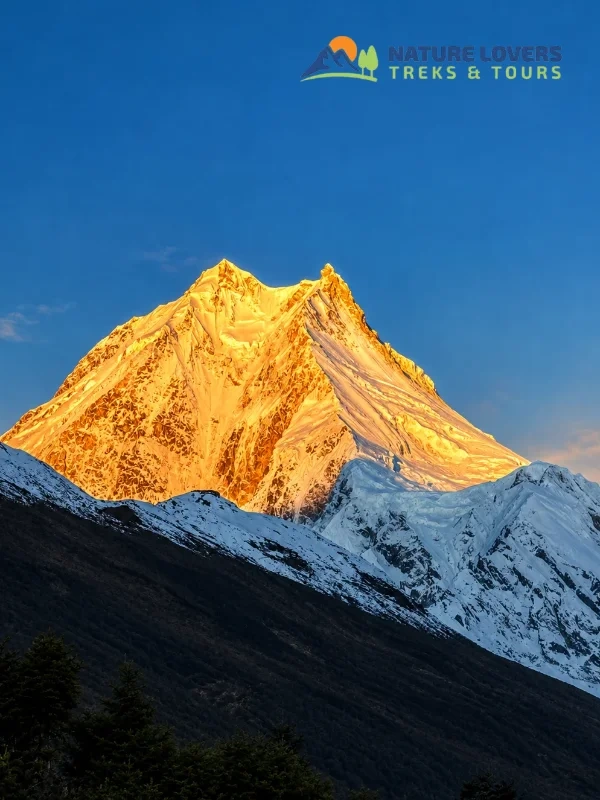
The world's eighth-highest peak, Mount Manaslu, stands tall at 8,163 m above sea level. The adventurous Manaslu Circuit Trek offers a majestic view of the mountains under the clear sky. Trekkers will be walking the trails of Samagaon and Samdo to cross the snow-covered Larkya La. The Tsum Valley also offers a continuous clear view of mountains under the clear sky, like Himalchuli and Ganesh Himal, without leaving the trail.
Exploring ancient Buddhist monasteries
The Manaslu Tsum Valley trek guide takes you to some of the oldest monasteries of the Manaslu region. Trekkers can explore the Mu Gompa, established in 1895. Rachen Gompa, founded in 1905, and many other ancient monasteries have been protected for centuries. The Mu Gompa and Rachen Gompa are believed to be important monasteries used by Tibetan yogis in the 11th century to meditate.
Traditional Tibetan-Influenced Villages
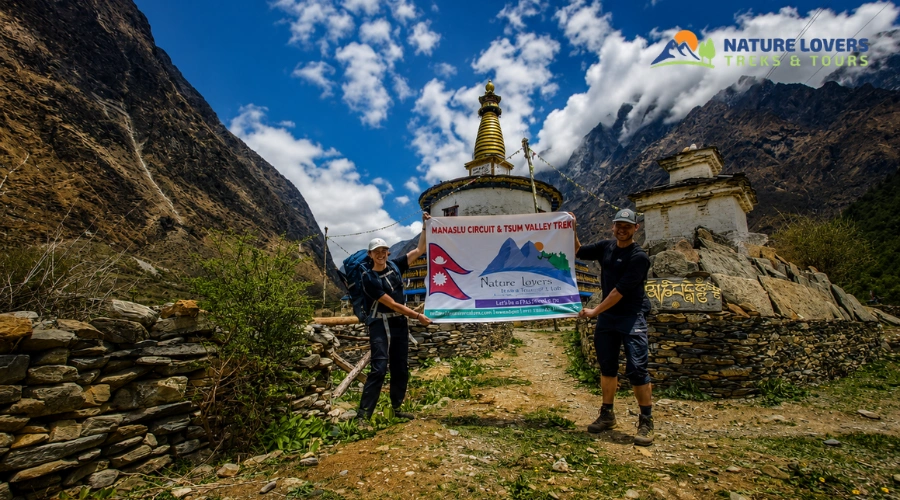
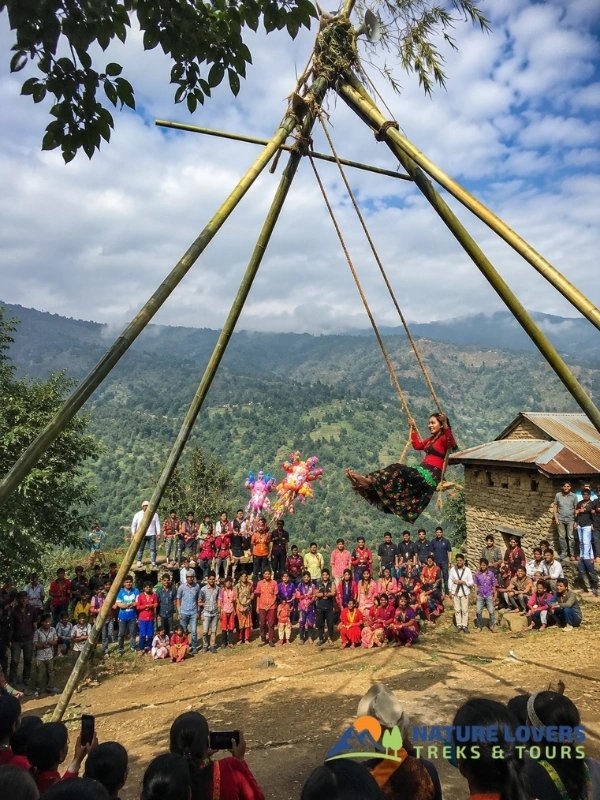
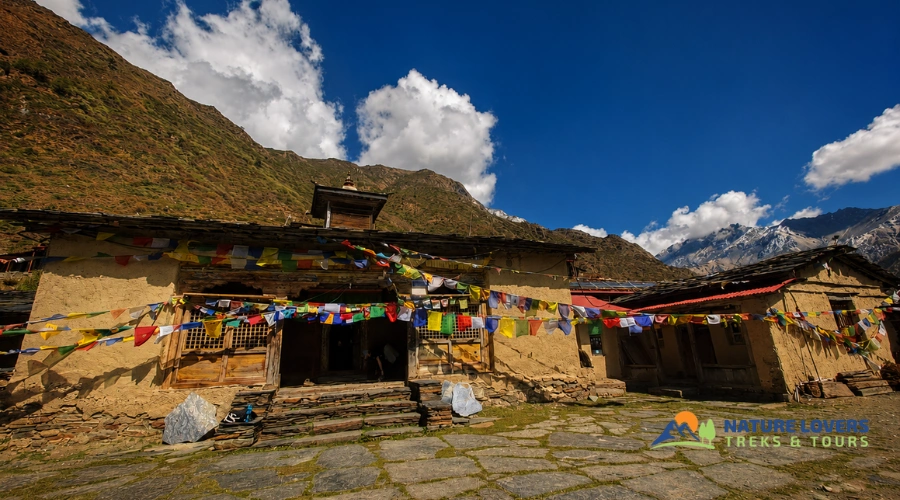
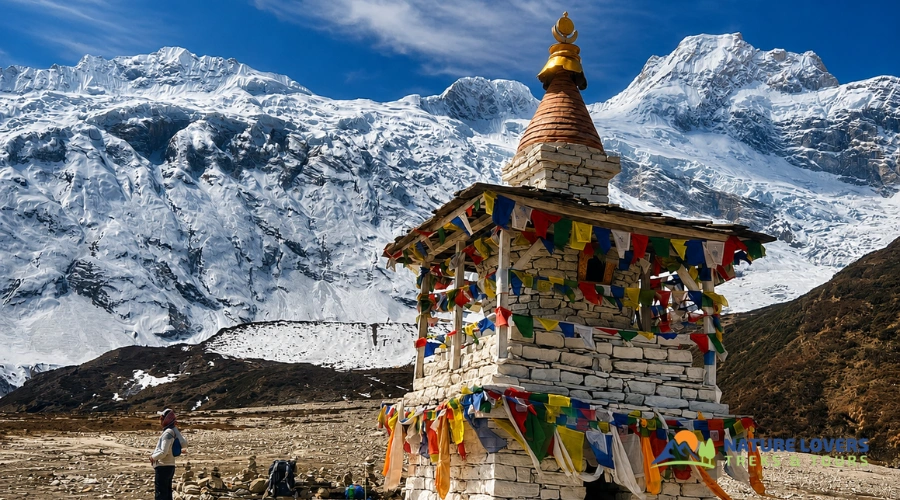
The Manaslu Tsum Valley trek guide follows the trails leading to villages like Chumling, Chhokangparo, and Nile, home to the Tsumba people. The villages are still influenced by the old Tibetan Buddhist culture and tradition. Trekkers will have an opportunity to learn about their dress, food, festivals, and many other traditions. The stone houses, mani walls carved with thousands of prayer stones, and colored flags representing Buddhist culture.
Crossing the Larkya La Pass
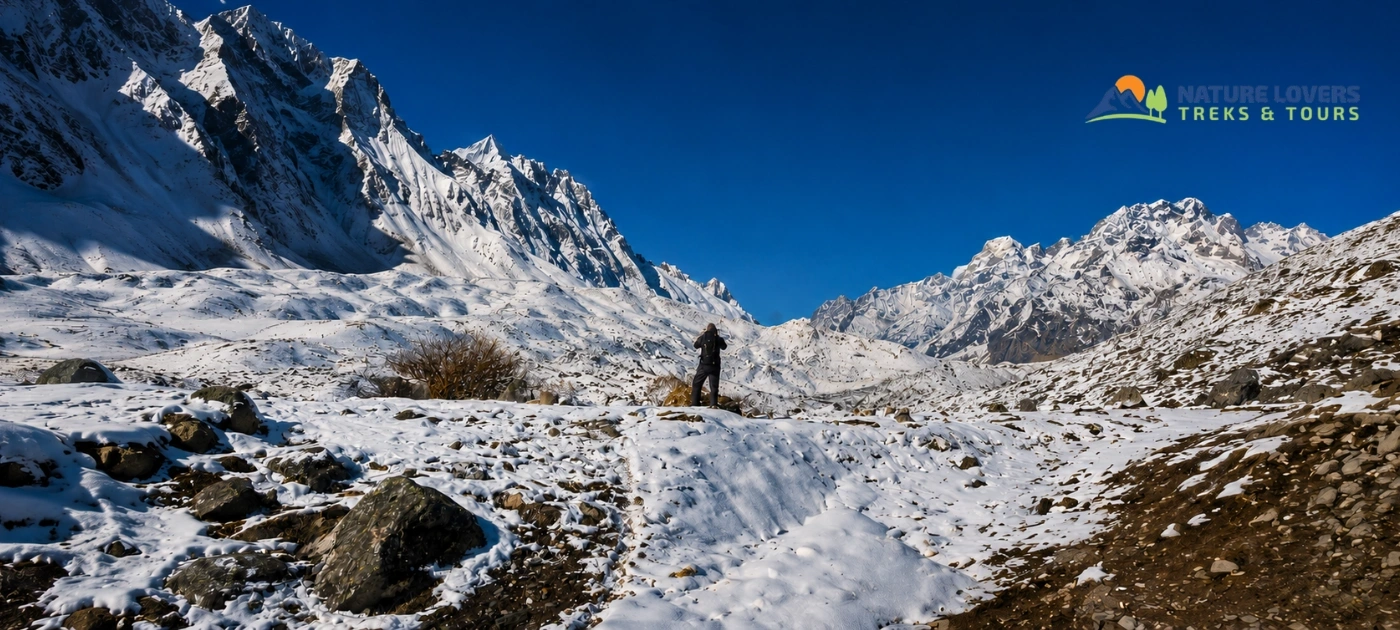
Crossing Larkya La and reaching an altitude of 5,106 m shows the true Manaslu trek difficulty level. The trail is covered with snow most of the season and demands more physical and mental effort from trekkers. Acute mountain sickness at Larkya La is the most common part of the Manaslu Tsum Valley trek guide. The trekkers are rewarded by the mesmerizing view of the snow-capped peaks of Mount Manaslu, Himlung, Cheo Himal, and the Annapurna Range before descending to Bimthang.
Remote Himalayan Landscapes and Wildlife
The Manaslu Conservation Area protects the wild, rare, and endangered species of animals, offering them a natural home environment to survive. The trekkers can enjoy the rare animals like snow leopards, Himalayan tahr, musk deer, red pandas, and different species of birds surrounding the rhododendron and pine forest. The trail provides the perfect opportunity for animal lovers to enjoy the pleasing view of mountains along with a forest filled with rare wildlife.
Manaslu Tsum Valley Trek Itinerary
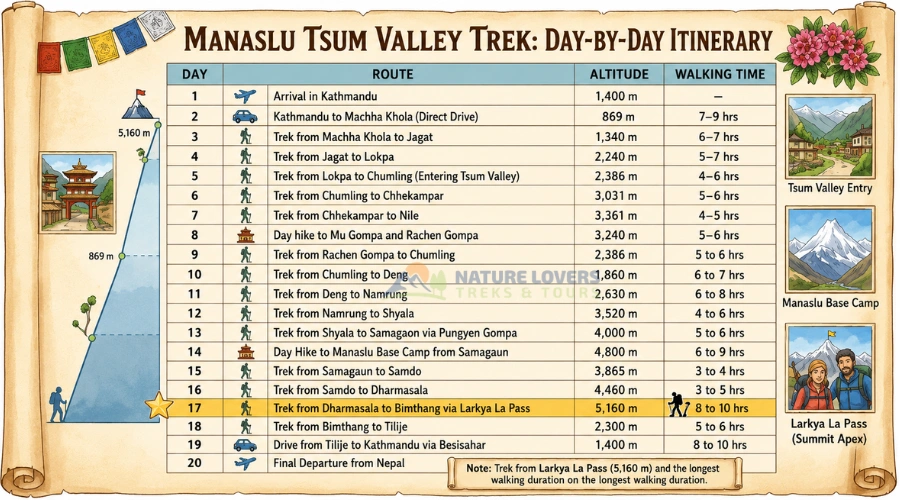
The 20-day adventurous high-altitude journey needs a properly planned itinerary to enjoy the combined trip of the Tsum Valley trek loop and the Manaslu Circuit Trek. Travelers will cross the Larkya La trail filled with a thick layer of snow. The journey also includes climbing and descending from Mu Gompa, located at 3,700 m above sea level. The table below shows a 20-day Manaslu Tsum Valley trek planned itinerary. Remember, the itinerary can be different depending on agencies, and many of them can customize it according to your comfort.
How difficult is the Manaslu Tsum Valley Trek?
The Manaslu Tsum Valley Trek's difficulty concerns many travelers because the trails are more physically demanding compared to the Annapurna Base Camp trek and the Everest Base Camp trek. Trekkers will walk the snow-covered trail crossing the Larkya La pass and the 600-year-old gompa that offers a majestic view of snow-capped mountains.
Trekking Distance and Daily Walking Hours
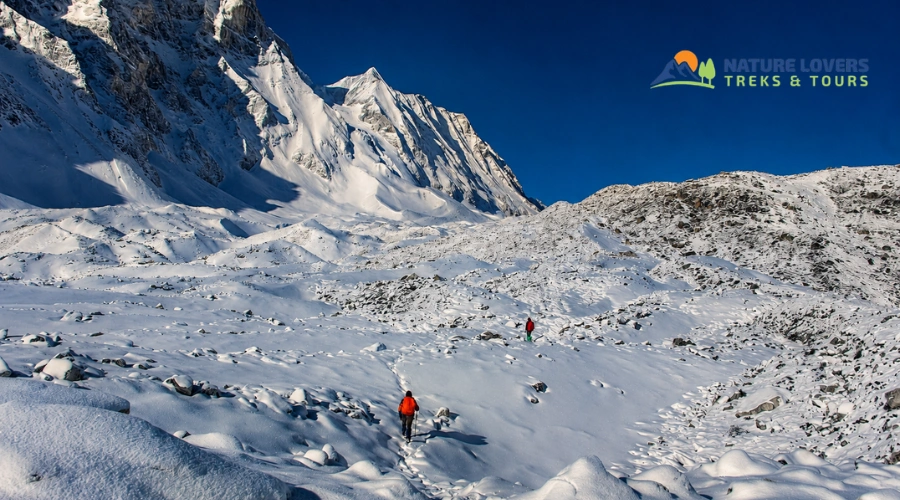
The 20-day Manaslu Tsum Valley trek is one of the most challenging high-altitude adventures. Trekkers have to cover around 170 kilometers and walk for 5 to 7 hours daily on average. Crossing the Larkya La takes around 8 to 9 hours from Dharamsala to reach Bimthang. It is also known as the most physically demanding day of your journey. The journey starts around 3 to 4 am in the morning and takes the entire day of climbing and descending to reach Bimthang.
High Altitude Challenges
The continuous increase in altitude is the most difficult part of this entire adventure. Trekkers will spend most of their days above 3,000 meters, increasing the risk of acute mountain sickness. If the AMS is not treated, it can damage the organs, and body parts can even risk the trekker's life. Altitude sickness at Larkya Lacan also affect professional trekkers, regardless of their fitness level. It is also the highest point of your entire journey, located at 5,106 m above sea level.
Physical Fitness Required
The trails of theManaslu Tsum Valley trek are filled with continuous ascents and descents in altitude. Trekkers must have a strong ability to walk for 5 to 7 hours daily, even in high-altitude places, while carrying weights on their backs. If you have time before your adventure, you can do short hikes, stair climbing, running, and other exercises to increase your stamina. This will help your body to sustain the physical challenges of your trekking journey.
Is the trek suitable for beginners?
The adventure seekers with good physical and mental health can complete this journey easily. But as beginners, it is not the easiest trek to join for their first high-altitude adventure. The trails are more physically demanding, with limited teahouses and long walking hours breaking the experienced trekkers. So trekkers must complete another high-altitude adventure, like the Ghorepani Poon Hill trek or theAnnapurna Base Camp trek, before joining the Manaslu Tsum Valley trek.
Best time for the Manaslu Tsum Valley Trek
Spring and autumn are the best times for the Manaslu Tsum Valley trek, offering the best trail conditions with good weather conditions. Choosing the right time and season for your high-altitude adventure can entirely affect your trekking experience. The right time also makes it easier to cross the Larkya La, as the trails are covered with a thick layer of snow.
Trekking in the Spring Season
The spring starts in March and lasts till May, providing the warm temperature and the season for blooming flowers. The stable weather and clear sky offer a mesmerizing view of mountains and blooming rhododendrons covering the forest trails. The warm temperature makes it easier to cover more distance, and the clear mountain view makes the Manaslu Tsum Valley trek in spring most suitable for adventure seekers.
Trekking in the Autumn Season
September brings autumn, waving goodbye to the monsoon, and the stay till November is known as the best season for the Manaslu Tsum Valley trek. The trails are more crowded and filled with other fellow trekkers, creating the opportunity for socialization. But the Tsum Valley is always quiet even in peak season, making it perfect for trekkers seeking solitude to enjoy a peaceful journey.
Trekking in Winter and Monsoon
The winter and monsoon are the most unsafe times for any high-altitude adventure. The trails are covered with snow and water, making it difficult to cross Larkya La and the forest areas. December to February brings winter, and June to August brings the monsoon. The unpredictable weather makes it difficult to navigate the trails of the mountains, and the dark clouds also block the view of the mountains. So winter and monsoon are the unfavorable seasons for the Manalsu Tsum Valley trek.
Permits Required for the Manaslu Tsum Valley Trek
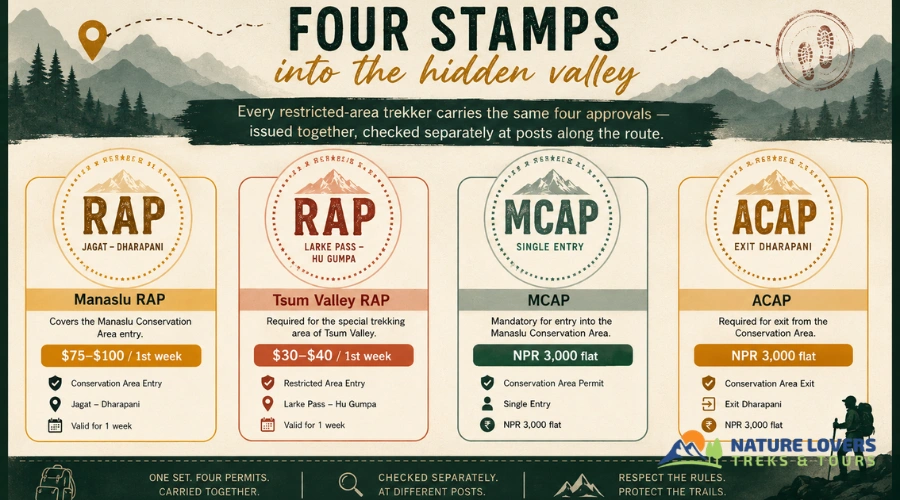
There are four important permits required to legally walk the trails of the Manaslu Circuit and the Tsum Valley adventurous journey. The Manaslu Restricted Area Permit, Tsum Valley Restricted Area Permit,Manaslu Conservation Area Permit, and Annapurna Conservation Area Permit are four important permits. The Manaslu Tsum Valley trek guide will show you all the required permits and processes to obtain them.
Manaslu Restricted Area Permit
The Manalsu Restricted Area Permit is a very important permit costing around $75 to $100 per person to cross the trails between Jagat and Dharapani. Without the proper documents and permits, trekkers are not allowed to enter the restricted area. The Manaslu RAP is checked at posts located in Jagat and Philim. The price can be different depending on the season and the number of days spent in the restricted zone.
Tsum Valley Restricted Area Permit
The Tsum Valley Restricted Area Permit is the second most important permit, costing around $30 to $40 per person, and is required to explore the hidden Tsum Valley of the Manaslu region. The Tsum RAP gives the trekkers access to the trails connected to the Lokpa and Mu Gompa trekking areas. This permit lasts for 7 days, and after that, you have to pay per-day charges for a longer stay.
Manaslu Conservation Area Permit (MCAP)
The Manaslu Conservation Area Permit costs NPR 3,000 per person, and there is no time limit like the other two permits. The collected funds are used to maintain the trail condition, waste management, and development of the region.
Annapurna Conservation Area Permit (ACAP)
The Annapurna Conservation Area Permit costs NPR 3,000 per person, and it also follows the same rule as the MCAP. The Manaslu Tsum Valley trek descends through Dharapani, which falls under the Annapurna Conservation Area, so trekkers must obtain an ACAP for the final push of their journey.
The total Tsum Valley and Manaslu Circuit trek cost for permits is around $180 to $230 per person, depending on the season. Without the permits, trekkers are not allowed to explore the restricted area of the Manalsu region. All the costs of permits are included in your packages, and agencies will apply for all four important restricted area permits.
Packing List for the Manaslu Tsum Valley Trek
Trekkers must pack all the important gear, equipment, clothes, permits, first aid, and other essential items to protect themselves from severe weather in a single journey. The Manaslu Tsum Valley trek guide has provided you with the packing list required for your journey, helping you to avoid overpacking.
Essential Clothing
- Insulated down jacket
- Waterproof, breathable outer shell jacket and pants
- Fleece or softshell mid-layer
- Insulated, waterproof trekking boots
- Warm hat, sun hat, and buff or neck gaiter
- Insulated gloves
- Wool or synthetic trekking socks
Trekking Gear and Equipment
- Sleeping bag rated to at least -15℃
- Trekking Poles
- Headlamp with spare batteries
- Water purification tablets or a filter
- Power back for device charging
- Duffel bag for porter use
- UV-protection sunglasses rated for snow glare
Important Documents and Permits
- Passport with validity for 6 months
- Passport-size photo for permits
- Printed and digital copies of all four permits
- Travel insurance with evacuation coverage details
- Nepal tourist visa
- Emergency contact list
First Aid and Personal Items
- Personal medications with an extra day's supply
- Pain relief, blister care, and rehydration salts
- High SPF sunscreen, moisturizer, and lip balm
- Hand sanitizer and toilet paper
- Snacks or energy bars for long walking days
Final thoughts on the Manaslu Tsum Valley Trek
The two combined treks, the Manaslu Circuit and Tsum Valley trek, offer adventure seekers the most rewarding journey. The trails are filled with challenges and are rewarding, with breathtaking views of snow-capped mountains. The least explored hidden valley of Nepal is filled with true Himalayan culture and tradition. The restrictions and rules keep the trails less crowded while enjoying the beautiful forest, gompas, villages, and rivers.
Crossing Larkya La Pass, the hardest day of the entire trek, is located at 5,106 m above sea level. Trekkers have to walk 5 to 7 hours every day, demanding more physical and mental strength. The trails pass through the Tsum Valley, the hidden gem of Nepal, filled with the oldest gompas. Without proper preparation, no one can compete in this challenging journey, so a Manaslu Tsum Valley trek guide is important for trekkers.
FAQ’s for Manaslu Tsum Valley Trek Guide
What is the Manaslu Tsum Valley Trek?
The Manaslu Tsum Valley Trek combines the two high-altitude adventures of the Manaslu Circuit and Tsum Valley, hidden gems of Nepal. The Tsum Valley is popular for its old monasteries and true Tibetan Buddhist culture hidden between the snow-capped mountains.
How difficult is the Manaslu Tsum Valley Trek?
The trek is popular for its moderate to great difficulty because of the continuous increase in altitude and long walking days. Crossing Larkya La Pass, the highest point of your Manaslu Tsum Valley Trek, is located at 5,106 meters above sea level.
How many days does the Manaslu Tsum Valley Trek take?
Depending on your itinerary and packages, it can be different, but most of the itineraries take between 18 and 24 days to complete the entire journey.
Do travelers need a Manaslu Tsum Valley Trek guide?
Yes, hiring a licensed travel guide is mandatory for both Manaslu and Tsum Valley because they are known as restricted trekking regions in Nepal.
What permits are required for the Manaslu Tsum Valley Trek?
Trekkers must have a Manaslu Restricted Area Permit, a Tsum Valley Permit, a Manaslu Conservation Area Permit (MCAP), and an Annapurna Conservation Area Permit (ACAP).
Is altitude sickness common on the Manaslu Tsum Valley trek?
Yes. While crossing the Larkya La pass, altitude sickness is common on the Manaslu Tsum Valley Trek, as trekkers will spend multiple days above 4,000 m from sea level.
Can beginners do the Manaslu Tsum Valley Trek?
Beginners with hiking experience and good physical condition can complete the Manaslu Tsum Valley Trek with proper preparation and an experienced travel guide.
Why is the Tsum Valley called the Hidden Valley?
The Tsum Valley is isolated by the mountains and preserves the old Tibetan culture, tradition, and ancient monasteries located in the land, which is restricted by the rules to protect their religion.