The 8-day Pikey Peak Trek is one of Nepal's most rewarding and least celebrated trekking adventures, weaving through the quiet lower Solu-Khumbu region on a journey that delivers world-class Himalayan panoramas, authentic Sherpa culture, and pristine mountain landscapes entirely free from the crowds of Nepal's mainstream trekking corridors. From the dense rhododendron forests and terraced hillsides of the lower trail to the sweeping alpine ridgelines approaching the summit, every day brings dramatic changes in scenery, elevation, and atmosphere, maintaining a sense of discovery and freshness from start to finish.
The crowning achievement of the journey is the pre-dawn ascent to Pikey Peak Summit at 4,065 meters, where a panorama of extraordinary breadth unfolds across the entire eastern Himalayan arc. Mount Everest, Kanchenjunga, Makalu, Lhotse, Cho Oyu, Nuptse, Ama Dablam, Thamserku, Annapurna, Manaslu, and Dhaulagiri are all visible simultaneously from this single vantage point. Sir Edmund Hillary, who climbed Everest itself, once declared Pikey Peak his favorite spot from which to view the world's highest mountain, a testament to the sheer magnificence of the perspective it offers.
Rated as moderate in difficulty and accessible entirely by overland transport from Kathmandu with no domestic flights required, the Pikey Peak Trek is ideally suited for first-time Himalayan trekkers, culture-focused travelers, and experienced adventurers seeking a genuinely off-the-beaten-path alternative in the Everest region. The itinerary is built around six full days of trekking through traditional Sherpa and Rai villages, ancient monasteries, pristine forests, and high alpine meadows, bookended by arrival and departure days in Kathmandu.
Why Go on the 8-Day Pikey Peak Trek
Nepal is home to some of the most celebrated trekking routes on earth, but it is also home to a handful of lesser-known trails that surpass even the famous routes in terms of raw beauty, cultural depth, and personal reward. The Pikey Peak Trek is precisely this kind of trail.
The Most Expansive Himalayan Sunrise You Will Ever See
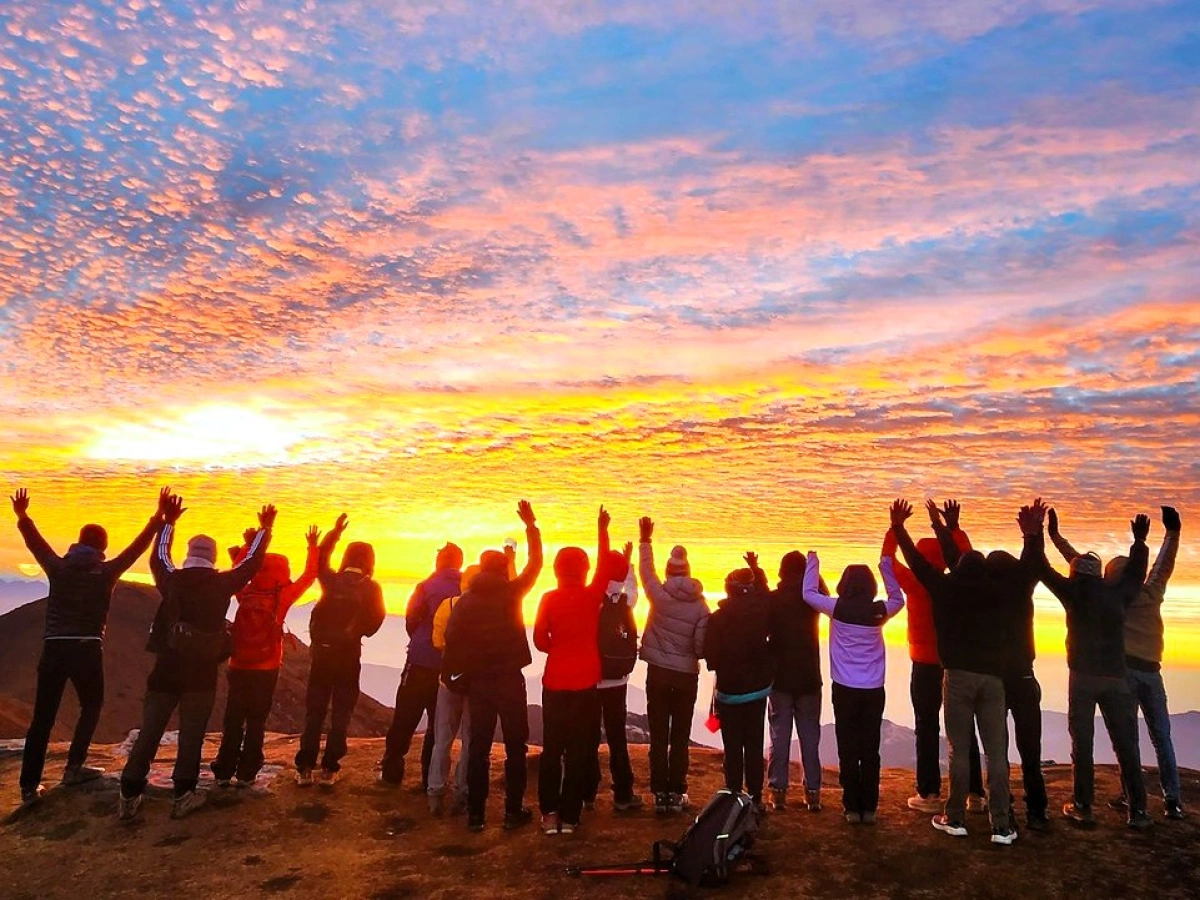
Standing on the summit of Pikey Peak at 4,065 meters as the sun rises over the eastern Himalayas is an experience that defies adequate description. From this single vantage point, you can see eight of the world's fourteen eight-thousanders simultaneously: Everest, Kanchenjunga, Makalu, Lhotse, Cho Oyu, Annapurna, Manaslu, and Dhaulagiri, alongside dozens of smaller but equally stunning peaks. The panoramic sweep spans over 300 kilometers of continuous Himalayan ridgeline, from the Kanchenjunga massif in the far east all the way to the Annapurna and Dhaulagiri ranges in the west. Sir Edmund Hillary, who stood on Everest's summit itself, named this very viewpoint as his personal favorite for viewing the mountain. When the golden light of a Himalayan dawn touches these peaks, you will understand in an instant why Hillary made that choice.
Untouched Trails Far From the Tourist Crowds
The Solu-Khumbu region through which the Pikey Peak Trek travels receives only a fraction of the visitor numbers that flow through the Namche Bazaar and Tengboche corridor further north. On these trails, you walk through forests where the only sounds are birdsong and the wind in the rhododendron canopy. You pass through villages where local families greet you with genuine warmth and curiosity rather than the transactional efficiency that inevitably develops on Nepal's busiest trekking routes. The teahouses are small, personal, and authentic, and the experience of the landscape and culture is all the richer for the quietness that surrounds it.
A Living Window into Sherpa and Rai Mountain Culture
The villages of Dhap, Jhapre, Jasmane Bhanjyang, Junbesi, and Phaplu that you pass through represent some of the most culturally intact Sherpa and Rai communities in the lower Everest region. Life in these settlements moves at a pace set by the seasons, the agricultural calendar, and the rhythms of Buddhist practice. You will walk past mani walls engraved with centuries of devotion, spin prayer wheels as local farmers tend their fields below, and share meals with families whose mountain heritage stretches back many generations. The highlight of this cultural journey is a visit to Thupten Choling Gompa in Junbesi, one of the most significant active Buddhist monasteries in the entire Everest region, where hundreds of monks and nuns maintain a living tradition of Tibetan Buddhist practice.
No Flights, No Permit Headaches - Genuinely Accessible
Unlike the Everest Base Camp Trek, which begins with an expensive and weather-dependent domestic flight to Lukla, the Pikey Peak Trek starts and ends with a comfortable overland drive from Kathmandu. This makes the trek significantly more affordable, removes the anxiety of missed or cancelled flights, and keeps the entire logistics of the journey within the control of Nature Lovers Treks and Tours - your trekking operator. The required permits are straightforward and inexpensive, amounting to approximately USD 35-40 in total, and all arrangements are handled entirely on your behalf before you leave Kathmandu.
Spectacular Biodiversity in Protected Himalayan Forests
The lower and middle elevations of the Pikey Peak route pass through some of the most botanically rich forest environments in the Himalayas. Rhododendron, oak, birch, fir, juniper, and bamboo create layered forest ecosystems of extraordinary density and variety. In spring, the rhododendron canopy bursts into spectacular bloom, filling the forests with vivid pinks and reds that frame every mountain view with natural color. The region's protected status has preserved populations of Himalayan tahr, musk deer, and a remarkable diversity of bird species, including Himalayan monals and numerous high-altitude raptors.
The Perfect Trek for All Experience Levels
At a moderate difficulty rating with a maximum altitude of just 4,065 meters, the Pikey Peak Trek strikes an ideal balance between physical challenge and accessibility. Daily trekking stages of four to six hours on well-established trails make the journey achievable for fit first-timers, while the quality of the mountain views, cultural encounters, and off-the-beaten-path character of the route makes it equally satisfying for experienced Himalayan trekkers seeking something genuinely different. The gradual ascent profile minimizes altitude-related risks, and the presence of a professional licensed guide throughout ensures that safety and acclimatization are always managed with care.
Cost of the Pikey Peak Trek: Permits, Guides, Porters, and Transport 2026/2027
Understanding the full cost picture of the Pikey Peak Trek before you book is important, and at Nature Lovers Treks and Tours, we are committed to complete transparency in our pricing with no hidden charges or unexpected additional fees. The total cost varies depending on group size, accommodation preferences, porter requirements, and any customization services you wish to include, but every package we offer is fully itemized from day one so you can plan your adventure with complete financial confidence.
Trekking Permits
The Pikey Peak Trek requires two essential permits: a TIMS (Trekkers' Information Management System) card, issued through registered trekking agencies in Kathmandu, and a local conservation area entry permit for the Gaurishankar or relevant protected zone through which the trail passes. Combined, these permits cost approximately USD 35-40 per person and are arranged entirely on your behalf by our team before the trek begins, so you arrive at the trailhead fully documented and ready to walk. Unlike several of Nepal's restricted area treks, the Pikey Peak route does not require a special restricted area permit, which keeps the overall permit cost significantly lower than comparable journeys in the Manaslu or Dolpo regions. All permit fees are included within our package price.
Licensed Trek Guide
All Nature Lovers Treks and Tours packages include the services of a professional, government-licensed, English-speaking trek guide for the full duration of the trekking days. Your guide is not simply a trail navigator; they are a trained cultural interpreter, a first aid responder, an acclimatization monitor, and a genuine companion whose knowledge of the Solu-Khumbu region, its languages, its communities, and its hidden gems will transform your experience of the trail from a walk into a genuine cultural immersion. Your guide's salary, meals, accommodation, transport, and insurance are all covered within the package cost.
Porter Service
Porter service is optional on the Pikey Peak Trek and can be added to any package on request. Sharing a porter between two trekkers is the most cost-effective arrangement and is recommended for trekkers who wish to carry only a small daypack on the trail. Porters carry a maximum of 20-25 kilograms of combined luggage and, like all field staff employed by Nature Lovers Treks and Tours, receive fair wages, adequate equipment, and comprehensive insurance coverage in line with industry best practices.
Transportation
All overland transport between Kathmandu and the trek start and end points is arranged and managed by our team in comfortable, well-maintained vehicles with experienced drivers. The outbound journey from Kathmandu to Dhap takes approximately eight to nine hours and departs early in the morning to maximize trekking time on arrival. The return journey from Phaplu to Kathmandu follows a similar schedule. Both legs of the road journey are included in the package cost at no additional charge. For trekkers who prefer to fly, Phaplu has a small airport with seasonal domestic flight connections from Kathmandu, which we can arrange separately on request. Please contact our team directly for a fully personalized, itemized quote within 24 hours.
A Typical Day on the 8-Day Pikey Peak Trek in Nepal 2026/2027
The Pikey Peak Trek follows the deeply satisfying rhythm of the classic Himalayan teahouse adventure. Days begin before the sun has fully risen, with the creak of teahouse floorboards and the warm glow of a gas stove coming to life in the kitchen below. Your guide will have you up and briefed while breakfast is still being prepared, typically a generous spread of Tibetan bread baked over a wood fire, freshly made porridge, boiled eggs, and sweet butter tea brewed in the Tibetan style. Many teahouses also offer omelettes, pancakes, and muesli for trekkers with different preferences.
The morning trekking session begins around seven o'clock, taking advantage of the cool, crisp mountain air and clear early light that makes Himalayan landscapes look their most vivid and photogenic. The trails wind through rhododendron forests, open ridge lines, traditional village squares, and terraced agricultural fields, covering between ten and fifteen kilometers before a midday lunch stop at a teahouse along the route. Lunch is typically a generous plate of dal bhat, noodle soup, fried rice, or momos, accompanied by hot lemon tea or sweet milk tea.
The afternoon trekking session is shorter and more relaxed, carrying you to your overnight teahouse well before dark. Arrival by three or four in the afternoon leaves ample time to explore the village, visit a nearby monastery or viewpoint, and watch the late light transform the mountain colors before dinner. Evenings in the Solu villages are quiet and genuinely magical; the absence of artificial light means the Himalayan night sky overhead is a spectacle in its own right, with the Milky Way arching clearly across the darkness on clear nights. After a full dinner of Nepali or Tibetan cuisine, your guide briefs you on the next day's route before an early rest.
Overland Transport Information for the Pikey Peak Trek
One of the most practically significant advantages of the Pikey Peak Trek over more famous Himalayan routes is its complete reliance on overland road transport rather than domestic flights. While treks like Everest Base Camp begin with a nerve-wracking flight to Lukla on one of Nepal's most demanding mountain airstrips, the Pikey Peak journey begins and ends with a comfortable drive from Kathmandu that is itself a scenic and culturally engaging introduction to Nepal's mid-hill landscape.
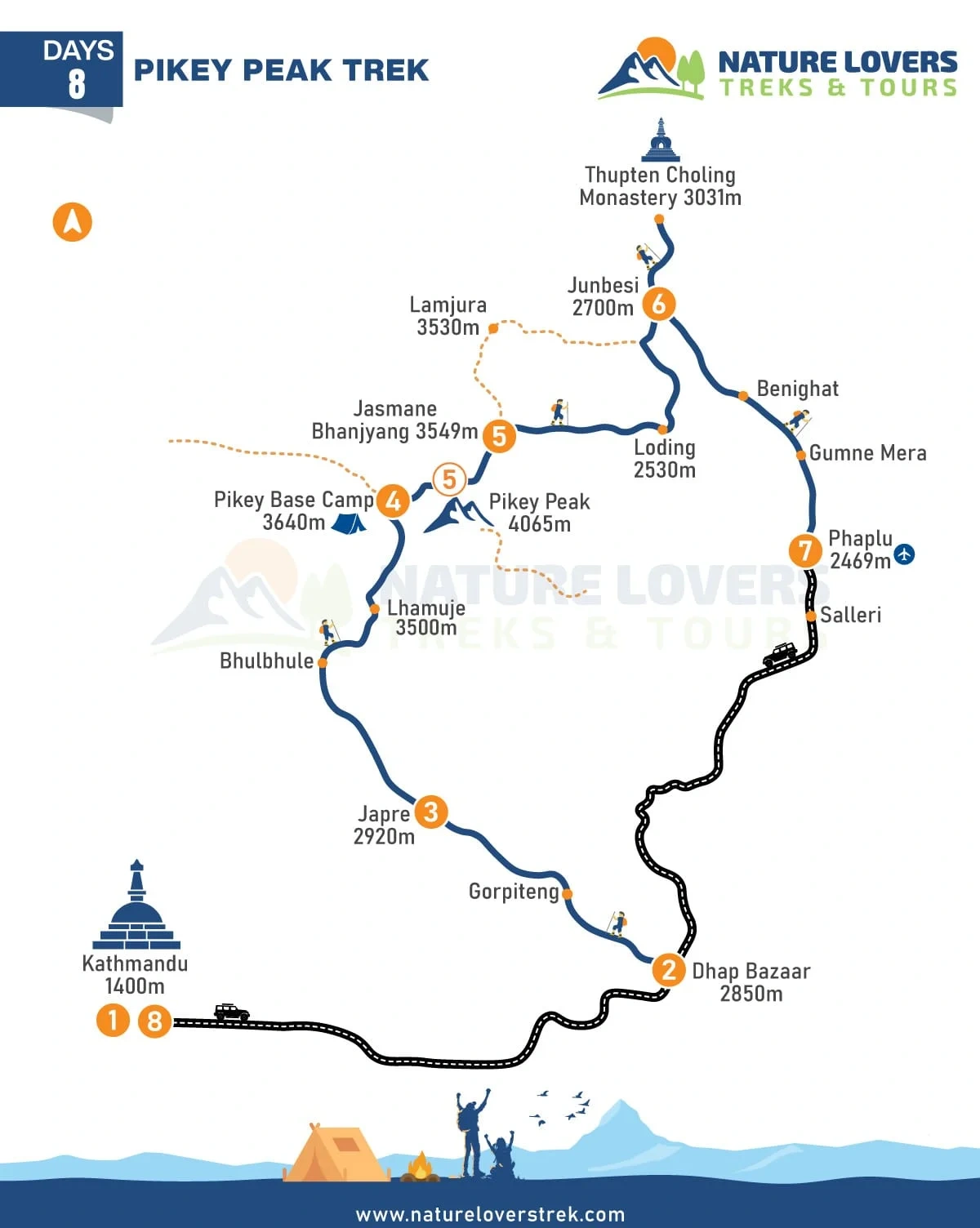
The outbound drive from Kathmandu to Dhap village departs early morning on Day 2 and takes approximately eight to nine hours, following the Araniko Highway east before turning south along the BP Highway through Dhulikhel, Khurkot, and Ghurmi, and eventually heading northeast toward Okhaldhunga and the final approach to Dhap at 2,850 meters. Along the way, the road passes through market towns, riverside settlements, and forested foothills that provide a rich preview of the environments you will soon be trekking through on foot. All road transfers are conducted in comfortable private or shared vehicles arranged and managed by Nature Lovers Treks and Tours, with experienced drivers who know the mountain roads of the Solu region well.
The return drive from Phaplu to Kathmandu on Day 8 departs at approximately five o'clock in the morning to ensure arrival in Kathmandu by late afternoon. For trekkers who prefer a shorter journey time to the trailhead, a seasonal domestic flight from Kathmandu to Phaplu Airport is available, reducing travel time to approximately 35 minutes. Unlike the Lukla flight, Phaplu does not require special permits and operates with marginally greater schedule reliability. Due to the nature of Nepal's mountain roads, minor delays caused by road construction, seasonal weather, or local traffic are occasionally possible, and our logistics team monitors all road conditions closely to coordinate schedules in advance.
Views During the Pikey Peak Trek
From the very first day of trekking on the Pikey Peak trail, the Himalayas assert their presence in a way that is impossible to ignore. Unlike many mountain treks that keep the big views in reserve for a single summit day, the Pikey Peak route reveals its panoramic rewards gradually and generously, offering exceptional vantage points at numerous stages along the route before culminating in the extraordinary 360-degree summit vista that gives the trek its name.
Lower Trail: First Glimpses of the Giants
Even on the first trekking day between Dhap and Jhapre, gaps in the rhododendron and oak forest offer tantalizing early glimpses of Everest and Mount Numbur rising above the ridge lines to the north. These fleeting views, framed by forest canopy and the terrace walls of Sherpa farms, carry an outsized emotional impact precisely because of their unexpectedness; the sudden appearance of the world's highest mountain through a gap in the trees is a moment that stops trekkers in their tracks every time.
Jhapre to Pikey Base Camp: The Ridge Line Opens Up
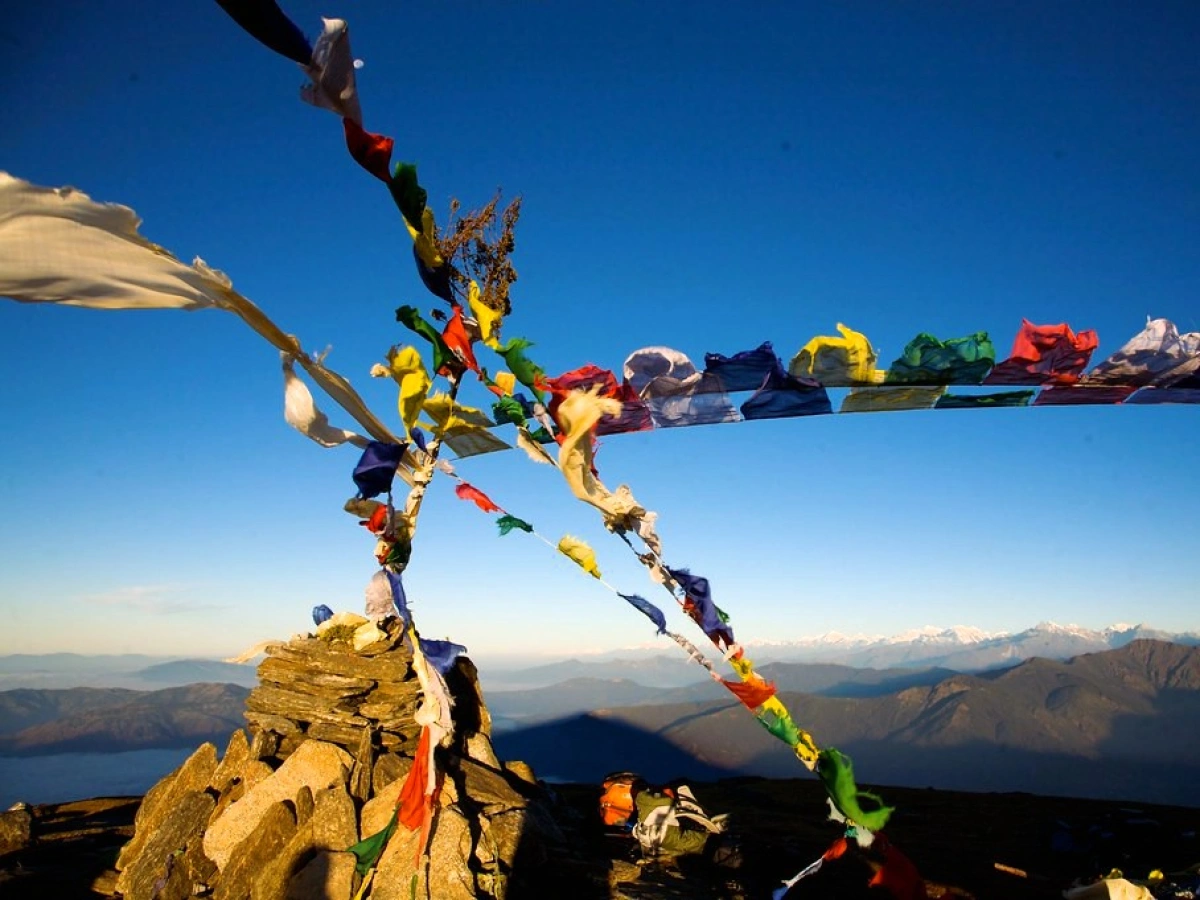
As the trail climbs from Jhapre along the Bhulbhule ridge toward Lamjura Danda and Pikey Base Camp, the forest thins and the views open dramatically. The Himalayan panorama to the north expands with every hundred meters of elevation gain, revealing not just Everest but Kanchenjunga to the far east, the elegant pyramid of Makalu, the bulk of Lhotse, and the sweeping ridgeline of Cho Oyu. The Langtang Range begins to appear to the northwest, and on exceptionally clear days, the white dome of Shisha Pangma, the world's fourteenth-highest mountain, is visible above the Tibetan Plateau. Prayer flags strung across the ridgeline mark the high points where the view is at its most expansive.
Pikey Peak Summit: The Crown of the Journey
The sunrise view from the Pikey Peak Summit at 4,065 meters is the defining experience of the entire trek and one of the most celebrated mountain panoramas in Nepal. In the minutes before dawn, the silhouettes of the world's greatest peaks emerge from the darkness one by one as the sky above Tibet shifts from deep indigo through violet and orange to the pale gold of early morning. Everest, at 8,848 meters, dominates the horizon to the north-northeast with an authority that is immediately apparent even among a skyline crowded with giants. To its right, the massive wall of Kanchenjunga (8,586m) marks the eastern boundary of the view, while Makalu (8,463m), Lhotse (8,516m), Cho Oyu (8,201m), Nuptse (7,861m), Ama Dablam (6,812m), and Thamserku (6,623m) fill the intervening skyline in a breathtaking sequence. To the west, the Annapurna range, Manaslu (8,163m), and Dhaulagiri (8,167m) complete a panorama that spans the full breadth of the Nepal Himalaya. Sir Edmund Hillary called this his favorite Everest viewpoint, and standing here at sunrise, that judgment feels entirely and perfectly earned.
Descending Through Jasmane Bhanjyang and Junbesi
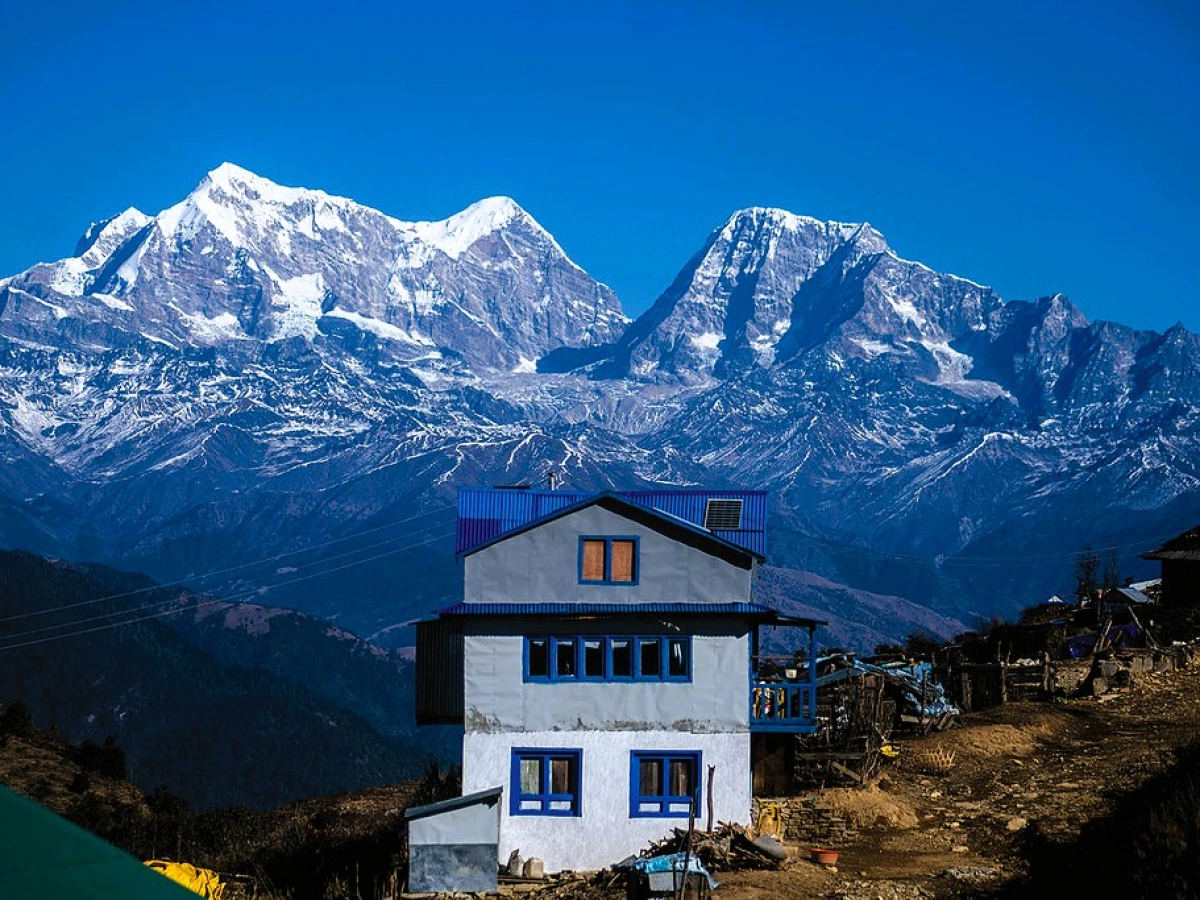
The views do not end with the summit. The descent through Jasmane Bhanjyang at 3,549 meters offers equally commanding ridge-top perspectives over the deep valley systems of the Solu region, with Everest and its companion peaks still dominating the northern horizon. The trail into Junbesi passes through terrain that reveals the layered depth of the Himalayan landscape in a different and equally compelling way, with the great peaks now serving as a backdrop to the green pastoral beauty of the Sherpa homeland, terraced fields, stone-walled villages, yak pastures, and the golden rooftops of Thupten Choling Gompa nestled in the valley below.
Major Highlights of 8-day Pikey Peak Trek in Lower Everest Region
- Stunning sunrise view from Pikey Peak with a wide Himalayan panorama including Mount Everest, Makalu, and Dhaulagiri
- Peaceful, less crowded trail compared to Everest region routes
- Authentic Sherpa villages with real local culture and simple hospitality
- Walk through beautiful rhododendron forests, especially colorful in spring
- Short and relatively easy trek, suitable even with limited time
- Diverse landscapes from green hills to alpine ridges in just a few days
- Visits to monasteries, prayer flags, and spiritual landmarks along the trail
- Everest region views without extreme altitude challenges
Customised Pikey Peak Trek 2026/2027
At Nature Lovers Treks and Tours, we understand that every trekker arrives with a unique combination of available time, physical fitness, personal interests, and budget expectations. Our standard 8-day Pikey Peak Trek itinerary has been carefully optimized over many years of experience to deliver the most rewarding possible experience within a tight and efficient timeframe, but we also offer a fully flexible approach to customization for trekkers who wish to shape their journey in a different way.
Popular customisation options include extending the itinerary by two or three days to incorporate a full exploration of the Junbesi valley and a side trip to Dudh Kunda, a sacred high-altitude lake of exceptional beauty located above the village of Phaplu. Trekkers with a strong interest in Buddhist culture can request an extended stay in Junbesi to allow more time for engagement with the community at Thupten Choling Gompa, including the opportunity to observe morning and evening prayer ceremonies and interact with resident monks and nuns in an unhurried setting. For trekkers with greater physical ambition and more available time, the Pikey Peak Trek can be seamlessly combined with an onward journey into the classic Everest Base Camp trail via Salleri and Solu Khumbu, creating a uniquely diverse route that ascends progressively into the dramatic high-altitude world of the Khumbu region. Accommodation upgrades, private vehicle arrangements, solo trekking packages, and helicopter emergency evacuation planning can all be incorporated on request. Please contact our travel experts directly to discuss your specific requirements, and we will provide a fully itemised quote within 24 hours of your enquiry.