Kanchenjunga Base Camp Trek - 17 Days

1700 Reviews in TripAdvisor
570 Reviews in Google

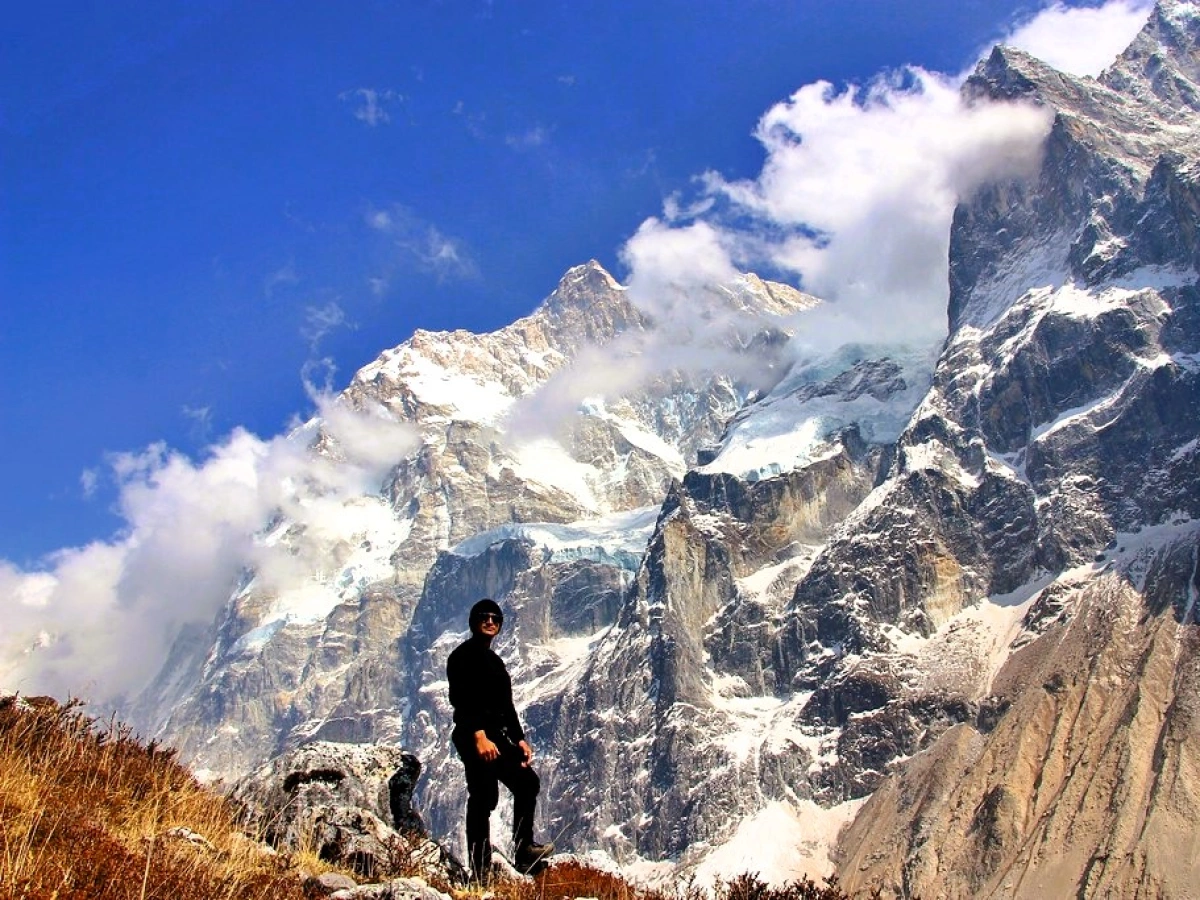
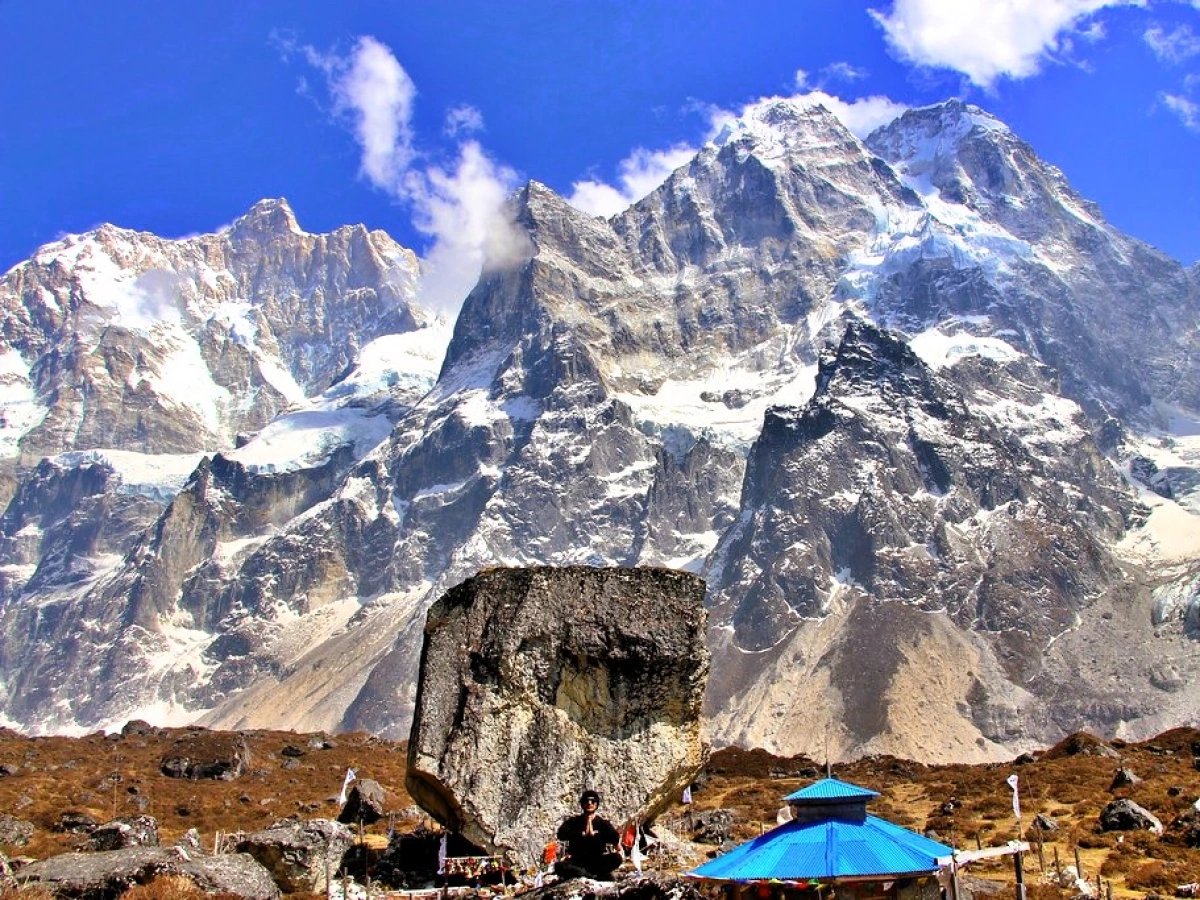
The Kanchenjunga Base Camp Trek via Selele Pass is the ultimate pilgrimage away from the crowded Everest trails. Located in the far eastern corner of Nepal, this 17-day journey connects the North Base Camp (Pang Pema) with the South Base Camp (Oktang). You will cross the high-altitude Sele Le Pass, and witness the "Five Treasures of the Snows" from different perspectives, as you move through subtropical cardamom forests to the jagged, glacial reaches of the borderlands near Sikkim and Tibet.

Duration
17 Days
Trip Grade
Strenuous
Country
Nepal
Max Altitude
5,143m / 16,873ft. at North Base Camp (Pangpema)
Starts
Kathmandu
Ends
Kathmandu
Group Size
Up to 12 Pax (Min. 2 required for Restricted Area Permit)
Activities
Trekking & Hiking
Best Time
March to May & October to November

The Kanchenjunga Base Camp Trek is a true exploration into the bewildering wild east of Nepal. Distinct from the paved paths of Everest that see a large number of footfall, Kanchenjunga is a more serene trek that introduces you to the raw Himalayan nature. Along your journey, you will witness the Limbu and Rai cultures of the lowlands before stepping into the high-altitude settlements of the Sherpa and Walung people, where Tibetan-Buddhist traditions are more prominent.

The 17-day Kanchenjunga Base Camp Trek starts with a dramatic shift in scenery. In the first few days, you will experience the humid tea gardens of Bhadrapur to the steep, terraced hills of Taplejung. Your journey further takes you along the Tamur River into the deep rhododendron forests. Keep your eyes peeled, as these forests are inhabited by the rare and endangered Red Pandas.

The real drama begins after Ghunsa. As the valley opens up, it reveals the North Face of Kanchenjunga. Your journey also takes you across the Sele Le Pass (4,290 meters), which bridges between two worlds. It links the high-alpine North side with the lush, dramatic South side. Our guides emphasize the Kanchenjunga Rhythm, where you start early to beat the valley mist and maintain a steady, yet comfortable pace to handle the vertical ascents of the eastern terrain.

Join Nature Lovers Treks and Tours on the pristine and quiet Kanchenjunga Base Camp trek. Due to its restricted status, spots are limited for the 2026/2027 season. Book yours today!

Why Go on the 17-Day Kanchenjunga Base Camp Trek in Nepal?

While the Everest and Annapurna regions draw masses, the Kanchenjunga Base Camp Trek remains a hidden sanctuary. This trek is suitable for travelers seeking the raw and untamed spirits of the Himalayas. It is a strenuous journey with immense rewards.

Here are the top reasons to go on the Kanchenjunga Base Camp Trek:

Dual Base Camp Experience: Why settle for one when you can visit two base camps? Our itinerary takes you to the North Base Camp at Pang Pema for the sunset view over the North Face. In the South Base Camp at Oktang, you can find a close-up view of the soaring Yalung Glacier.

The Peak of Terror: On Day 7 of the trek, you can hike toward the base of the 7,710-meter Jannu Peak, or the Kumbhakarna. Climbers often call it the peak of terror, as it is one of the most intimidating vertical walls in the world. Seeing this peak from Khambachen is a spiritual experience.

Authentic Travel: Forget Starbucks or luxury lodges in Kanchenjunga. You rely on authentic teahouse experiences. Throughout the journey, you will eat locally grown potatoes and sukuti (dried meat). In the lower village, you can also try the fermented millet brew of Tongba.

Biodiversity Hotspot: The 17-day trek takes you through the Kanchenjunga Conservation Area. This region is home to the elusive snow leopard, the Himalayan black bear, and the red panda. Also, since this region receives more rainfall, the landscapes are lush. The ancient forests look like something out of a prehistoric movie.

A Typical Day During the Nepal Kanchenjunga Base Camp Trek

Your day at Kanchenjunga begins at 6:30 with a steaming cup of Alainchi Chiya (black cardamom tea). The Kanchenjunga region is the global Alainchi capital. More than just a drink, the medicinal property of this spice is a secret remedy to open the lungs on a damp, misty morning.

After breakfast, typically consisting of deep-fried Gurung Bread, you hit the trails by 8:00 AM. Unlike the crowded Everest, you will find serene and peaceful trails. Your guide will remind you of the “Bistarai-Bistarai” (slowly) mantra as you follow the Kanchenjunga Rhythm.

At around noon, you will stop for lunch. As for Ningro, wild fiddlehead ferns are foraged from the local rhododendron forests. By 4:00 PM, you will reach your teahouse, where you can catch the warmth by gathering around a stove fueled by aromatic juniper branches.

In the evening, your guide will perform the mandatory oximeter check followed by a warm dinner, featuring spiced dried meat or Sukuti. On special nights, you can share a pot of Tongba. Sipping this fermented millet beer through a bamboo straw is a customary Eastern hospitality ritual, which helps warm your body and soul before heading to bed.

Nepal Kanchenjunga Base Camp Trek: Cost for Transportation, Permits, Guides, and Porters

The Kanchenjunga Base Camp Trek is a serious commitment. This trek into Nepal’s wild east demands complex logistics. Nature Lovers Treks and Tours manages all necessary logistics, including the Kanchenjunga Restricted Area Permit, domestic flights, and private jeep transfers.

To further ensure a hassle-free and seamless experience, our package includes a 1-porter-per-2 trekker ratio. While costs are covered in the package, carry extra local cash for additional expenses. You will need the extra buck for solar charging, a bucket shower in remote villages, or a well-deserved pot of Tongba to celebrate the completion of your journey.

Major Highlights of 17-day Kanchenjunga Base Camp Trek via Selele Pass

  • Experience the "Grand Traverse" by visiting both the North Base Camp (Pang Pema) and South Base Camp (Oktang) in a single epic journey.
  • Stand before the massive North Face of Kanchenjunga, the world’s third-highest peak, for a sunset view at 5,143 meters.
  • Conquer the high-altitude Sele Le Pass, the rugged bridge connecting the remote northern and southern wilderness.
  • Gaze at the vertical granite wall of Mt. Jannu (7,710m), known to climbers as the "Peak of Terror," from the Khambachen valley.
  • Explore the ancient stone village of Ghunsa, the cultural heartbeat of the high-altitude Sherpa and Walung communities.
  • Trek through the Kanchenjunga Conservation Area, a pristine sanctuary home to the elusive Red Panda and Himalayan Black Bear.
  • Navigate the debris-covered moraines of the Yalung and Kanchenjunga Glaciers, where the landscape changes with every shifting ice block.
  • Witness the "Five Treasures of the Snows" from the Oktang viewpoint, offering a close-up of the soaring 8,000-meter ridges.
  • Journey through the humid, prehistoric rhododendron forests and the world’s most famous cardamom gardens in the lower foothills.
  • Experience the rare authenticity of the East, where teahouse hospitality still centers around a warm pot of local Tongba.

Customized 17-day Kanchenjunga Base Camp Trek

The Kanchenjunga Base Camp Trek is a rugged journey visiting both the North and South base camps. Nature Lovers Treks and Tours delivers a seamless package with all-inclusive logistical arrangements. However, we understand that no two trekkers are the same.

To cater to your specific needs, we offer a fully customizable Kanchenjunga package. You can choose to add extra acclimatization days in the village of Ghunsa or opt for a private helicopter return.

Discuss your interests with Nature Lovers Treks and Tours travel experts, and together we will craft an itinerary that specifically meets your goals.


Short Itinerary & Altitude

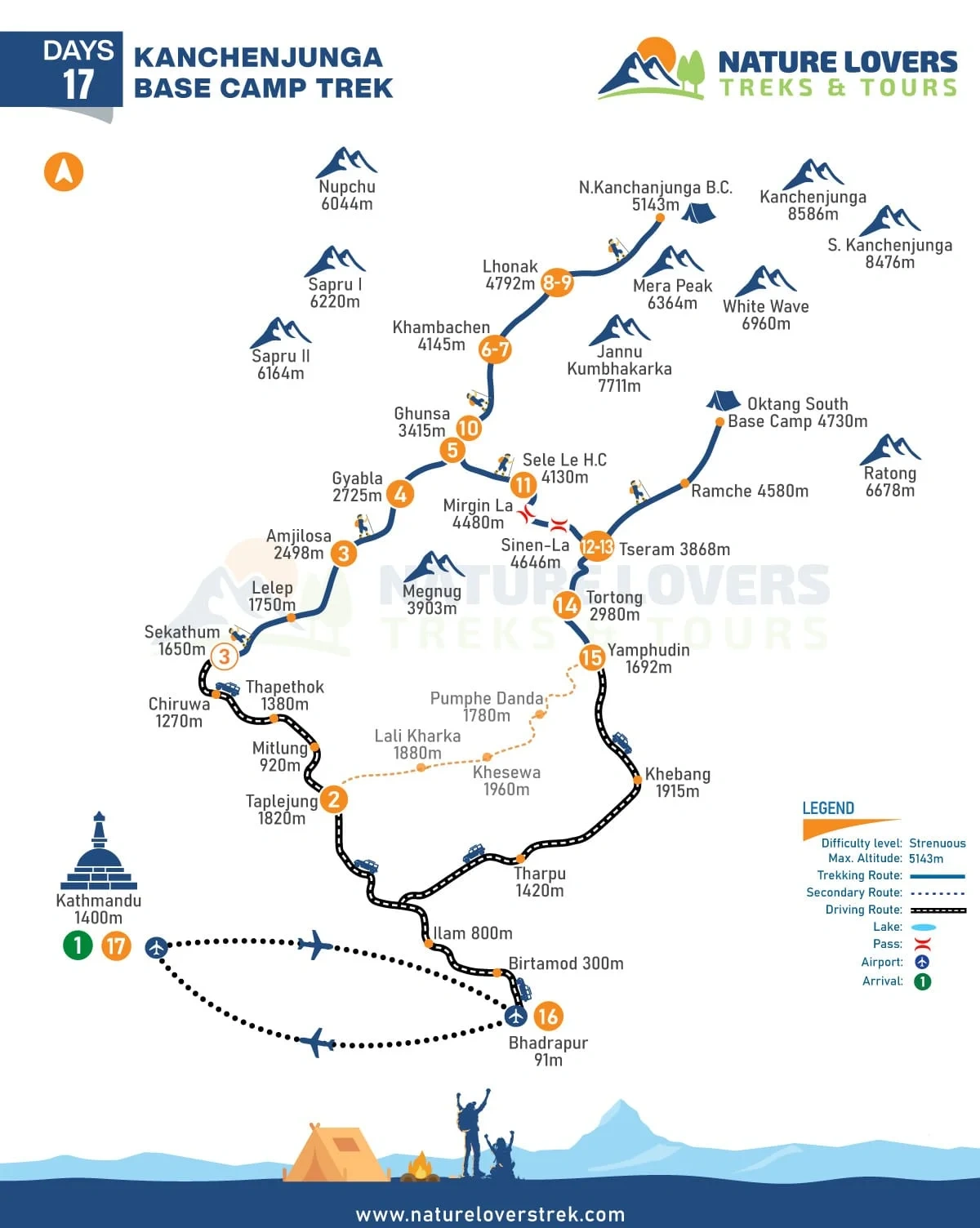
Kanchenjunga Base Camp Trek - 17 Days Detailed Itinerary

Day 1

Arrival in Kathmandu (1,324m) & transfer to the Hotel

Upon arriving at the Tribhuvan International Airport, a representative from Nature Lovers Treks and Tours will greet and transfer you to your hotel. Take some time to rest and unwind. In the evening, you will attend a pre-trip briefing and meet your guide. This is also the time to finalize your restricted area permit. End the day by strolling through the vibrant streets of Thamel and engaging in last-minute shopping.

Day 2

Fly from Kathmandu to Bhadrapur & drive to Taplejung (1,820m)

The journey begins with a scenic 45-minute flight to the lowland plains of Bhadrapur. Upon landing at the airport, you will be transferred to a local jeep that drives you through the lush tea gardens of Ilam. It’s a long and winding road that takes you from the tropical heat to the cooler terraced hills of Taplejung, the gateway to Kanchenjunga.

Day 3

Drive from Taplejung to Sekathum (1,650m) & trek to Amjilosa (2,498m)

In the morning, you will take a short drive to Sekathum to bypass the dusty roads. Upon reaching Sekathum, the trek truly begins. You will enter the Eastern steps and challenge yourself as you take on the series of steep stone staircases. The trail follows the Ghunsa Khola and leads you through a narrow gorge and damp forest, with the scent of wild cardamom.

Day 4

Trek from Amjilosa to Gyabla (2,725m)

Today’s journey is relatively short, but it demands sheer endurance as you climb through the dense bamboo and rhododendron forests. Watch out for the elusive red pandas hiding behind the dense bushes. As you reach the Tibetan village of Gyabla, the valley begins to open up, offering a hint of the high-altitude landscapes.

Day 5

Trek from Gyabla to Ghunsa (3,415m) via Fale

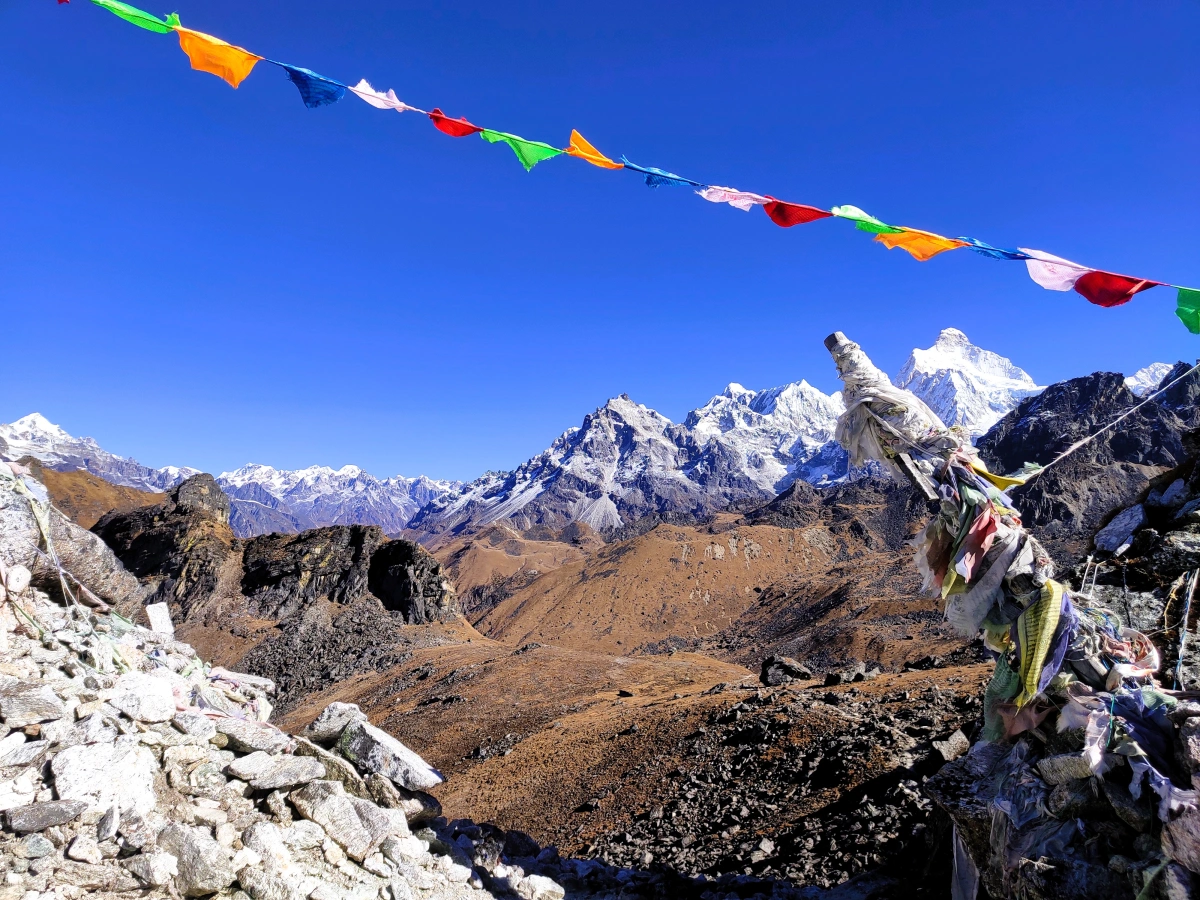
Compared to the previous day’s trek, the trails are slightly more leveled out. You will pass through potato fields and larch forests, and cross several suspension bridges before arriving in Ghunsa. This is the largest and most significant Sherpa village of the region. Witness the colorful prayer flags adorning the charming village featuring weathered stone architecture.

Day 6

Trek from Ghunsa to Khambachen (4,145m)

Today, you will move above the treeline and experience the landscape shift into a stark, alpine world. The trek takes you along the edge of Ghunsa Glacier. Navigate the rocky morains along the simple stone cairn markings. As you approach Khambachen, the final bend reveals the beautiful North Face of Mount Jannu (Kumbhakarna).

Day 7

Acclimatization day in Khambachen | hike to Jannu Base Camp (4,500m)

Acclimatization is vital to allow your lungs to adjust to the increasing altitude. So, today, you will practice the “Climb high, sleep low” strategy. As a part of this process, you will take a side trip to the base of Mount Jannu, where you will stand face-to-face with the “Peak of Terror.” Soak in the spiritual experience as you listen to the distant roar of avalanches tumbling off the Jannu Glacier.

Day 8

Trek from Khambachen to Lhonak (4,792m)

The climb to Lhonak requires a steady ascent across the Kanchenjunga Glacier’s lateral moraine. Upon completing the climb, you will reach the high-altitude desert. Here, the only inhabitants are the herds of blue sheep and a few snow leopards. As you reach the high-altitude village of Lhonak, you will find a few basic teahouses. Experience the raw, end-of-the-world feeling in this isolated sandy plain.

Day 9

Hike to Kanchenjunga North Base Camp (Pang Pema 5,143m) and return to Lhonak

Pang Pema is the pinnacle of the North circuit. The journey takes you along the glacier’s edge to Kanchenjunga North Base Camp. From here, you can witness the 8,580-meter summit looming directly above you. Embrace is sheer Himalayan silence, broken only by the groaning of the massive river of ice beneath you.

Day 10

Trek from Lhonak to Ghunsa (4,145m) via Khambachen

Today, you will retrace your steps down the valley. The descent is long but allows your lungs to relax. Spend your evening in Ghunsa. The key is a nutritional diet and sufficient hydration. Pro tip: order a bowl of Gundruk ko Jhol (fermented green soup) to help your body prepare for the high pass ahead.

Day 11

Trek from Ghunsa to Selele High Camp (4,130m)

Away from the main trail, you will take on a steep climb into the isolated ridges that separate the North and South valleys. Selele is a remote outpost. Here, you will find only two basic stone huts. This is one of the quietest spots on the trek, offering a view of the star-filled Himalayan sky far from the light pollution.

Day 12

Trek from Selele to Tseram (3,868m) via Selele Pass (4,290m)

This is the most challenging part of the 17-day trek. You will cross several high ridges, including the Sele Le Pass (4,290 meters). The summit gives you panoramic views of the Makalu and Everest in the western horizon. Up here, the weather is unpredictable. Navigating through the rugged terrain, you will descend to Tseram.

Day 13

Hike to Oktang (South Base Camp 4,740m) and back to Tseram

Today you will journey to the South Base Camp at Oktang. This is a more dramatic and glaciated region than the North. You will walk along the Yalung Glacier to reach the viewpoint. Witness the “Five Treasures of the Snows.” After enjoying the breathtaking views of the Kanchenjunga South Face, you will return to Tseram for the night.

Day 14

Trek from Tseram to Tortong (2,980m) via Andhaphedi

You begin your final descent through “The Mossy Forest.” It is a prehistoric landscape where ancient rhododendron trees are covered in thick, green lichen. Compared to the higher altitudes, the lower elevation regions feel like a luxury. The increased oxygen makes walking feel effortless compared to the previous days.

Day 15

Trek from Tortong to Yamphudin (1,692m) via Lase Bhanjyang

Today’s journey is long and consists of a roller coaster of a trek. You will climb back over the Lasiya Bhanjyang ridge before taking on the descent to Yamphudin, which feels like torture to your knees. Yamphudin is the first multicultural village. In this lower foothill village, you will encounter people of the Rai, Limbu, and Sherpa communities living together.

Day 16

Drive from Yamphudin to Bhadrapur (91m) via Phidim Bazaar

Prepare for the final, but grueling jeep journey that takes you back toward the plains. You will drive through the bumpy offroads that follow the river valleys before eventually smoothing out as you reach the paved roads of Terai. In Bhadrapur, it’s time to celebrate the completion of your incredible trek with your guide and porters. Share a celebratory pot of Tongba.

Day 17

Fly back from Bhadrapur to Kathmandu (1,324)

To officially end your trek, you will board a morning flight to Kathmandu. Ask for the right side seat to catch one final glimpse ofthe  Kanchenjunga massif. Upon landing in Kathmandu, you will be transferred to your hotel.

Still Confused?
No worries. Our team is ready to guide you every step of the way.

Cost Details

Includes

  • Airport transfers in Kathmandu (arrival and departure)
  • 2 nights hotel stay in Kathmandu with daily breakfast
  • Full board meals (Breakfast, Lunch, Dinner) during the trek
  • Accommodation in standard teahouse lodges on the trek
  • Round-trip domestic flights between Kathmandu and Bhadrapur, including airport transfers
  • Public sharing jeep transfers: Bhadrapur to trek start (Taplejung) and trek end back to Bhadrapur
  • Services of a professional, government-licensed English-speaking trekking guide
  • Safe, purified drinking water (purification tablets provided) throughout the trek
  • Secure luggage storage in Kathmandu during the trek
  • All necessary trekking permits, conservation area, and restricted area fees
  • All government taxes, VAT, tourist service charges, and official expenses

Excludes

  • International flights to and from Kathmandu
  • Nepal entry visa fee (USD 30-50 depending on duration)
  • Travel and medical insurance (mandatory)
  • Meals in Kathmandu (lunch and dinner)
  • Personal expenses (laundry, phone calls, internet, battery charging)
  • Hot showers and WiFi charges at teahouses during the trek
  • All alcoholic and non-alcoholic beverages during the trek
  • Porter service for personal luggage (if required)
  • Tips for guide, porter, and driver (mandatory)
  • Personal trekking gear and equipment
  • Emergency evacuation costs (helicopter rescue if needed)
  • Any costs arising from unforeseen circumstances (natural disasters, flight delays, political situations)
  • Extra nights in Kathmandu beyond the included 2 nights

Essential Information

When is the Best Time for the 17-day Kanchenjunga Base Camp Trek in 2026/2027?

Autumn (October to November) and Spring (March to May) are the best times for the Kanchenjunga Base Camp Trek. However, the weather is becoming increasingly unpredictable. Because Eastern Nepal sees more rainfall than the rest of the country, you can expect the monsoon to linger deeper into October. Traveling during the rainy season sees the trails infested with leeches. In such conditions, it is best to carry a pouch of salt to keep them off your boots.

Traveling in autumn offers the sharpest, crystal-clear views of the North Face. On the other hand, spring is known for the vibrant rhododendron and wildflower blossoms. However, rising temperatures are making the glacial moraines near Pang Pema more unstable due to rapid melt.

For the 2026/2027 season, we recommend aiming for mid-to-late October. The rains have fully stopped, leaving behind the crisp skies and awe-inspiring views.

How Difficult is the 17-day Kanchenjunga Base Camp Trek?

The Kanchenjunga Base Camp Trek is a challenging/strenuous journey and a step up from the popular EBC and ABC treks. Navigating the high-altitude Sele Le Pass and the shifting lateral moraines of Kanchenjunga and Yalung glaciers are the most demanding stretches of the journey. Though not technical, you will face rugged, unstable terrain that demands constant focus and physical endurance.

The trek requires 8–10 hours of daily trekking in the high-alpine zones. Considering the remoteness, you will need to adjust to basic teahouse accommodations. The real challenge is the cumulative fatigue of constantly trekking above 4,000 meters.

Who Can Go on the 17-day Kanchenjunga Base Camp Trek?

Kanchenjunga Base Camp Trek is suitable only for seasoned trekkers with high physical endurance and mental resilience. We recommend this trek for the following group of travelers:

  • Active trekkers who want to complete both North and South Base Camps rather than a standard out-and-back trail.
  • Trekkers with high physical stamina who are prepared to tackle the steep Eastern steps.
  • Solitude seekers and photography enthusiasts who want to witness the world’s third-highest peak and the “Peak of Terror” (Mount Jannu).

Preparing for the 17-day Kanchenjunga Base Camp Trek: Necessary Gear and Equipment

Here is a comprehensive list of gear and equipment for the 17-Day Kanchenjunga Base Camp Trek.

Head

  • Trekking Hat/Cap
  • Headlamp/Flashlight (with extra batteries), good quality
  • Sunglasses (UV protection)
  • Woolen hat /Beanie (for cold weather)
  • Bandana/Buff (for dust and sun protection)
  • Sunblock (Sunscreen) (SPF 40 or higher)
  • Insect Repellent (for lower trekking areas)

Body

  • Base Layer Shirt: Two (moisture-wicking, breathable fabric)
  • Trekking Jacket: A pair of lightweight (water-resistant/windproof)
  • Insulating Layer: A pair (fleece, down jacket, or sweater for warmth)
  • Rain Jacket/poncho (lightweight, waterproof)
  • Trekking Trousers/Pants: Two pairs (comfortable and durable)
  • Long-sleeve shirt: 1 pair (for sun or insect protection)
  • Underwear: Two pairs (moisture-wicking, quick-dry fabric)
  • Compression Garments (for reducing muscle fatigue, optional)
  • Gore-Tex or a similar waterproof jacket

Lower Body

  • Trekking Pants: Two pairs (convertible into shorts if needed)
  • Thermal Leggings: one (for cold weather)
  • Shorts: Two (optional, for warmer weather)
  • Knee Guards/Support (for those who need extra knee protection)
  • Hands: Protect your hands with warm gloves
  • Light inner gloves (for lower-elevation trekking)
  • Insulated or down gloves (high-altitude trekking)
  • Waterproof gloves (wet season)

Footwear

  • Trekking Boots/Shoes (comfortable, waterproof, with good grip and ankle support)
  • Gaiters (to protect from mud, snow, or rocks entering boots)
  • Thick Socks: Two pairs (merino wool or synthetic, moisture-wicking)
  • Lightweight Socks: Two pairs (for warmer weather or layering)
  • Sandals/Flip-flops (for campsite/rest stops)

Extra Suggested Items

  • Sleeping bag
  • Drying towel
  • Trekking Poles
  • Cash (extra Nepali rupees for additional expenses)
  • Backpack 60 L. (Rucksack) (with rain cover and hydration system)
  • Hydration System/Water Bottles/Camelback
  • Water Purification Tablets/Filter
  • Snacks (Energy Bars, Dried Fruits, Nuts
  • First Aid Kit (with basics like bandages and antiseptics, as per personal need)
  • Portable Power Bank (to charge devices)
  • Camera or Smartphone (to capture the views)
  • Toiletries (toothbrush, toothpaste, biodegradable soap, shampoo, etc.) Feminine hygiene products as needed
  • Wet wipes
  • Emergency Whistle
  • Dry bags
  • Clothing Layer
  • Hand sanitizer
Need Help? Call Us+977 9851254172