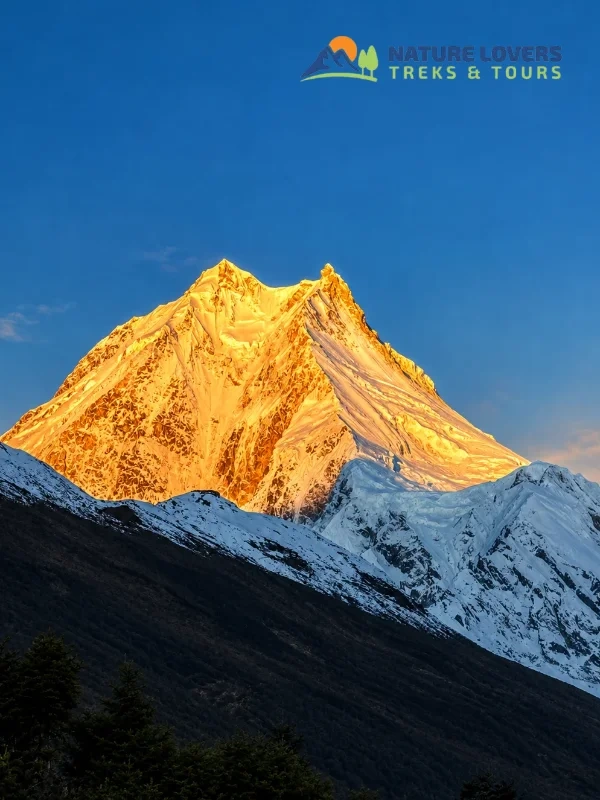
Why is crossing Larkya La the most dangerous day on the Manaslu Circuit?
Compared to other trekking destinations, the Manaslu Circuit trek cost is affordable for budget-friendly trekkers craving high-altitude adventure in the Nepalese Himalayan region. But it is also one of the difficult journeys, so trekkers prepare themselves to overcome all the physical challenges waiting at the trials of the Manaslu Circuit Trek. The altitude sickness at Larkya La, changes in temperature, difficult climbing days, 6 to 7 hours of average walking every day, and many other physical challenges.
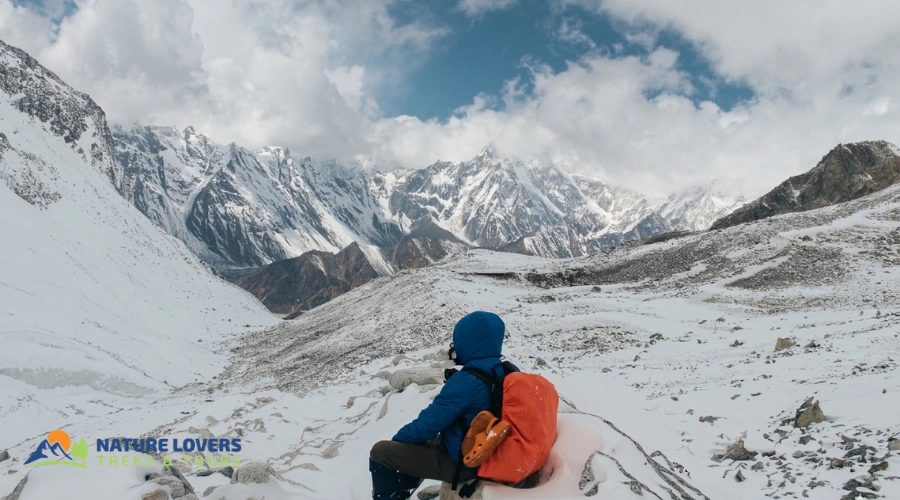
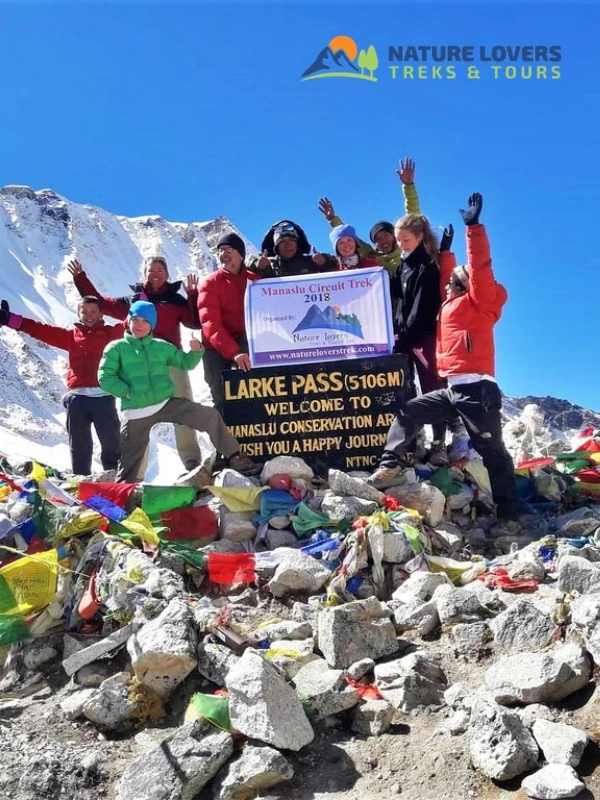
Trek from Dharamsala (4,460 m) to Larkya La Pass (5,106 m).
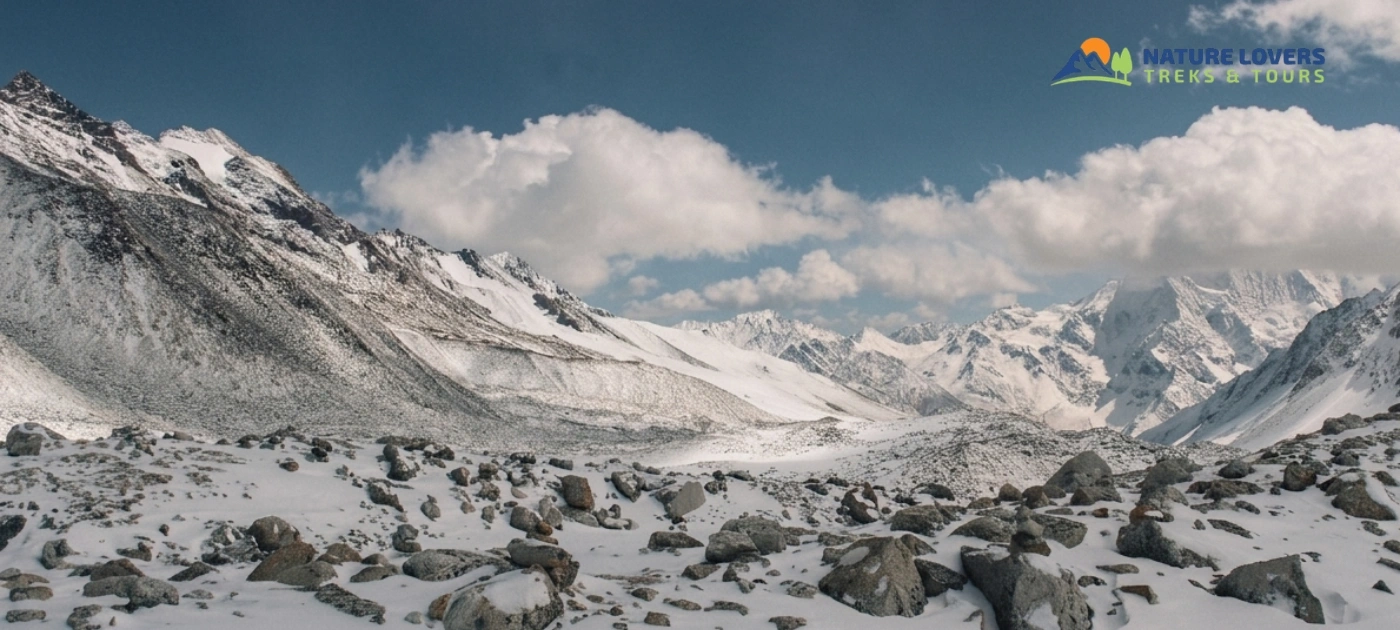
Dharamsala is also known as Larkya Phedi or High Camp, with an altitude of 4,460 meters. The last day of your Dharamsala tea house before climbing to the altitude of 5,106 meters at the Larkya La summit, the highest point of the Manaslu Circuit trek. The Larkya La summit is covered with snow throughout the year, making it one of the most physically demanding days of your journey.
The 6 km of continuous climbing starts around 3 to 4 AM. Walking a high-altitude trail covered with snow and harsh weather caused many trekkers to suffer altitude sickness at the Larkya La summit. You do not need any advanced technical skills. But trekkers must be equipped with high-quality gear, as trails covered with snow can create difficulty in footing and navigation. You must conserve your energy and follow all instructions given by your travel guide.
After crossing the Larkya La, the highest point of your journey, now trekkers will descend towards the village of Bimthang, located at 3,590 meters. The 8 to 10 hours of ascending and descending while facing the harsh weather and cold temperature will reward trekkers with warm food and rest in a comfortable room. The physical exhaustion and high-altitude environment can make any trekker suffer symptoms of altitude sickness at Larkya La.
Very Important Note: In the mid-climb of Larkya La, there is no tea house, lodge, or communication to contact the emergency team if trekkers suffer from altitude sickness. So you must take an altitude sickness test at Dharamsala and do not force your body for unnecessary physical activities, as altitude sickness at Larkya La can permanently damage your body parts and organs.
Altitude sickness at Dharamsala
The human body goes through several changes as the altitude increases, and you will notice different symptoms of altitude sickness as you cross 2,500 meters in altitude. It is very important to have all the required information regarding the red flags of AMS before crossing Larkya La. The altitude sickness at Larkya La mid-climb can be life-threatening because of the few rescue options.
AMS Symptoms Every Manaslu Trekker Must Recognize Above 4,000 m
Many trekkers suffer from acute mountain sickness, also known as AMS, in their high-altitude adventure. The AMS symptoms can be noticed as the altitude increases to 2,500 m due to a lack of oxygen supply. As the altitude increases, the atmospheric pressure decreases, causing a lower supply of oxygen and difficulty in breathing, creating several changes in your mental and physical health.
Many professional and physically fit young people have also suffered altitude sickness at Larkya La Pass climbing because AMS does not discriminate according to fitness level, age, or experience. Anyone can suffer altitude sickness, and a headache is a cardinal symptom of AMS. Your body will take around 1 to 2 days to completely adjust to the new environment, so you must follow your travel guide's instructions to avoid any serious injuries.
Here is a short list of acute mountain sickness (AMS) symptoms.
- Fatigue or weakness
- Loss of appetite
- Dizziness or lightheadedness
- Difficulty sleeping
- Low oxygen saturation
- Difficulty breathing
- Nausea and vomiting
- Body Swelling
Remember, you will not notice all of the symptoms, but the headache, fatigue, and breathing difficulty are the most common symptoms that every trekker will suffer from. So you must keep yourself hydrated and eat hygienic food for your entire journey. If the symptoms start to get worse, do not force yourself to continue the journey and descend to a lower altitude and seek medical support as soon as possible.
The Red Flags of AMS
High Altitude Cerebral Edema (HACE) and High Altitude Pulmonary Edema (HAPE) are the two life-threatening stages of AMS. It occurs when trekkers are delayed or do not descend back to the lower altitude after facing several AMS symptoms. If HACE and HAPE are left untreated for a long time, they can permanently damage several organs and body parts. Trekkers can lose their lives.
So here are a few altitude sickness at Larkya La Pass red flags you must never ignore.
- Ataxia is a condition where trekkers cannot walk in a straight line or properly.
- Trekkers will have an altered mental condition, creating confusion, hallucinations, irritability, disoriented speech, or unusual drowsiness, which is different than normal fatigue.
- The headache keeps getting worse, causing continuous vomiting and unresponsiveness to any medicine.
- Your body will continuously feel breathlessness even when you are at rest.
- If the body starts producing pink, frothy, or blood-tinged sputum, cough trekkers must seek immediate rescue.
- Trekkers will suffer from cyanosis, turning lips or fingernails blue, because of a critically low level of oxygen in the blood.
There are many other serious HACE and HAPE symptoms you will notice at Dharamsala, like SpO₂ below 70%, oxygen deprivation, physical distress, resting dyspnea, and many other unusual changes in your body. If you are feeling uncomfortable, you must tell your travel guide and act as soon as possible to avoid any serious or fatal injuries.
The Lake Louise Score Explained
The Lake Louise Score is one of the most used techniques to determine the health of trekkers suffering from AMS. If you are facing unusual changes before climbing the Larkya La pass, your travel guide or camp doctor will take a Lake Louise test. The test will be taken the night before you climb the Manaslu Circuit trek's highest pass and get a score for altitude sickness at Larkya La Pass.
Here is the Lake Louise AMS score and score interpretation chart.
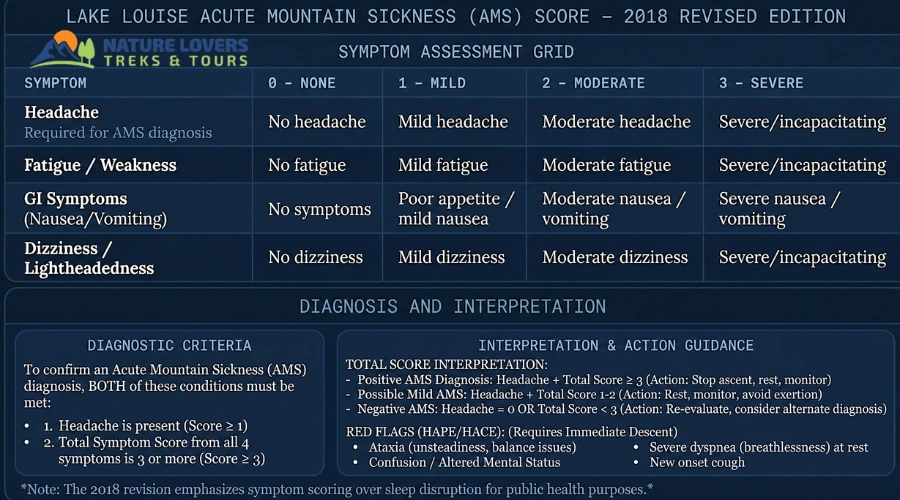
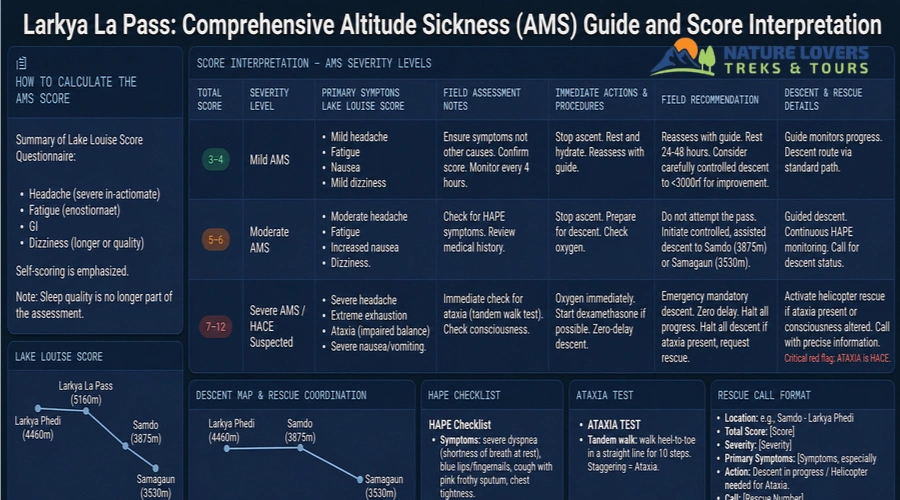
Remember, even if you have a saved or zero score, that does not guarantee the safety of trekkers. So you must follow all the instructions of your camp doctor and travel guide to avoid altitude sickness at the Larkya La climb. The test will be taken the night before your climb, and if it is 5 or higher than 5, you must seek an immediate rescue option. Never force your body for unnecessary physical efforts, and ask for proper medical care until you descend back to a safe location.
The Crossing Decision—Who makes it and when
Why does the real decision happen at Dharamsala the night before?
The climb for Larkya La starts at 3 am early in the morning from Dharamsala. Many trekkers make the decision early in the morning based on their feelings. But remember, all the trekkers feel exhausted, tired, and confused early in the morning, so it is very important to make decisions at the dharamsala the night before the climb.
As many trekkers start to notice several changes in their bodies as they reach Dharamsala, located at an altitude of 4,460 m. So trekkers must make their decision between 6 PM and 9 PM the night before their journey. If your condition is getting worse, notify your travel guide, and you must take the Lake Louise test. If the score is higher than or equal to 5, prepare for the descent and seek medical support immediately.
What your licensed guide assesses before departure
According to the Nepal trekking regulation, trekkers must hire a licensed guide for the Manaslu Circuit trek. A trained and professional guide has the knowledge to handle unpredictable and emergency situations to make emergency evaluations from the Dharamshala High Camp.
These are the few things your travel guide will provide before you descend.
- Lake Louise Score a traditional way of measuring the AMS symptoms and scoring them from 0 to 12 accordingly.
- The guide must carry a pulse oximeter that constantly monitors your oxygen level in your blood and pulse rate.
- Trekkers must take a straight walking test known as the tandem gait test to check the HACE red flag symptoms.
- The travel guide will monitor the functional assessment of your energy level, appetite, affect, and communication to know your physical and mental state.
- The guide will do a trend assessment check of your changes in symptoms between arrival and bedtime.
Many trekkers give wrong information to their guide so they can continue their journey. But remember, AMS can damage your body organs permanently, and a few dollars are not worth risking your entire life. Always report your travel guide truly about your symptoms so they can follow the process accordingly for your safety. Mount Manaslu is not running away, so you can again attempt this journey if you are physically and mentally healthy.
Symptoms that mean you do not start without any exceptions
Many trekkers put their egos before their lives, as they have always been seeking breathtaking high-altitude adventure. Remember, not being able to cross Larkya La is not a sign of failure but another opportunity to prepare your physical and mental health to be stronger and challenge the heights again.
Here are a few symptoms that show absolute no-go conditions.
- Failing the ataxia and tandem gait test
- Disturbed mental condition creating confusion, hallucinations, or disorientation
- Breathlessness at rest
- Body-producing pink, forty, or blood-tinged sputum cough
- Lake Louise Score greater than or equal to 5
- SpO₂, also known as blood oxygen saturation below 78 to 80%
- Continued vomiting that prevents fluid retention.
These are the symptoms that trekkers must take seriously and seek medical treatment for as soon as possible. Start your descent from Dharamsala High Camp, reach a lower-altitude place, and get the proper medical treatment to avoid any serious injuries.
Your options if you can’t cross Larkya La from Dharamsala
Many trekkers face serious AMS symptoms from Dharamsala and need emergency rescue for immediate treatment. Trekkers have four options depending on their conditions, weather, and insurance. We will talk about the possible rescue option if you fall sick at Dharamsala and can’t cross Larkya La Pass.
Option 1: Rest and Recover at Dharamsala (Mild AMS Only)
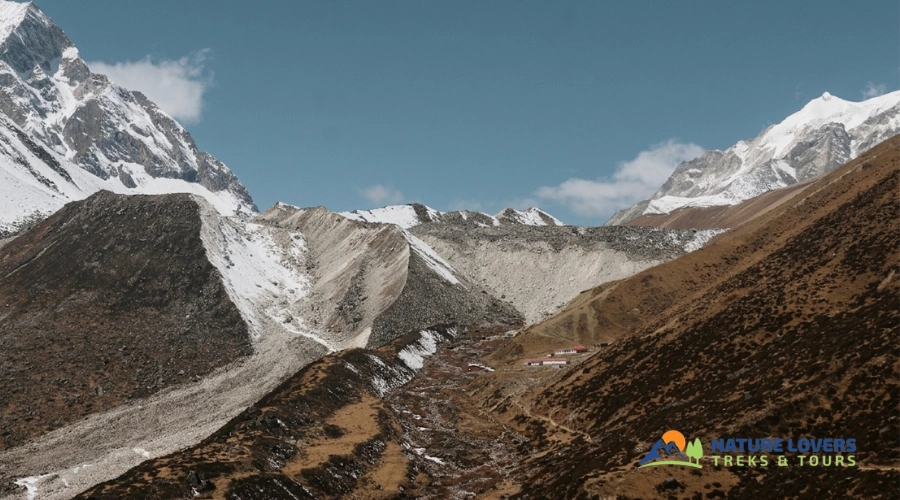
If trekkers start to notice unusual changes in their bodies, making them uncomfortable, the guide will suggest you take a Lake Louise test. If your score is 3 to 4, excluding headache, and your SpO₂ level must be above 78%, it is not considered a red flag, so you can rest and recover at Dharamsala.
Option 2: Descend to Samdo or Samagaun
If you are still feeling uncomfortable, losing altitude is the best treatment for AMS. Trekkers can descend back to Samdo, located 585 meters below Dharamsala, which takes around 1 to 2 hours depending on weather, trail, and trekker condition. You can rest in Samdo, whose comfortable tea house and food help you physiologically fight AMS symptoms.
If your condition is getting worse, you must travel to a lower altitude as soon as possible, and Samagaun is the best option, located at 3,530 m altitude. After 3 to 4 hours of walking, you will reach the village and rest there for 24 to 48 hours, and many trekkers totally recover from mild to moderate AMS symptoms.
Option 3: Helicopter Evacuation from Larkya La High Camp
If trekkers have crossed the 4,800 m altitude and start to develop red flag symptoms of altitude sickness at Larkya La mid-climb, they can be evacuated with the help of a helicopter from Larkya La high camp. If you cannot descend back on foot, make an emergency evacuation satellite call to the guide's operator in Kathmandu or Gorkha and follow the emergency helicopter evacuation procedure.
Option 4: Helicopter Evacuation from Dharamsala or Bimthang
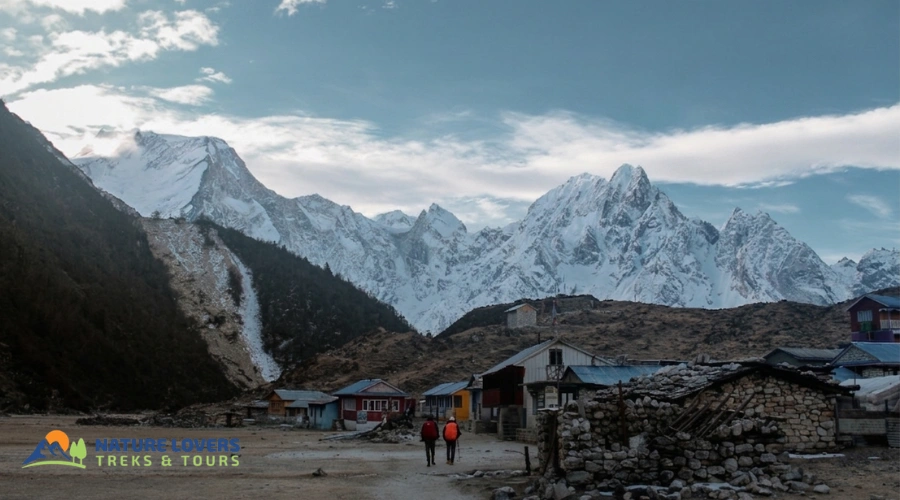
If trekkers show the red flag symptoms of HACE or HAPE before the night of climbing at Dharamsala and cannot descend on foot, helicopter evacuation is possible from Dharamsala, depending on weather conditions. But sometimes, with the help of porters, they will carry you and reach Bimthang, located at 3,590 m altitude, which has a better emergency landing area for helicopters.
How much Manaslu helicopter evacuation actually cost
The emergency helicopter evacuations are not cheap and cost more than you think. The emergency helicopter provides medical support and all the needed equipment to keep the patient's condition stable. So normally, helicopter evacuation costs around $3,000 to $6,000 or even more, depending on weather conditions and risk.
Before the helicopter starts the emergency evacuation process, there must be some form of assurance or advance payment guarantee. The passport, credit card, or any legal document also works sometimes, depending on the agencies and situation. The process starts when your trekking operator or guide reaches out through their emergency contact network. Remember, if a trekker does not have any travel insurance, they will have to pay the entire amount from their pocket.
Insurance that actually covers it
There are hundreds of insurance companies that offer different facilities and privacy policies. But many agencies do not cover emergency helicopter evacuation above 5,000 m altitude. They always prepare the document around the 4,000 m to 4,500 m altitude limit, which excludes a rescue from Larkya La.
Before purchasing the travel insurance, you must read the document properly and look for the facility information provided below:
- Helicopter evacuation must cover altitudes above 5,000 meters.
- Trekking above 4,500 should not be excluded
- Total emergency medical and evacuation cost coverage of around $100,000 USD.
- 24/7 emergency assistance helpline with a direct number
- Medical repatriation to your home country is covered if required
- Trip cancellation must be covered if you cannot complete the Manaslu Circuit Trek.
- Policy explicitly lists covering the trekking destination of Nepal for high-altitude journeys.
After checking all the required information and facilities, print your insurance policy and emergency number, and make sure to keep them in a safe place away from water.
Conclusion
Remember, you cannot avoid altitude sickness at Larkya La. Even if you are physically and mentally strong, you will suffer normal symptoms like headaches, breathlessness, and fatigue due to the low supply of oxygen in your blood. But if you follow the instructions of your travel guide properly, there is less chance of suffering HACE or HAPE, and you can complete the entire Manaslu Circuit trek easily.
Make sure to check your travel insurance, emergency contact numbers, itinerary, licensed guide, physician, and Larkya La crossing decision before your departure for the Manaslu Circuit trek. Do not rush and take small steps while drinking plenty of water to conserve your energy, and inform your travel guide if you start to feel uncomfortable. Take meals with high protein and avoid alcohol or tobacco substances to keep you safe from altitude sickness at Larkya La.
FAQs for altitude sickness at Larkya La
How common is altitude sickness at Larkya La Pass on the Manaslu Circuit?
According to the travel guide reports, there is a 20 to 30% chance of suffering altitude sickness at Larkya La because of sudden changes in the environment.
What should I do if I feel sick in Dharamsala the night before Larkya La?
Inform your guide that they will take the Lake Louise test and pulse oximetry to check the total score to determine the red flags, so they can take action accordingly.
Can fit and experienced trekkers get altitude sickness at Larkya La?
Altitude sickness at Larkya La is not caused by your fitness level or your trekking experience; even a small mistake can be dangerous at high-altitude places. So yes, fit and experienced trekkers also get altitude sickness at Larkya La
How much does an emergency helicopter rescue cost on the Manaslu Circuit?
The emergency helicopter rescue cost around $3,000 to $6,000, depending on weather and altitude.
Is it possible to complete the Manaslu Circuit after turning back from Larkya La?
Yes, after your descent, trekkers will rest for 48 to 72 hours to clear all the critical symptoms of AMS and take all the required tests to get a clear certificate, making them eligible to complete the Manaslu Circuit after turning back from Larkya La.