Understanding the Difficulty Level of the Manaslu Trek
The Manslu Circuit Trek is one of the most physically demanding trekking destinations because trekkers have to spend weeks climbing and descending the hard trails at an altitude above 4,000 m. As the altitude increases, you will notice significant changes in your body, leading to altitude sickness. The trails are also less crowded as not many trekkers join this trip due to fear of failure.
Is the Manaslu Trek Suitable for Beginners?
The trails demand more physical effort compared to other trekking destinations in Nepal, so the Manaslu trek is not suitable for people with no high-altitude trekking or hiking experience. If you have never spent a day in higher places, you will never be able to imagine the difficulties and challenges you have to face while climbing the trails of Mount Manaslu. Small carelessness and mistakes can even permanently damage your body parts and organs.
That does not mean beginners cannot prepare themselves for this journey. First, they can attempt a week-long hike and can try the Annapurna Base Camp trek, reaching an altitude of 4,130 m above sea level. You can also try the 4-day Ghorepani Poon Hill trek and constantly push your physical capabilities to survive in high-altitude places. Within four months, if you follow proper training, you will be ready for the Manaslu trek adventure with an experienced travel guide.
Thousands of travelers visit Nepal to experience the challenging adventure offered by the Himalayan region. But if it's your first time walking the path of this adventurous trekking journey, start with an easy trip. A short day hike or short itinerary trek, and then you can complete the most highlighted trekking destinations, like the Annapurna Base Camp and Everest Base Camp treks, before taking part in the Manaslu Circuit trek.
Why the Manaslu Trek is Considered Challenging
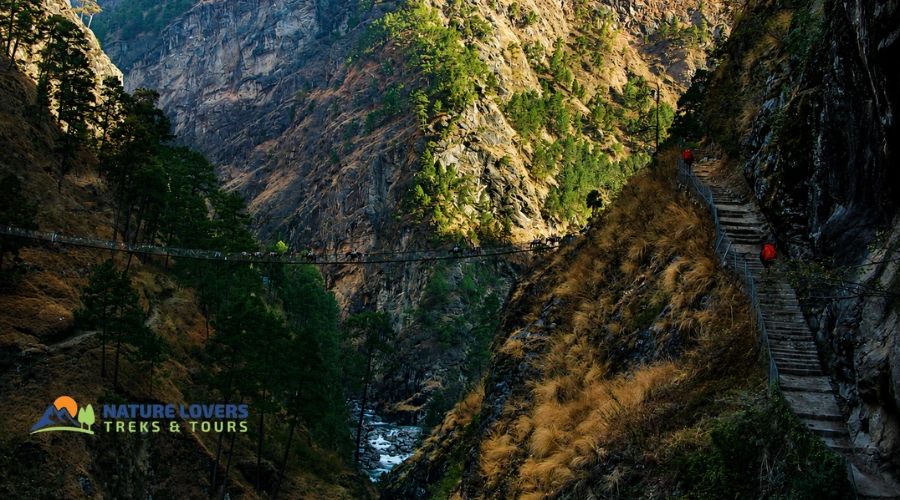
The isolated land, by the government of Nepal, only allows a certain number of trekkers to walk on the unexplored land of the Himalayan region. Spending two weeks in the remote land with low medical facilities and harsh weather while fighting the altitude and many other factors makes it one of the hardest trekking destinations in Nepal.
Here are a few reasons for considering the Manaslu trek challenging:
- Trekkers must fulfill the criteria to apply for the restricted area permit, and they are only allowed to travel with a licensed guide.
- So trekking is illegal, and limited resources add more difficulty.
- Trekkers have to spend 5 or more days above 4,000 feet, which eats you mentally and physically.
- No roads, no vehicles, and very few rescue options compared to the Everest or Annapurna regions.
- The 14 to 16-day trek demands both a physically and mentally strong body compared to other trekking destinations.
- The tea houses are not comfortable and very basic compared to those in the Annapurna region.
Important Note: As of the spring of 2026, governments have opened the trails for solo trekkers, but you will still need to hire an experienced guide and book through a government-registered travel company for your safety, and without a licensed guide, you will not be allowed to enter the restricted area of the Manaslu Circuit Trek.
Comparing the Manaslu Trek with the Everest and Annapurna Treks
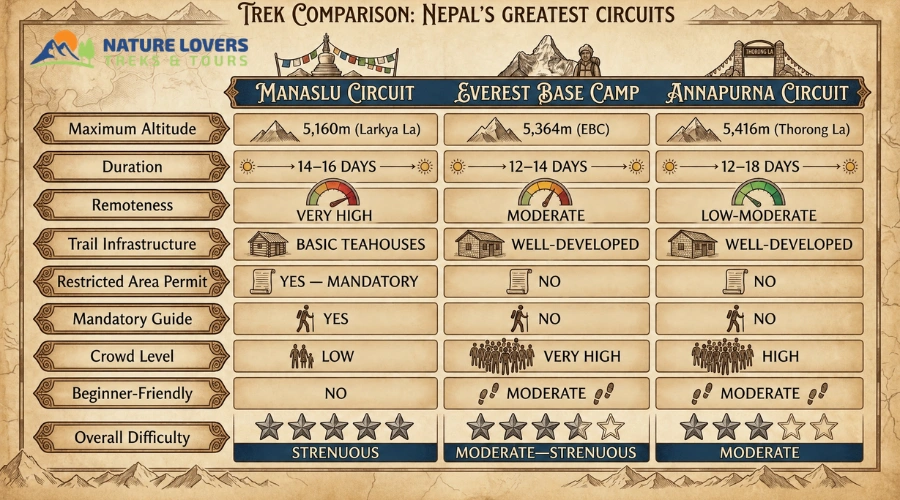
As we have compared this journey with the Everest Base Camp and Annapurna Circuit, we can clearly see that the Manaslu Circuit Trek is not considered for beginners. The isolated trails with basic infrastructure and low rescue options, with no proper medical facilities, make it one of the most difficult journeys in Nepal's Himalayan region. The Annapurna and Everest regions have well-maintained trails and tea houses with comfortable facilities, making it easier for trekkers to sustain for weeks. Even some tea houses in the Annapurna region offer facilities like Wi-Fi, which is very uncommon in high-altitude places.
Major Factors That Make the Manaslu Trek Difficult
The Manaslu Circuit Trek is one of the most difficult trekking destinations that requires proper preparation and is more physically demanding to complete the entire journey. Trekkers must understand the major factors that make this Manaslu trek difficult. Here are 5 main reasons for making this trek one of the most difficult journeys.
Risk of Altitude Sickness
As the altitude increases, the atmospheric pressure decreases, and lower air pressure does not help to supply the proper amount of oxygen to your lungs and heart, increasing the risk of altitude sickness. Acute mountain sickness, also known as AMS, symptoms can be noticed when you cross 2,000 m altitude, and on the Manaslu Circuit, the altitude keeps increasing, making trekkers stay at 4,000 meters altitude for multiple days.
Headache, dizziness, poor sleep, breathlessness, fatigue, and nausea are the major symptoms of AMS that every trekker will notice as they keep climbing to higher altitudes. But remember, if it's not handled properly, it can turn into High Altitude Cerebral Edema (HACE) and High Altitude Pulmonary Edema (HAPE), serious conditions that can cost you your life.
Long Walking Hours on Remote Trails
Trekkers have to walk for 5 to 9 hours, depending on the day and their planned Manslu Circuit trek itinerary. Crossing Larkya La Pass from Dharamsala is one of the most physically demanding days and can take around 8 to 11 hours depending on weather conditions. The trek starts at 3 to 4 am in the morning and takes the entire day of climbing and descending to reach Bimthang.
Steep Ascents and Descents
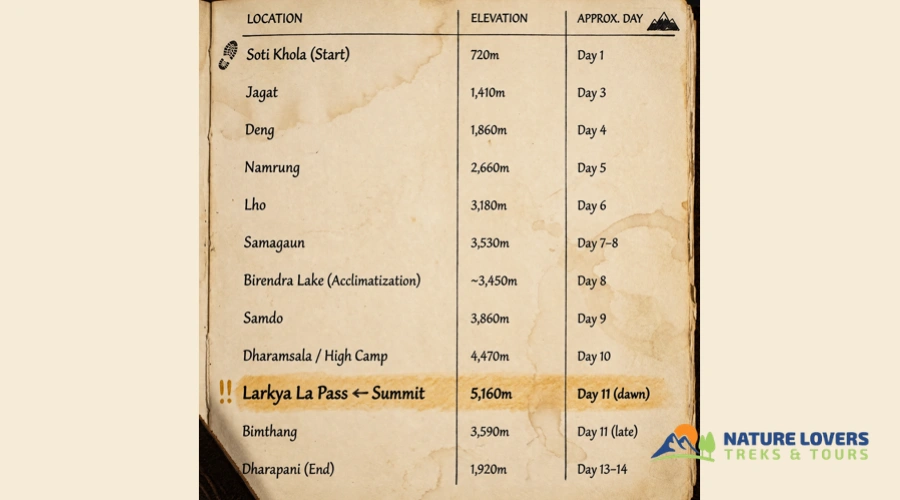
The Soti Khola, located at 720 m altitude, is the starting point of your journey, and after 10 to 11 days of walking, you will reach Dharamsala, located at 4,470 m above sea level. Then an early morning climb to Larkya La Pass, reaching an altitude of 5,160 m. Trekkers will descend back to Bimthang, losing around 1,600 m in altitude in a single day. The trails filled with steep ascents and descents at higher altitudes can cause major strain in your legs and back, making this journey more physically demanding.
Important Note: Trekkers are highly recommended to carry trekking poles, as they are one of the most important pieces of equipment for steep ascents and descents.
Limited Infrastructure and Basic Teahouses
Compared to other famous trekking locations, the Manaslu Circuit Trek is a less explored land because of the restriction rules made by the government to protect its origin. Not many trekkers attempt this journey because of its difficulty and restrictions. So there is only limited infrastructure and a basic teahouse along the route. The villages have limited resources, nothing fancy, and trekkers have to survive for 14 to 16 days in that environment.
Weather and Seasonal Challenges on the Manaslu Trek
The unstable weather and sudden changes in temperature make the journey more difficult. If you are traveling in spring and autumn, the temperature can be around 15 to 20°C. But at night the temperature will drop significantly, reaching 0 to -25°C. The highest point of the Manaslu Circuit Trek, Larkya La Pass, is covered with snow, and the temperature can reach up to -30°C, trapping many trekking groups in Dharamsala due to snowstorms and bad weather conditions.
Altitude Difficulty on the Manaslu Trek
The continuous climbing creates the sudden changes in altitude, which is the biggest obstacle to your Manaslu Trek journey. The 14- to 16-day adventure, reaching the highest point, Larkya La Pass, located at 5,160 meters above sea level, can be difficult if you do not have proper knowledge on tackling the changes of higher altitudes.
Highest Point of the Manaslu Circuit Trek
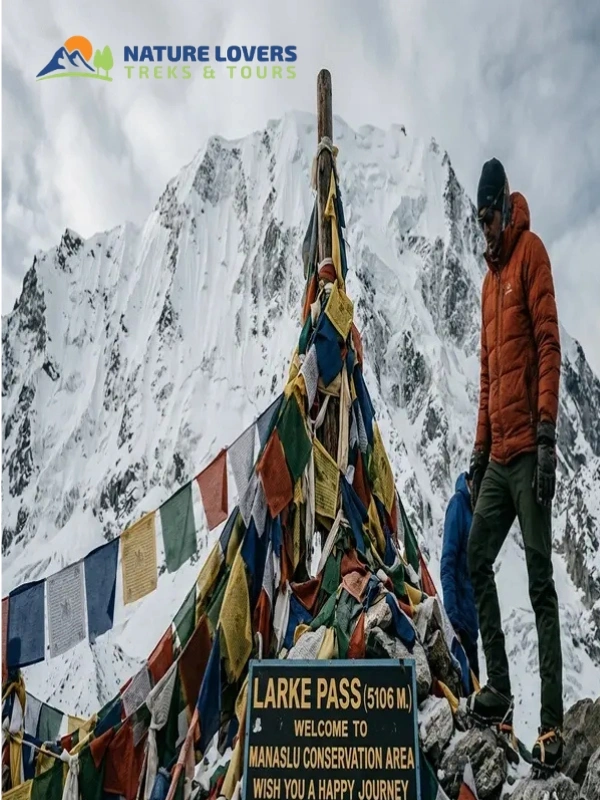
Larkya La Pass, located at an altitude of 5,160 m, is also the highest point of the Manaslu Circuit Trek. Here is the normal table that shows the elevation of the standard trekking route of your journey.
Crossing the Larkya La Pass
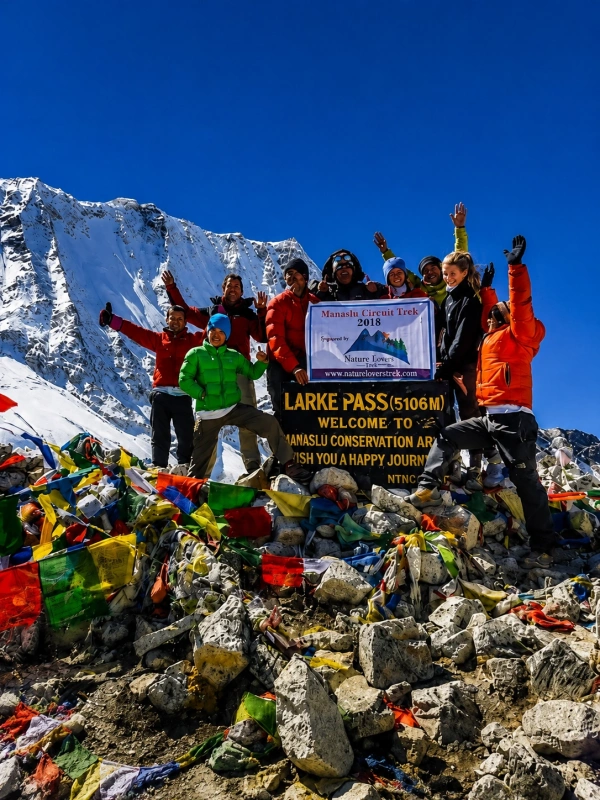
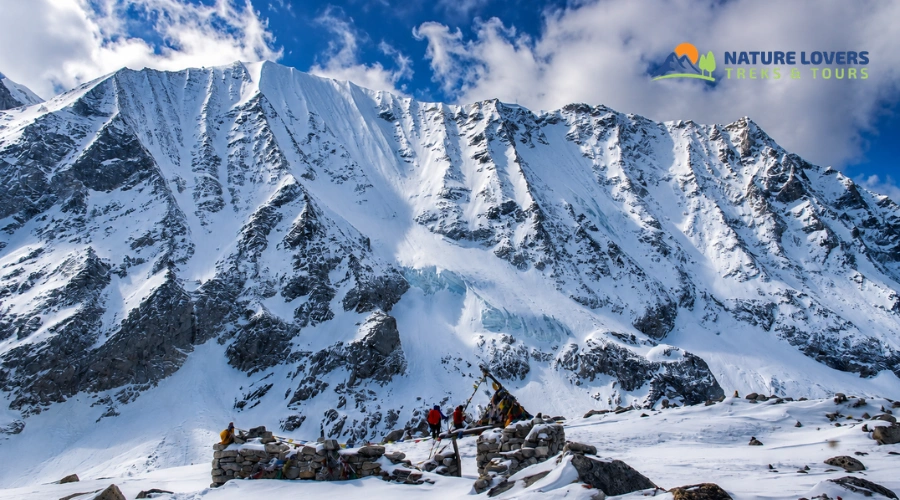
Crossing Larkya La Pass is one of the most important parts of your Manaslu Circuit journey that requires both physical and mental preparation. Larkya La is situated at an altitude of 5,160 m, the soul of Nepal's mountain trekking destination of Mount Manaslu, the world's eighth-tallest mountain. Trekkers will start the climb early in the morning from Dharamsala, located at 4,470 meters above sea level. Depending on weather conditions, the trek will start around 3 am to 4 am, and sometimes can even be extended up to 5 am.
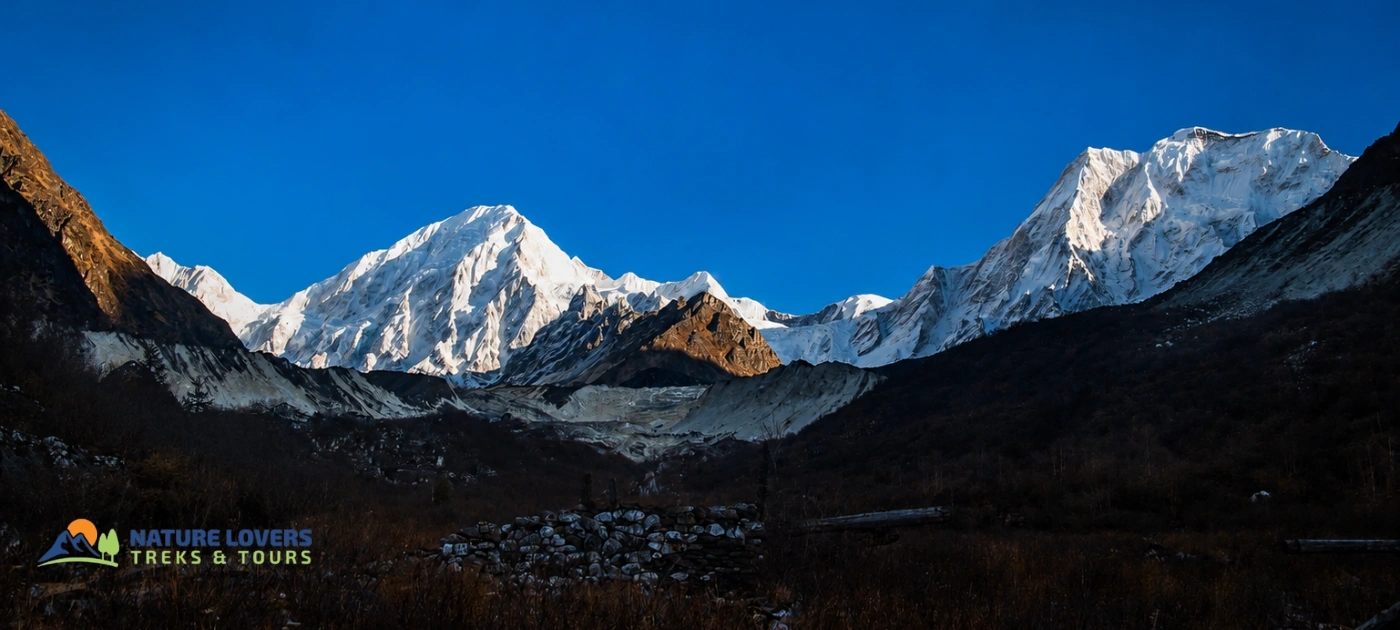
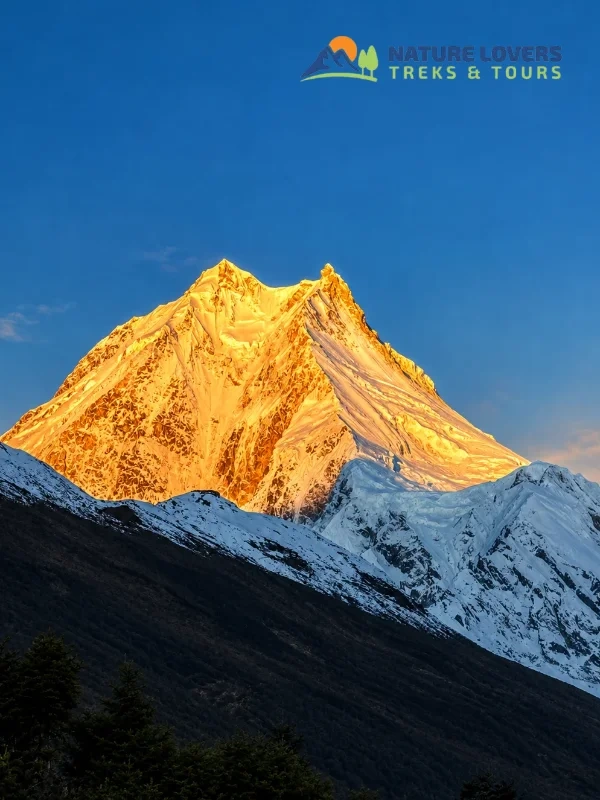
You will need proper trekking gear and equipment because the trails are steep and rocky, often covered with a thick layer of snow. After conquering the cold weather, high altitude, and difficult trail covered with snow, trekkers will reach the summit. After 8 to 11 hours of climbing, trekkers will be rewarded with the 360-degree view of breathtaking mountains like Manaslu (8,163 m), Himlung Himal (7,126 m), Cheo Himal (6,820 m), Kang Guru (6,981 m), Annapurna II (7,937 m), and Bimthang (3,590 m).
Symptoms of Acute Mountain Sickness (AMS)
As the altitude increases, you will notice different changes in how your body functions. As you will spend multiple days above 4,000 m altitude, climbing and descending the trails covered with a thick layer of snow. Even the experienced and professional trekkers cannot avoid the symptoms of acute mountain sickness, also known as AMS. So we will talk about the common mild to moderate and severe symptoms of AMS that can be dangerous on the Manaslu trek.
Mild Symptoms of AMS
- Mild headache
- Dizziness
- Fatigue
- Short breathing
- Difficulty sleeping
- Loss of appetite
- Mild nausea
- Increased Heartbeat
- Slight swelling of hands, feet, or face
Moderate Symptoms of AMS
- Worsening headache
- Nausea or vomiting
- Weakness and exhaustion
- Difficulty waking steadily
- Poor Coordination
- Breathlessness even while resting
- Chest tightness
- Reduce appetite and dehydration
- Insomnia
Severe Symptoms of AMS
The severe symptoms of AMS can be life-threatening and can lead to HACE or HAPE, requiring immediate medical treatment because a small delay can cost them their lives.
Severe AMS/HACE Symptoms
- Severe, throbbing headache
- Confusion, disorientation, and hallucination
- Ataxia
- Extreme fatigue
- Unable to move properly
- Loss of consciousness
- Difficulty speaking and thinking clearly
Severe AMS/HAPE Symptoms
- Severe shortness of breath at rest
- Dry Cough
- Pink or frothy sputum, coughing
- Blue lips, fingernails, or toes
- Rapid breathing and heartbeat
- Sound of cracking in the lungs
- Chest congestion or pressure
If trekkers are facing any of these symptoms, they must tell their travel guide or medical team and seek immediate treatment and emergency descent depending on the condition. The small carelessness or delay can permanently damage their body parts and organs, also threatening their lives.
How to acclimatize properly during the Manaslu Trek
Normally, the classic Manaslu Circuit trekitinerary is around 14 to 16 days and can be shorter depending on the route you take. But you will get two major acclimatization opportunities to rest properly and help your body gain its peak performance again. Remember, if you are a beginner, do not skip these rest days to save time or shorten your itinerary, because it will increase the chance of suffering from AMS when crossing Larkya La Pass.
Samagaun Acclimatization Day (3,530 m)
Around day 7 to 8, you will reach Samagaun. There you can make two choices depending on your condition. You can spend the entire day properly resting or spend your time joining the short hike to Birendra Lake, Manaslu Base Camp or the viewpoints above the village. Make sure to make the decision depending on your physical and mental status so you can preserve your energy for the final push from Dharamsala to Larkya La Pass.
Samdo to Dharamsala
You can spend another rest day at Dharamsala after the short walk from Samdo, located at 3,860 m above sea level, and reach Dharamsala, located at an altitude of 4,470 m. The most intense day of making decisions was crossing Larkya La Pass, the highest point of the Manaslu Circuit trek.
Tips and best practices for Manaslu acclimatization
- On Samagaun rest day, hike to 3,800 to 4,000 m and return back to 3,530 m for sleep. It is known as the “Climb High and Sleep Low” method to avoid the risk of altitude sickness.
- Drink 3 to 4 liters of water every day to keep your body hydrated properly.
- Avoid smoking and any alcohol products that affect the changes in your body.
- Only gain around 500 m altitude every day.
- Never rush to complete your journey, and make a proper, planned itinerary according to your comfort.
How to make the Manaslu Trek Easier
As it is one of the hardest trekking destinations, it demands more physical and mental effort to complete the entire journey. Can we make the Manaslu Trek easier? It is one of the most asked questions by beginner and intermediate trekkers. Yes, with the proper plan and good decisions, you can make the entire trek easy. Here are a few tips that will help you to make your Manaslu Circuit expedition easier.
Choose a proper itinerary
Normally, the Manaslu Circuit trek takes around 14 to 16 days to complete the entire expedition, depending on your package. In 14 days, you will make two rest days that will grant you time to mentally prepare yourself. If you are a beginner, you can take 16 days, which will have an extra rest day at Samagaun, and you can reach Dharamsala more easily and enjoy this short approach.
The Manaslu Circuit trek cost offers the best adventurous journey to explore the isolated land of the Nepal Himalayan region. So many agencies offer short itineraries, like 10 to 12 days, which reduces the rest day and increases the risk of acute mountain sickness (AMS). So it is very important to choose a proper itinerary depending on your experience and physical abilities.
Hire Experienced Guides and Porters
Due to safety concerns, governments have made rules that all solo, pair, and group trekkers must hire a licensed travel guide. So make sure your guide is professional and has many years of climbing experience. A professional guide will handle all the unpredictable situations calmly and help you navigate the correct routes while keeping everyone safe from any danger. Porters will carry around 10 to 15 kg of your load so you can explore freely with less weight on your shoulders.
Pack Lightweight but Essential Gear
It is important to pack all the important equipment and gear, avoiding overpacking. But make sure to carry all the warm clothes that can handle extreme temperatures. Since you can hire porters to carry around 10 to 15 kg of your weight, it's best to carry the luggage yourself, filled with important essential items.
Here is the list of non-negotiable gear that all trekkers must carry.
- A down jacket rated to -10°C for the Dharamsala and Larkya La crossings
- Telescopic trekking poles
- Waterproof jacket and pants
- Sleeping bag rated to -15°C to -20°C
- Microspikes, waterproof shoes for areas covered with snow
- Headlamp and spare batteries
- Water purification tablet, first aid kit, and other personal essentials.
Stay Hydrated and Maintain Proper Nutrition
The continued climbing, descending, and hours of walking cause fatigue faster as the altitude increases. So trekkers must drink plenty of water and eat food with nutrients that are easy to digest to keep themselves hydrated and energetic, fighting the symptoms of AMS. Altitude sickness at the Larkya La crossing is the most common part of this adventure. So trekkers must follow their guide's instructions properly and drink 3 to 4 liters of water every day for their entire journey. Carry nutrient bars, nuts, dried fruit, chocolate, and other high-protein items for long walking days.
Conclusion
The Manalsu trek demands greater physical and mental strength compared to other popular trekking destinations. The 14 to 16 days continue walking to reach the highest point, Larkya La Pass, located at 5,160 m above sea level. So trekkers must have experience of surviving the high-altitude places and a professional travel guide to explore the restricted area of Mount Manaslu. But with the proper months of training and a well-disciplined diet, even beginners can complete the Manaslu Circuit trek and enjoy the opportunity to walk the least explored land that offers the adventurous journey with breathtaking views of majestic mountains.
FAQs for Manalu Trek Difficulty
What is the difficulty rating of the Manaslu trek?
The Manaslu trek is rated on the fourth level of a five-tier scale from easy to extreme. The trek demands a strong level of physical and mental fitness to complete extreme challenges for a 14- to 16-day itinerary.
How tough is the Manalu Circuit trek compared to the Annapurna Base Camp trek?
The Manaslu Circuit trek is nearly 1,000 meters higher than the Annapurna Base Camp trek and takes 14 to 16 days of continuous climbing and descending compared to the 7 to 12-day trek.
What is the hardest part of the Manaslu trek?
Crossing the Larkya La Pass, located at 5,160 m, is the hardest part of the Manaslu trek.
How fit do you need to be for the Manaslu trek?
Trekkers must have strong physical and mental strength to continue climbing and descending for 6 to 8 hours as the altitude keeps on increasing for 14 to 16 days.
Can beginners without any experience do the Manaslu Circuit Trek?
No, beginners without any trekking experience cannot complete the Manaslu Circuit Trek because the trails demand more physical and mental strength compared to other trekking destinations.