Why Choose Lobuche Peak Climbing?
Most itineraries combine the Everest Base Camp and Lobuche East summit. Here’s what the combination buys you compared to a standard EBC trek.
Two trips in one
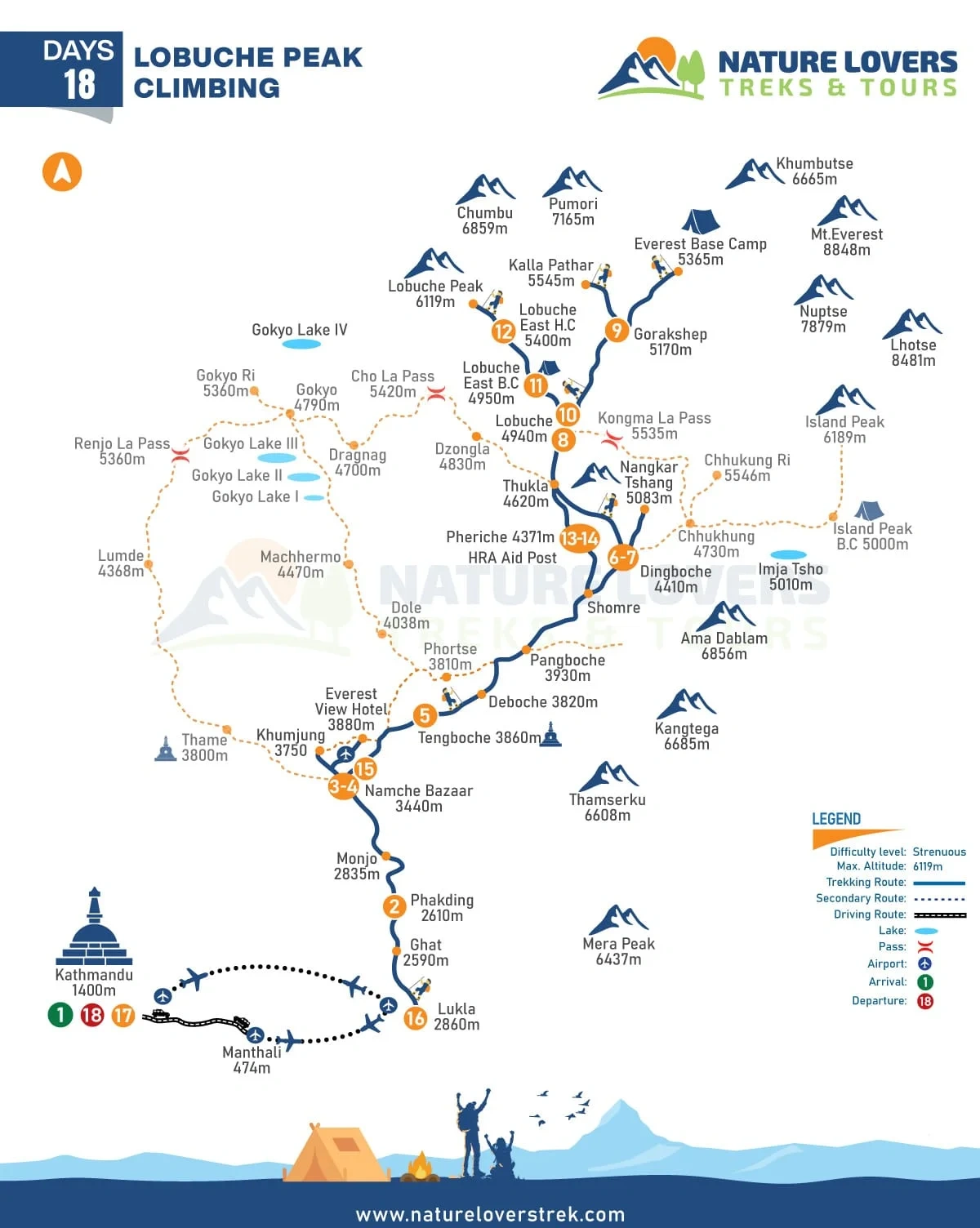
The Lobuche Peak Climbing 18-day itinerary combines Everest Base Camp and Kala Patthar with a mountaineering adventure on a single flight and permits.
Acclimatization Days
The 18-day itinerary includes two acclimatization (rest) days at Namche Bazaar and Dingboche before the Kala Patthar ascent. Acclimatization days are important to prevent altitude sickness. Trekkers join a short hike to Hotel Everest View (3,440 m) and Nangkartshang Peak (5,083 m).
A real introduction to mountain climbing
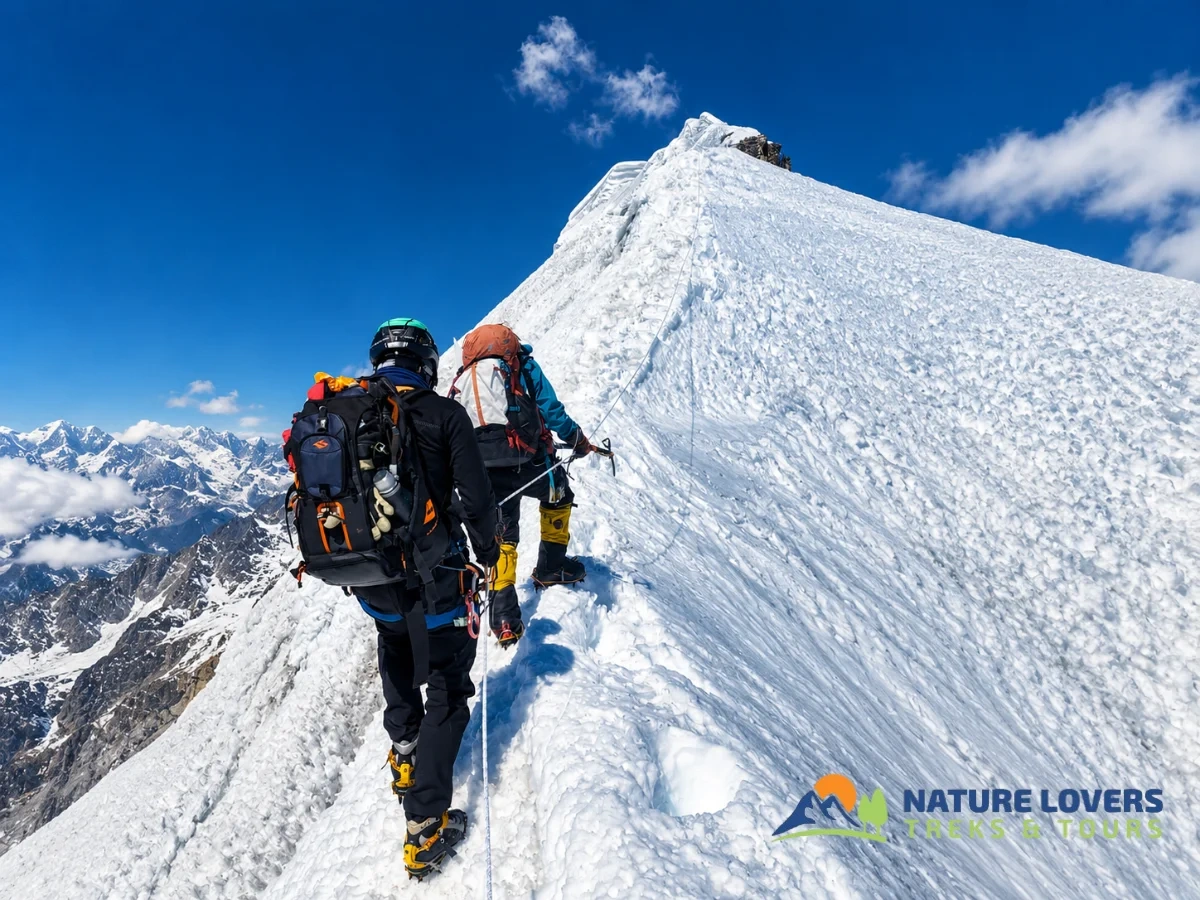
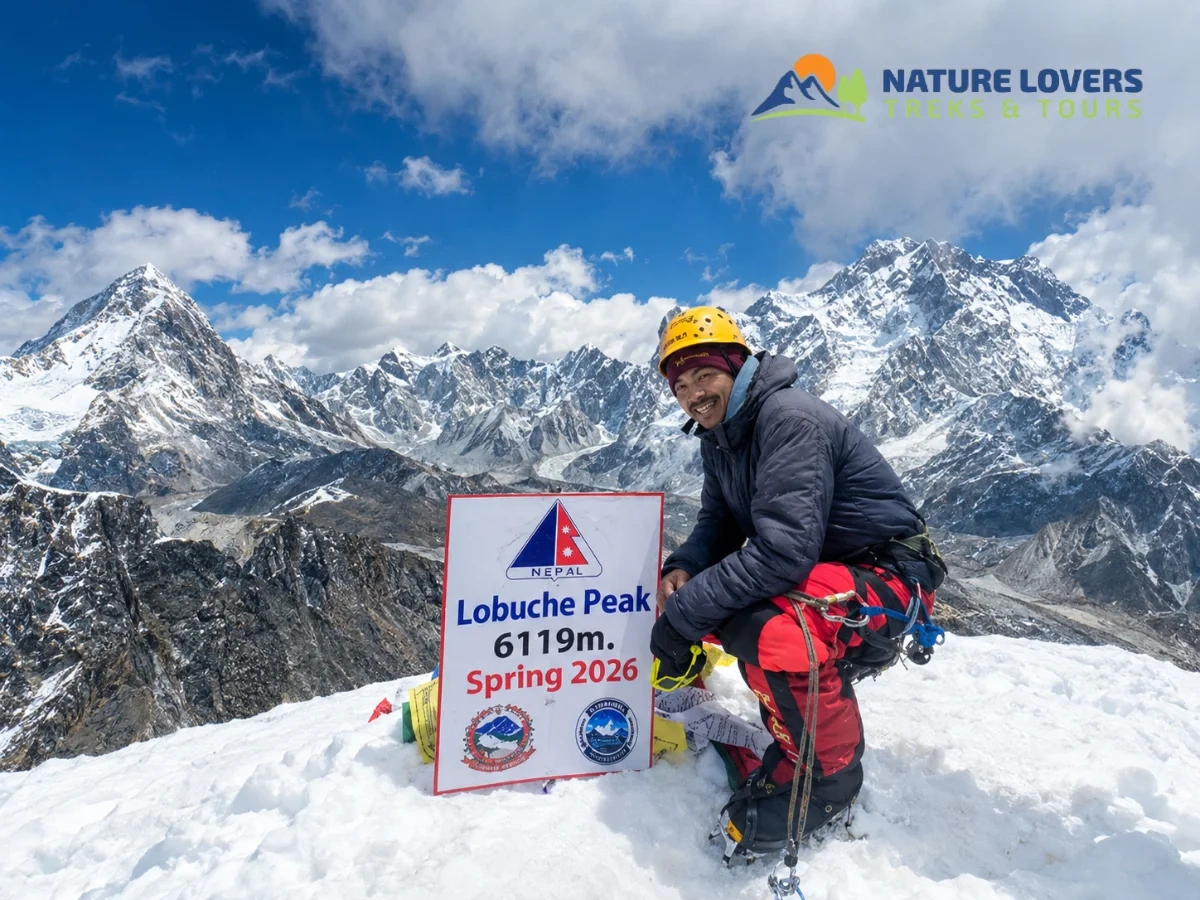
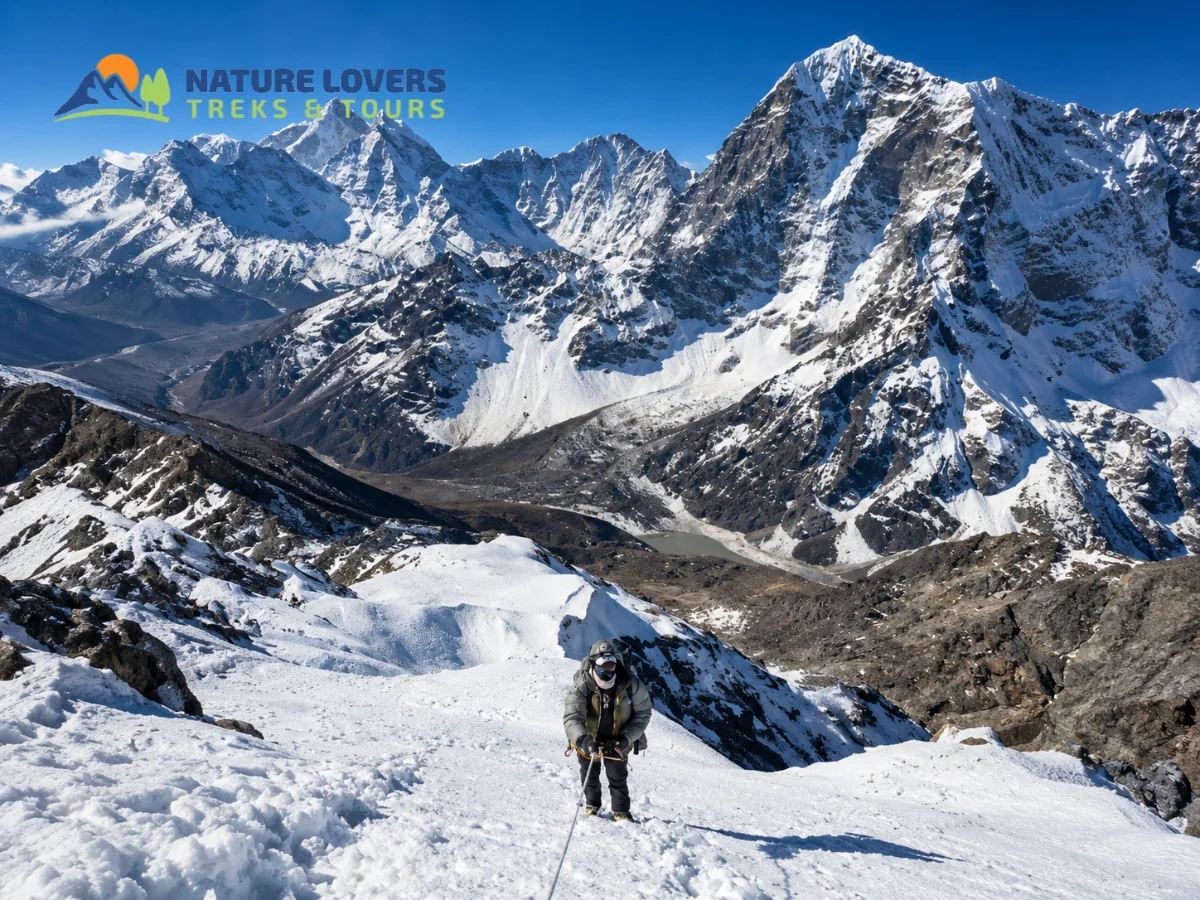
Climbers will summit Lobuche East (6,119 m) with crampons, ice axes, fixed ropes, and rope team movement. The snow-covered trails are at high altitude, making the summit day more technical and physically demanding.
A defensible reason to say “I climbed a Himalayan peak"
Lobuche East is a recognized summit in Nepal above 6,000 m above sea level, not a hike to a high viewpoint. A steep climb on trails covered with snow requires technical mountaineering skills and physical endurance.
Key Takeaway: The 18-day Lobuche Peak Climbing itinerary combines EBC, Kala Patthar, and Lobuche East rather than only climbing the summit.
How Difficult Is Lobuche Peak Climbing?
The Lobuche Peak climbing difficulty is graded as moderate to strenuous and PD+ (Peu Difficile) rated on the alpine scale. The trails of Lobuche East are more physically and technically demanding than theEverest Base Camp Trek andIsland Peak Climbing. Climbing 6,119 m above sea level with the help of a fixed rope, crampons, and ice axes requires technical mountaineering skills.
Trekking Difficulty vs Climbing Difficulty
Two different challenges are combined in a single journey. The first 10 days of the itinerary follow the classic Everest Base Camp Trek route. Climbers will cross Lukla, Namche Bazaar, Tengboche, Dingboche, Lobuche, Gorak Shep, Everest Base Camp, and Kala Patthar, which is physically demanding but does not require technical mountaineering skills. The real climbing preparation starts on day 11. Climbers will ascend to Lobuche East Base Camp and High Camp before the long summit to Lobuche East (6,119 m).
Key Takeaway: Climbers have to use fixed ropes, crampons, and ice axes for the Lobuche East Summit.
High Altitude Challenges
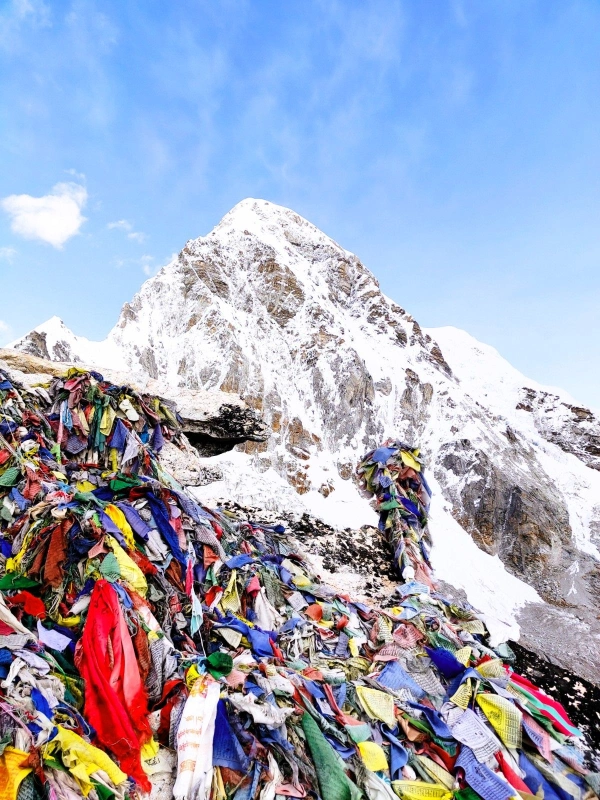
Climbers will spend multiple days at 4,000 m, and the itinerary takes them to 6,119 m above sea level. Everest Base Camp at 3,364 m, Kala Patthar at 5,545 m (the highest point of the EBC Trek), and Lobuche East Summit at 6,119 m above sea level. As you cross Dingboche, climbers will notice reduced oxygen levels, slower recovery, disrupted sleep, and breathlessness, which can be life-threatening if not taken seriously.
Key Takeaway: The Lobuche East is located 6,119 m above sea level.
Steep Snow and Ice
The Lobuche East summit trails are covered in snow, and icy slopes require technical mountaineering skills. Climbers need proper gear to reach the summit located at 6,119 m above sea level. Fixed ropes, crampons, and ice axes are important equipment for steep snow and ice climbing.
Key Takeaway: The summit day takes around 10 to 12 hours of climbing on steep snowy trails.
Summit Day Duration
The summit day takes around 10 to 12 hours from High Camp, depending on the weather, route, trails, and snow conditions. Depending on the climber or rope team's pace, the summit push can take up to 14 hours. The harsh weather, cold temperatures, high altitude, and steep climbing on snowy trails require technical mountaineering skills.
Key Takeaway: Climbers have to walk around 7 to 8 hours daily on rocky trails of the Khumbu region.
Physical Fitness Required
Climbers must have high physical and altitude endurance to summit Lobuche East. The trails are both physically and technically demanding. Climbers have to walk 7 to 8 hours on rocky trails of the Khumbu region and 10 to 12 hours of steep climbing above 6,000 m altitude. The Lobuche Peak climb is not beginner-friendly and requires previous high-altitude trekking or mountaineering experience.
Key Takeaway: Climbers must prepare their gear and equipment before starting their Lobuche Peak climb.
Lobuche Peak Climbing Permit and Cost
Climbers require a Lobuche East Climbing Permit, a Sagarmatha National Park Permit, and a Khumbu Pasang Lhamu Rural Municipality Permit for Lobuche Peak Climbing.
Lobuche East NMA Climbing Permit
The Lobuche East NMA Climbing Permit is the most important permit for the East Summit push. The Nepal Mountaineering Association (NMA) issues all the permits for the summit push. The Lobuche East NMA Climbing Permit cost depends on the season.
- Lobuche East NMA climbing permit in spring costs USD 350
- Lobuche East NMA climbing permit in autumn costs USD 175
- Lobuche East NMA climbing permit in winter/summer costs USD 175
Sagarmatha National Park Permit
Climbers will require a Sagarmatha National Park Entry Permit to explore the rocky trails of the Khumbu region. The permit costs around NPR 3,000 for foreign citizens, NPR 1,500 for SAARC citizens, and NPR 100 for Nepali citizens. The funds raised from the permit are used for trail management and other infrastructure.
Khumbu Pasang Lhamu Rural Municipality Permit
The Khumbu Pasang Lhamu Rural Municipality Permit is a local area permit forEverest region trekking. The local area permit costs around NPR 3,000 per person for all foreign, SAARC, and Nepali citizens. Climbers have to apply directly for this permit in Lukla or Monjo. The funds raised by the permit are later used for the development of the Khumbu region.
Who Arranges the Permits?
Your operator arranges all of the above as standard practice. NMA won't issue a Lobuche East permit without a licensed guide attached to the application, so this isn't really optional for commercial climbers in the way choosing an independent trekking guide might be.
Do Permit Fees Change by Season?
Yes, the permit fees for Lobuche East NMA climbing change by season. The climbing permit fees in autumn, winter, and summer cost USD 175. The permit cost in spring is USD 350 because of higher demand and more stable climbing conditions.
Best Time for Lobuche Peak Climbing
Spring (March-May) and autumn (September to November) are the best times for Lobuche Peak climbing. Both seasons offer more stable high-altitude weather and safer fixed-rope conditions than winter or the monsoon. Which one suits you better usually depends on trail traffic, temperature, and whether you'd rather see rhododendrons or crisp post-monsoon peaks.
Lobuche Peak Climbing in Spring
Spring is peak season in the Khumbu because of increased daylight, higher temperatures, and blooming rhododendron forests. It is also a high-cost season for an NMA trekking permit, which costs $350 compared to $175 in other seasons. The trails, mountain lodges, and teahouses are much busier, especially in April and May. Lukla flights are often shifted to Manthali/Ramechhap airport instead of Kathmandu, requiring an additional road journey.
Lobuche Peak Climbing in Autumn
After the monsoon season comes autumn, bringing the clearest skies of the year. Climbers can enjoy the best views of Everest, perfect for photography. October is the peak month for Lobuche Peak climbing, offering stable weather, temperatures, clear skies, and dry trails. But temperatures are colder at higher altitudes than in spring. Famous festivals in Nepal, such as Dashain and Tihar, are also celebrated in autumn.
Lobuche Peak Climbing in Winter and Monsoon
Winter (December-February) is climbable but has cold temperatures, unstable weather, and trails covered in a thick layer of snow, making summit pushes dangerous. Winter is not for beginner or intermediate climbers. The Monsoon (June to August) brings unpredictable weather, heavy snowfall, and rainfall at lower altitudes. The Lukla flights are closed, and the forests are filled with blood-sucking leeches. The monsoon is the worst season for climbing and other high-altitude adventures in Nepal.
Key Takeaway: Spring covers the forest with different shades of rhododendron (red, pink, orange, and purple), but autumn offers the clearest skies and famous festivals in Nepal, such as Dashain and Tihar.
Final thoughts on 18-day Lobuche Peak Climbing
The 18-day itinerary combines trekking and climbing for high-altitude adventure seekers. Lobuche East summit is at 6,119 m above sea level, perfect for beginner climbers. Climbers will ascend to Kala Patthar (5,545 m), the highest point of the Everest Base Camp Trek, and then summit Lobuche East from the high camp, then descend back to Pheriche. Beginner climbers can complete the summit with a proper itinerary and professional climbing guides. So book your Lobuche Peak climb with Nature Lovers Treks and Tours, and we will handle your logistics so you can focus on training and the summit push.