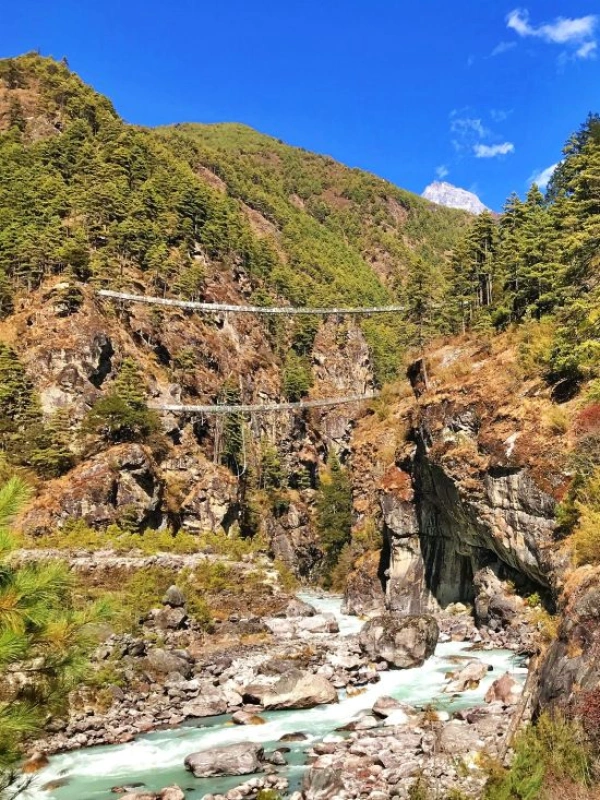
Nepal 16-day Everest Three Passes Trek Overview
Are you looking to avoid the crowded main trails of Everest Base Camp? Find yourself distant from the busy teahouses and into the silence of the high-altitude pass on the 16-day Everest Three Passes Trek. More than just a hike, this is a wholesome trek that loops through the most rugged corners of the Khumbu region.
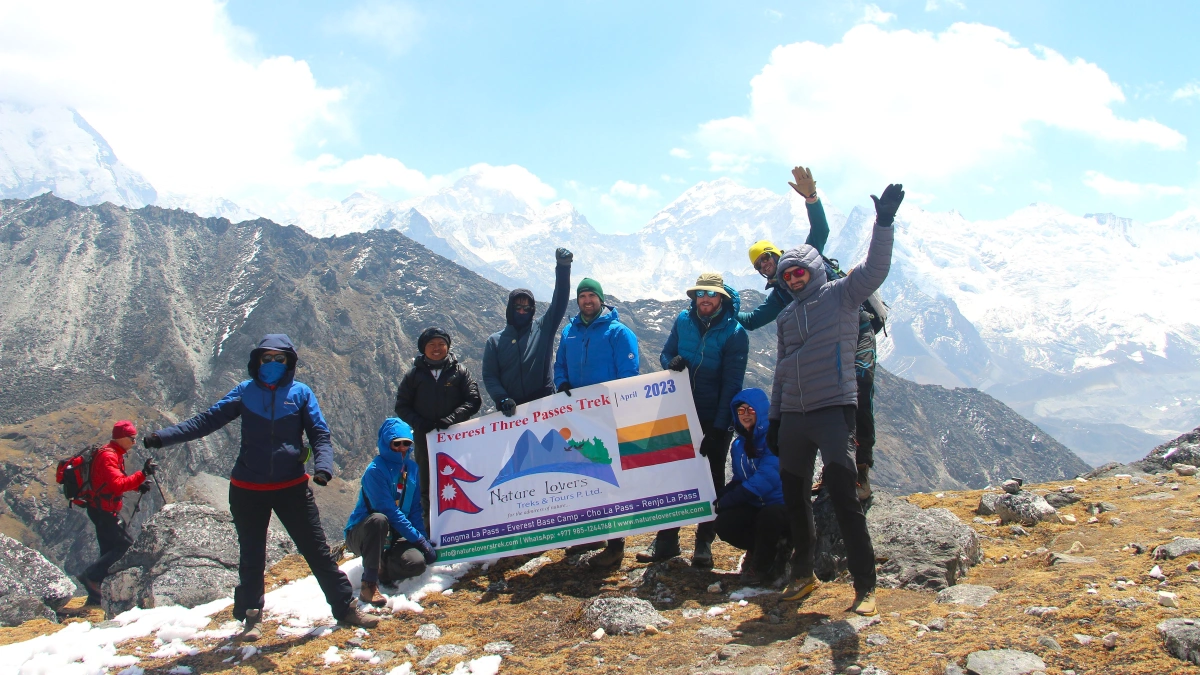
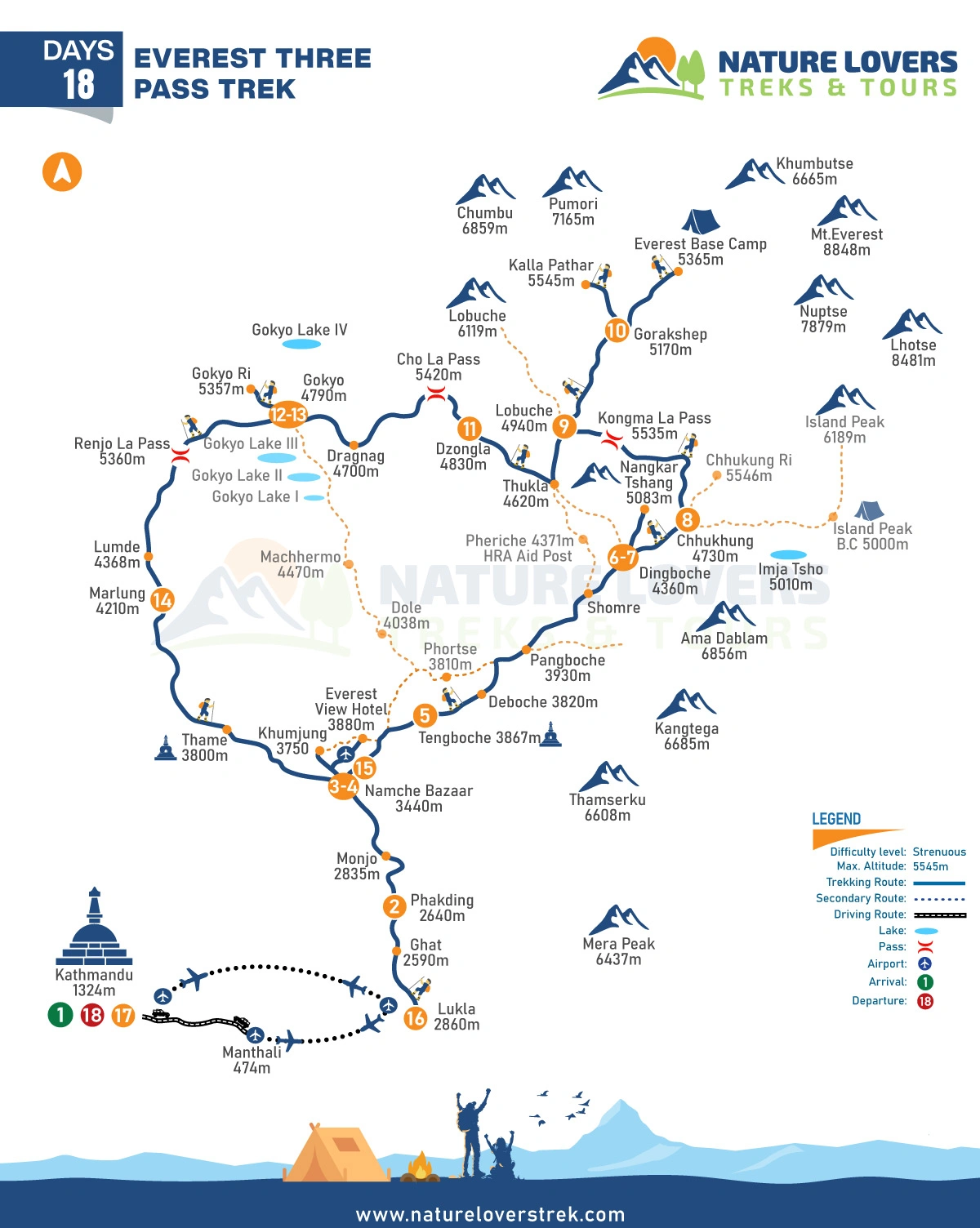
Of course, the highlights are the big three: Kongma La (5,535 meters), Cho La (5,420 meters), and the Renjo La (5,360 meters). Like any trekker, you will cherish the moments between the passes and treasure the adventure as you take on the strenuous journey across the rugged high passes. What sticks with you is the sounds of the yak bells in the Thame Valley, the scented juniper incense at Tengboche monastery, and the first bowl of garlic soup, a local secret to fight the altitude, after a long day’s trek.
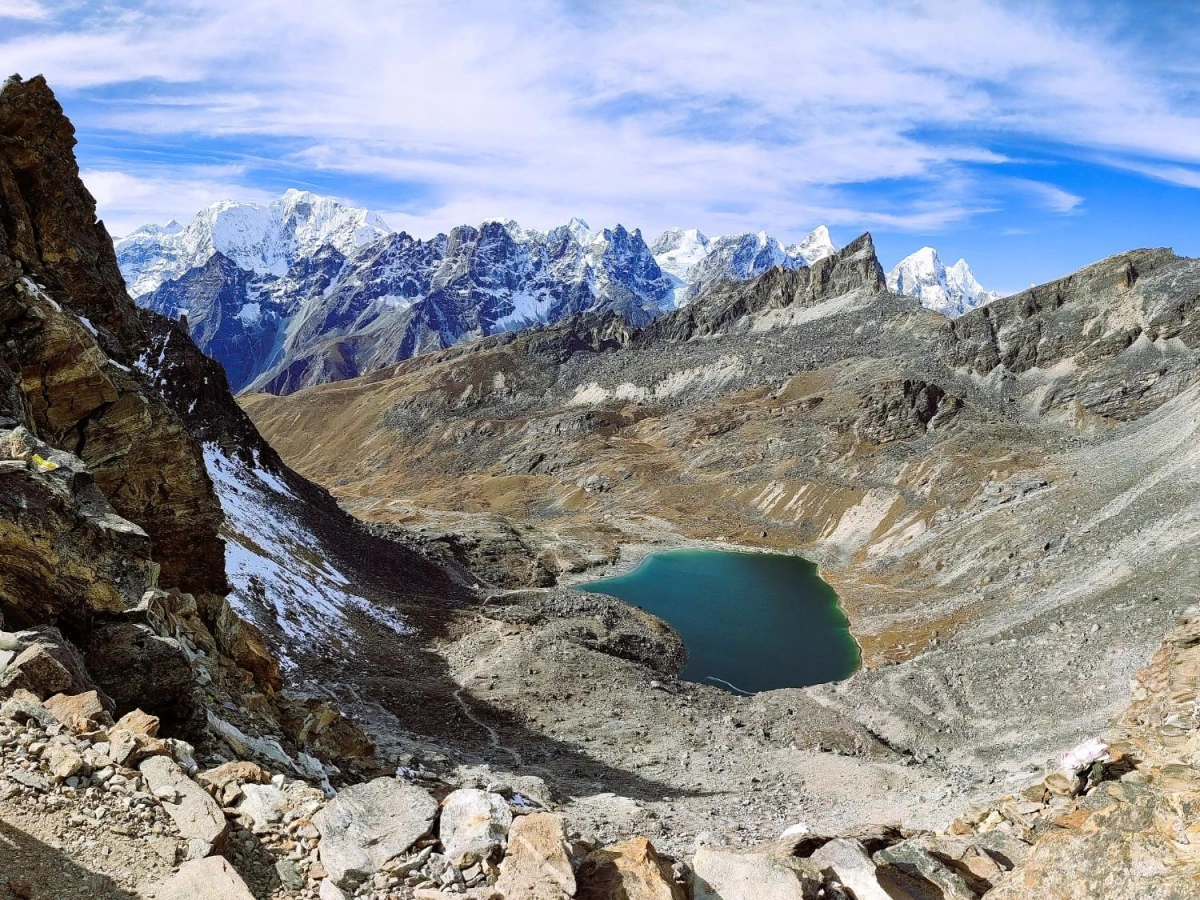
On this trek, you are not just ticking a box at Everest Base Camp. You will cross the Khumbu Glacier and witness the sea of ice, experience the sunrise from Kala Patthar, and relish the prized view from the top of Renjo La. The sight of the emerald-green Gokyo Lakes, with Everest, Lhotse, and Makalu lined up like white giants, is the ultimate reason to explore the off-beat destination on this 16-day Everest Three Passes Trek.
2026/2027 slots are limited. Book yours today!
Why Go on the 16-day Everest Three High Passes Trek in Nepal?
If you’re looking to take on the Everest Three Passes Trek, you probably already know the “big one.” While the standard EBC trek is a great adventure, the Three Passes is a proper journey into the high altitudes of the mountain. These 16 days introduce you to the thinner air, cause heavy breathing, but at the same time reward you with awe-inspiring views of the mighty Himalayan landscapes.
Here is what makes the Everest circuit different from anything else in the Himalayas.
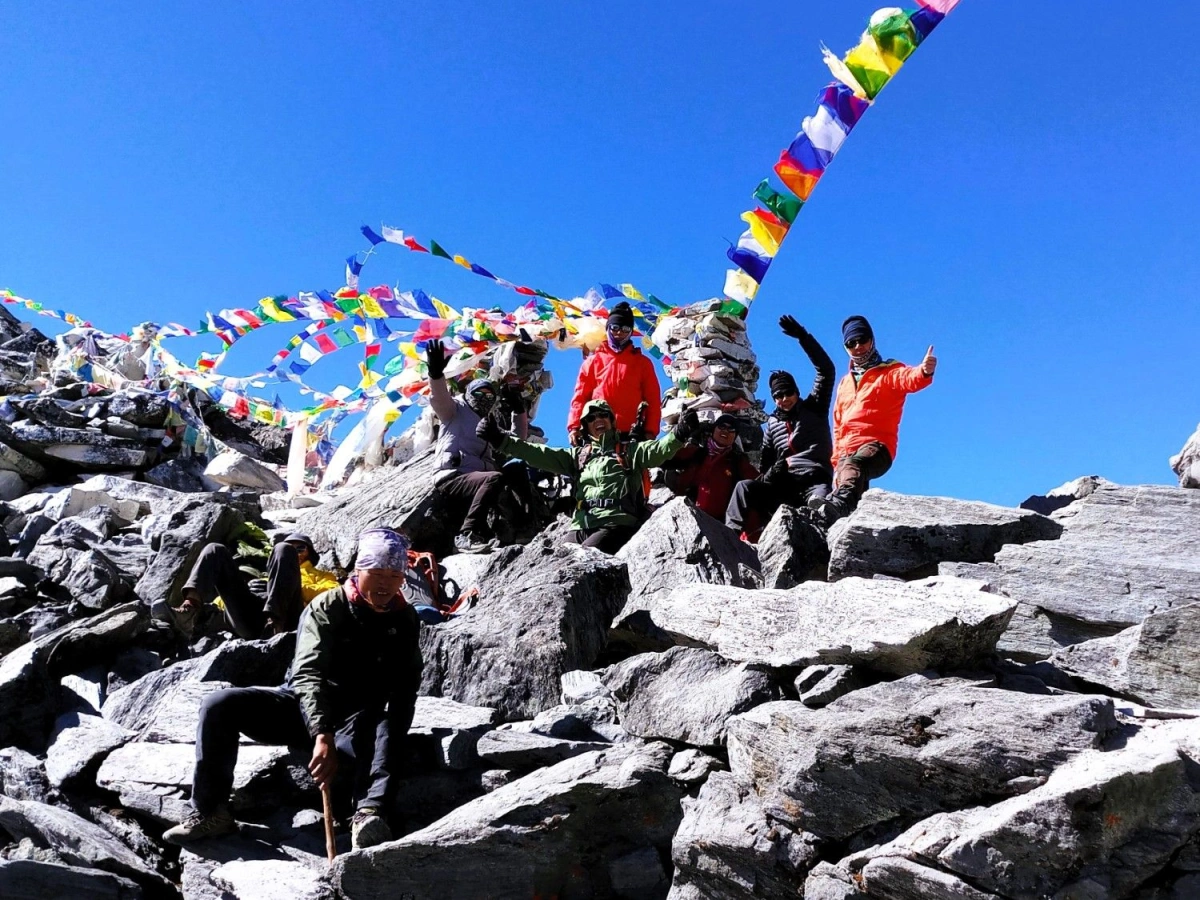
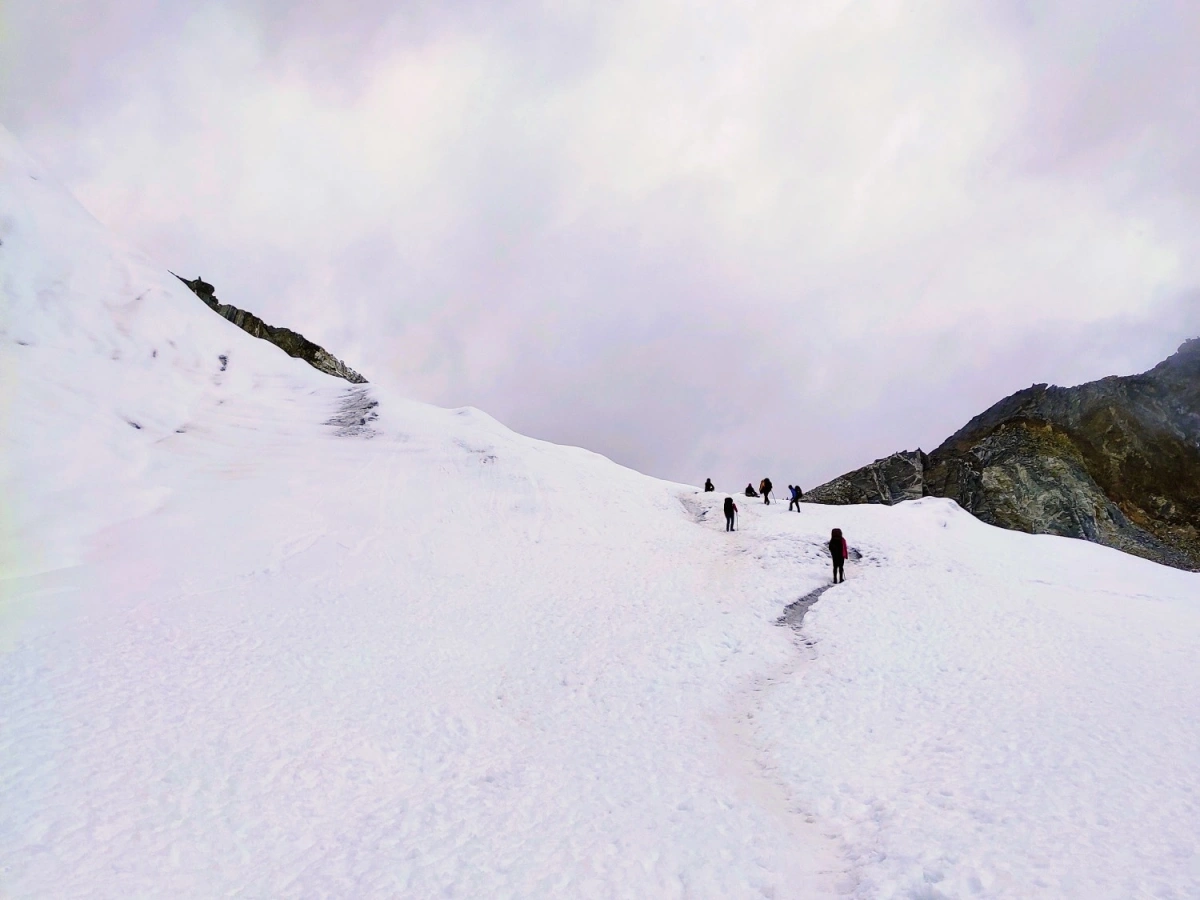
Big Three: More Than Just Checkboxes: Crossing the Kongma La (5,535 meters), Cho La (5,420 meters), and the Renjo La (5,360 meters) is a true high altitude adventure. But, this is more than just the altitude. On Kongma La, you will navigate a massive, shifting moraine that feels out of this world. Cho La is strenuous and may require specialized gear, including spikes, for the glacier crossing. More than just walks, these are true achievements that rightfully allow you to earn your stripes by the time you reach the top of the third pass.
The Himalayan Views: Everest is a bucket list activity for all trekkers, but the view isn’t actually from the base Camp. You will experience the real magic of Renjo La Pass. In the east from this high pass, you will see emerald-green Gokyo Lakes sitting at the foot of the world’s largest peak. You can further enjoy the 360-degree skyline of Everest, Lhotse, Makalu, and Cho Oyu.
Escaping the Khumbu Traffic: The classic Everest Base Camp Trail may feel like trekking the highway, especially during peak season. But as you head away to the passes, the crowd vanishes. You can finally experience the dreaded Himalayan silence. It’s a much more raw and intimate way to see the mountains.
The Teahouse Experience and Local Secrets: Beyond the amazing vistas, it’s the small things that you will take back with you. You will remember ordering the Garlic Soup at every dinner, the local remedy for altitude, or the way the dining room finally warms up once the kitchen staff lights the yak-dung stove. You will learn to give way to the yak caravan so you don’t get nudged off a cliff, and relish the Sherpa tea as you go higher.
A Typical Day during the 16-day Everest Three Passes Trek in Nepal
The wake-up call on the Three Passes Trek is irrelevant. You will most likely wake up at 5:30 AM as the sun hits your lodge window. The sound of the hikers in the next room, beyond the thin plywood walls, scribbling through their dry bags, further urges you to prepare for the long day.
Forget trekking through the passes; the toughest part of the day is the ten minutes you spend psyching yourself to leave the warmth of your sleeping bag. However, the “Bed Tea” to your door makes the Khumbu cold manageable. Breakfast is mostly Tibetan bread or porridge, paired with ginger-lemon-honey tea.
By 8:00 AM, you will move out from the teahouse into the trails. Throughout the day, you will hear your guide yell “Bistarai, bistarai”, asking you to slow down as the altitude can catch you if you try to show your fitness. Also, if you hear the yak bells, move to the uphill side of the trail immediately. You don’t want a 500 kg yak accidentally nudging you off a ledge.
Lunch is served at around noon and consists of Dal Bhat. This 24-hour power is necessary to get over the afternoon ridge. After a strenuous hike, you will reach your next village by 3:00 or 4:00 PM. In the evening, you will gather in the common room around the central stove, fueled by dried yak dung. This is where the real trekker culture happens before dinner. By 8:00 PM, you will return to your room for a much-deserved sleep.
16-day Everest Three High Passes Trek Costs: Permits, Guides, Porters, and Transport
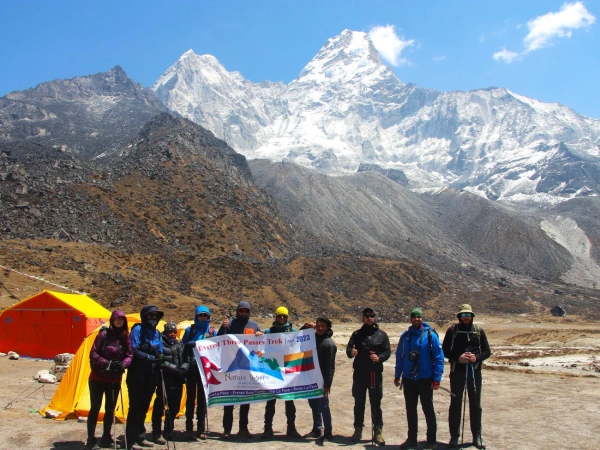
The Everest Three Passes Trek is a comprehensive teahouse trek across the Khumbu region. On this 16-day loop, Nature Lovers Treks and Tours provides an all-inclusive package designed for your safety and well-being. We also take care of all logistics, including Lukla flights, essential permits, a licensed guide, and your daily “Dal Bhat” power and tea house stays to ensure a hassle-free journey.
Porters are not mandatory for this trek, but hiring one makes your trek a lot easier. You will also need to carry local cash for extra expenses like hot showers, battery charging, and Wi-Fi.
Check our 16-day Everest Three Passes Trek fixed departure trek for cost reference. Or, for a personalized quote, just reach out to us.
Nepal Everest Three Passes Trek Major Highlights 2026/2027
- Conquer the Kongma La at 5,535 meters, the highest and quietest pass, where the sheer face of Lhotse feels close enough to touch.
- Navigate the icy, boulder-strewn Cho La Pass, crossing its dramatic high glacier for a technical alpine challenge at 5,420 meters.
- Reach the top of Renjo La for a "wow" moment, seeing the emerald Gokyo Lakes perfectly framed by the world’s tallest peaks.
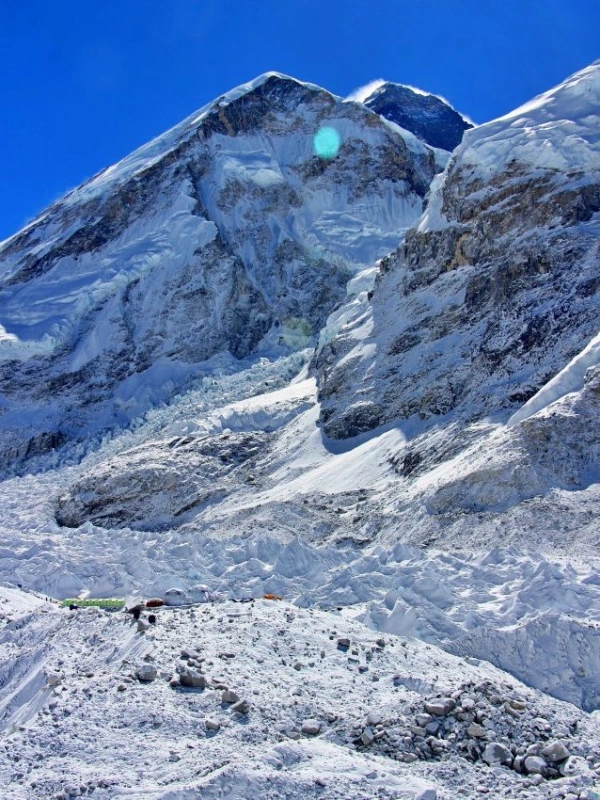
- Stand among the prayer flags at Everest Base Camp, feeling the massive scale and groans of the shifting Khumbu Icefall.
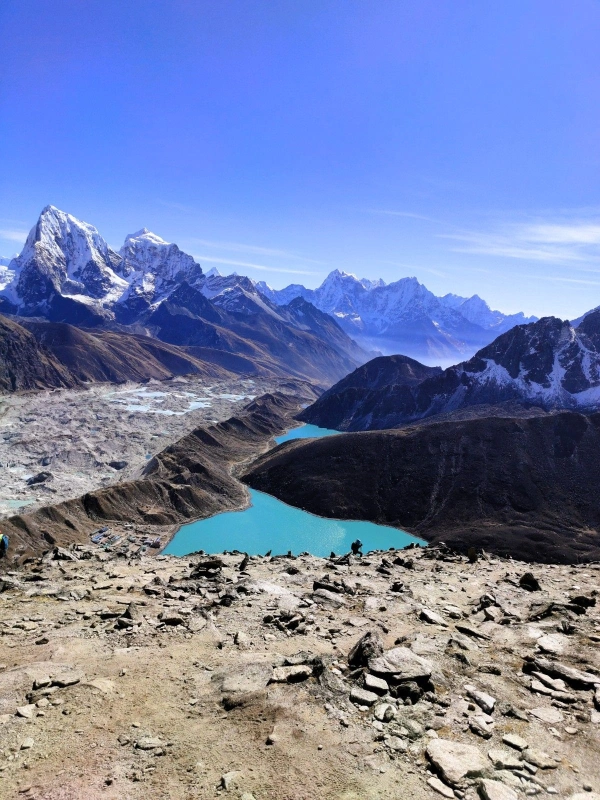
- Discover the six high-altitude Gokyo Lakes, whose deep turquoise waters offer a spiritual serenity most tourists never find.
- Brave the cold on Gokyo Ri and Kala Patthar to watch the sunrise turn Everest from icy blue to burning gold.
- Share tea by a yak-dung stove in remote Sherpa villages, experiencing the legendary hospitality of the high Khumbu.
- Take the famous flight into Lukla, a heart-racing aerial tour of the jagged Himalayan ridges.
- Traverse the massive Ngozumpa Glacier, listening to the eerie sounds of shifting ice beneath the rugged moraine.
- Get a front-row seat to the Everest summit from Kala Patthar, the ultimate viewpoint at 5,545 meters.
Customized Everest Three High Passes Trek in Nepal
The 16-day Everest High Pass Trek is the favorite way to experience the Khumbu region. But we understand every traveler has specific preferences. While we have designed a solid route through the high passes, we offer customizable options. Add a day or two to rest your lungs at high altitudes, or push deeper into the valley where most tourists never go.
We can create an itinerary to ensure you don’t just do the trek, but actually have time to experience the immersive culture and hospitality of the Khumbu region in the silence of the high Himalayas.