Manaslu Circuit Trek in Spring—14 Days at a Glance
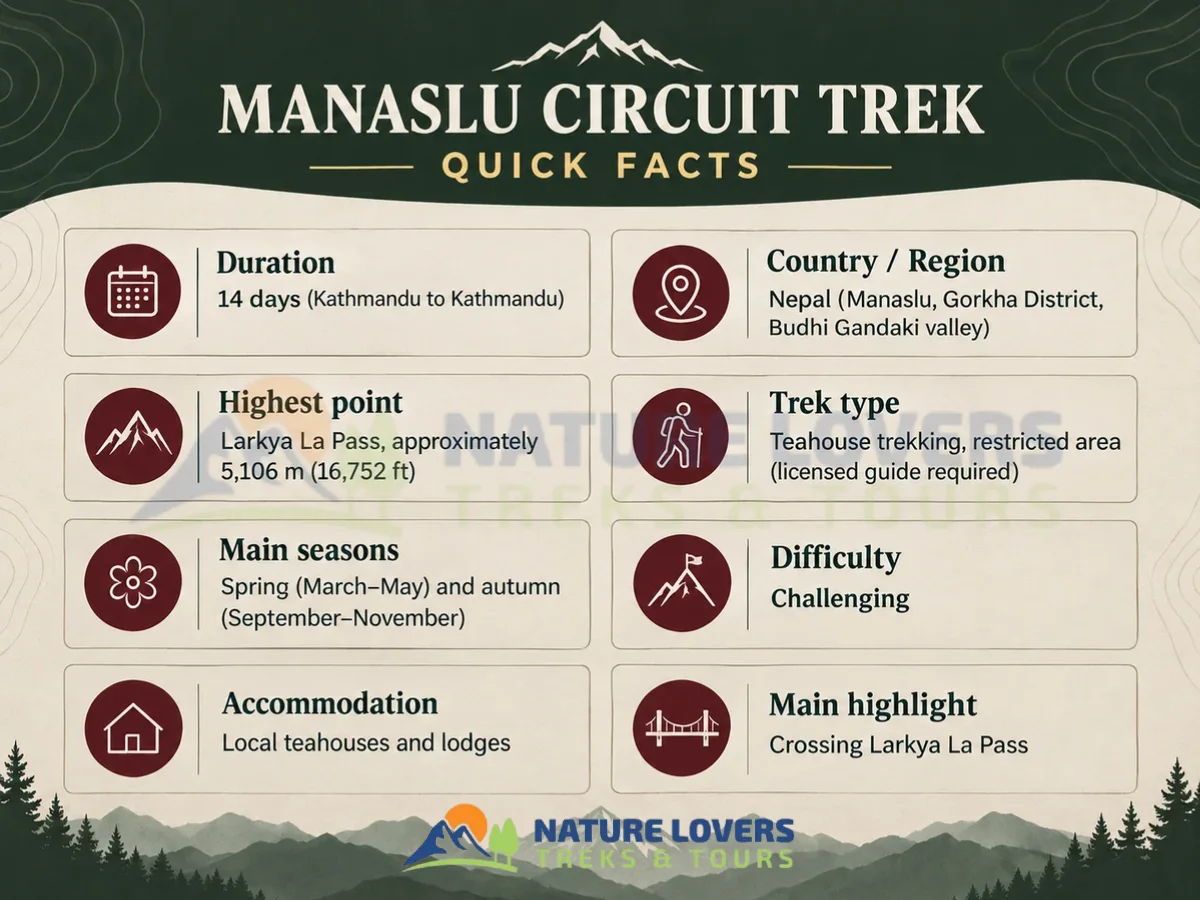
The table below shows the 14-day Manaslu Circuit Trek's core facts and details of a restricted-area trek in Nepal.
Duration, distance, and highest point
The standard Manaslu Trek itinerary lasts 14 days, and trekkers spend 9 to 10 days inside the Manaslu region restricted area between Jagat and Dharapani. Spring offers favorable trail and weather conditions for crossing Larkya La Pass (5,106 m above sea level), the highest point of the entire 14-day Manaslu Circuit Trek.
Starting and ending point
The journey starts with a long drive from Kathmandu to Machhakhola. Trekkers will hire a private or shared jeep depending on their comfort. The drive takes 6 to 7 hours and covers 160 km from Kathmandu. After crossing Larkya La Pass, trekkers will descend to Tilije and hire a private/public vehicle to the Kathmandu endpoint of the journey.
Trekking difficulty and fitness requirements
The Manaslu Circuit Trek difficulty is graded as challenging because of the constant altitude gain and crossing Larkya La Pass. The trails are physically demanding but do not require technical mountaineering skills. Trekkers walk 6 to 7 hours daily throughout the trek, so prior short hiking experience is needed for the Manaslu Trek.
Accommodation and meals
The Manaslu region is a restricted trekking area in Nepal, so it is less crowded than famous trekking routes in Nepal. Trekkers stay in normal teahouses with simple twin-sharing rooms and shared bathrooms. Most packages include three meals (breakfast, lunch, and dinner). Trekkers have a limited menu, such as dal, bhat, noodles, and soup dishes, because of limited supply.
Permits and guide requirements
Trekkers require four permits for the Manaslu Circuit Trek, and they are:
- Manaslu Restricted Area Permit (MRAP)
- Manaslu Conservation Area Permit (MCAP)
- Annapurna Conservation Area Permit (ACAP)
- Chumnubri Rural Municipality Fee (local area permit)
Key Takeaway: Trekkers must hire a licensed guide from a registered trekking agency to apply for the restricted-area permit.
Who is this trek best for?
The Manaslu Circuit Trek (14 Days) is best for those who prefer quieter trails and high-altitude adventures, exploring rocky mountain routes in Nepal. During peak season, the Everest Base Camp and Annapurna Base Camp trails are busy, and most of the teahouses are prebooked or already occupied.
Why Choose the Manaslu Circuit Trek in Spring?
The Manaslu Trek in spring (March-May) offers clear mountain views, suitable weather, blooming forests, greener valleys, and longer daylight hours.
Clear Himalayan views on suitable weather days
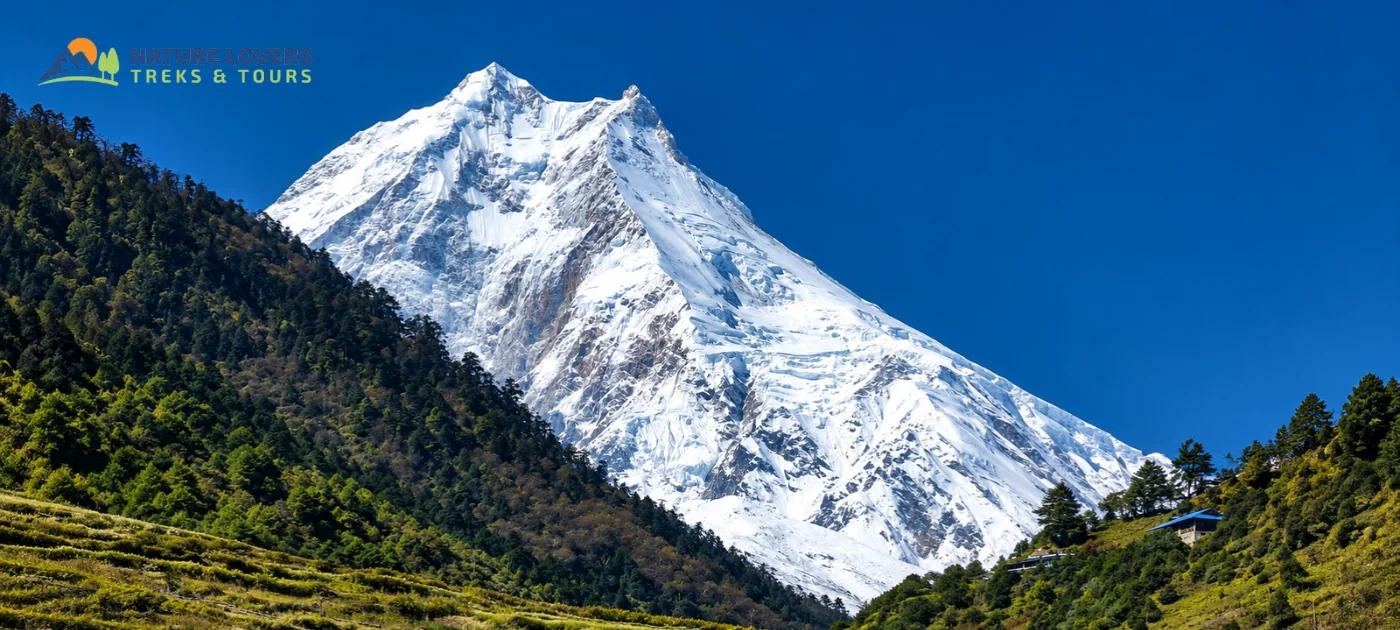
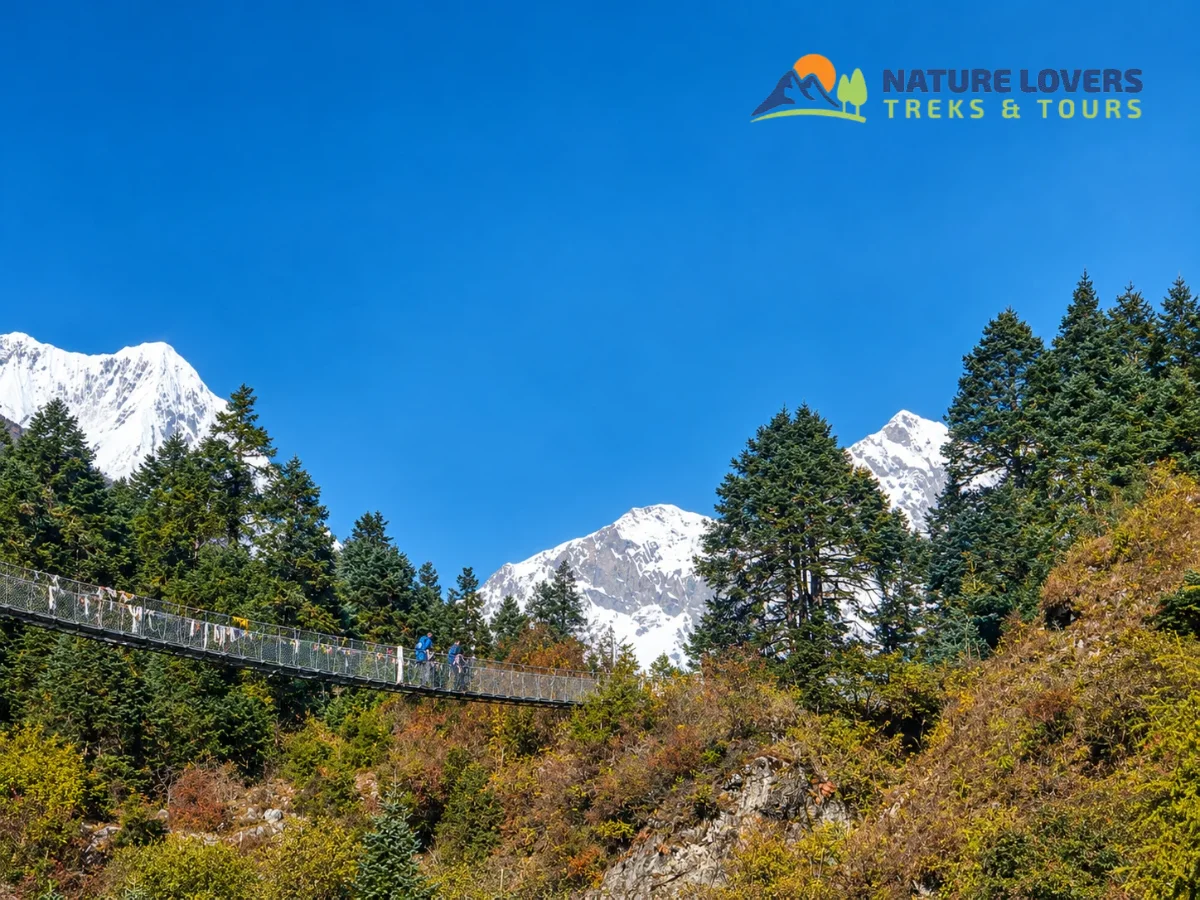
Spring offers clear morning skies on the Manaslu Circuit Trek, surrounded by breathtaking mountain views from villages and Larkya La Pass. Trekkers can enjoy breathtaking mountain views such as Himalchuli, Ngadi Chuli, and Mount Manaslu from Samagaun and Samdo. Trekkers can take mesmerizing mountain photographs before 10 am from March to May.
Spring flowers and rhododendron forests
Rhododendron, locally known as lali gurans, is the national flower of Nepal and covers lower-elevation villages and forests. Trekkers can also enjoy other wildflowers such as magnolias, primroses, orchids, oak trees, pine trees, and flora and fauna between 1,500 and 3,000 m above sea level.
Longer daylights hours for trekking
From March to May, it gets around 13 hours of daylight, which is perfect for high-altitude trekking in Nepal. Trekkers walk around 6 to 7 hours daily and 8 to 9 hours for crossing Larkya La Pass, so spring's longer daylight hours suit the 14-day Manaslu Circuit Trek.
The challenge of crossing Larkya La Pass
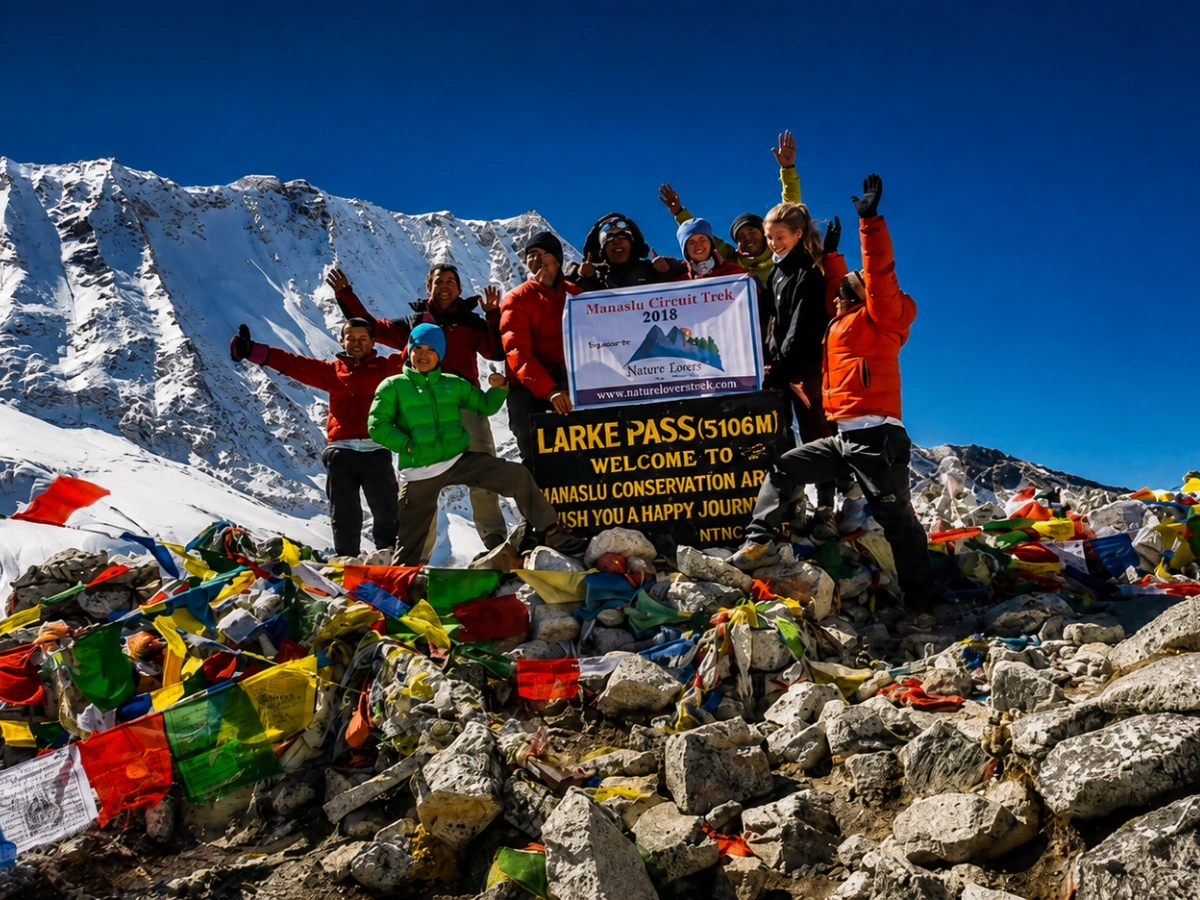
Larkya La Pass (5,106 m/16,752 ft) is the highest point of the 14-day Manaslu Circuit Trek. Trekkers walk 8 to 9 hours of continuous ascent to Larkya La Pass and descent to Bimthang on the same day. Altitude sickness at Larkya La Pass is common on the Manaslu Circuit Trek because of low atmospheric pressure. Remember, spring does not remove the Larkya La Pass challenges, but it is slightly easier than in winter and monsoon.
Manaslu Circuit Trek in Spring Weather
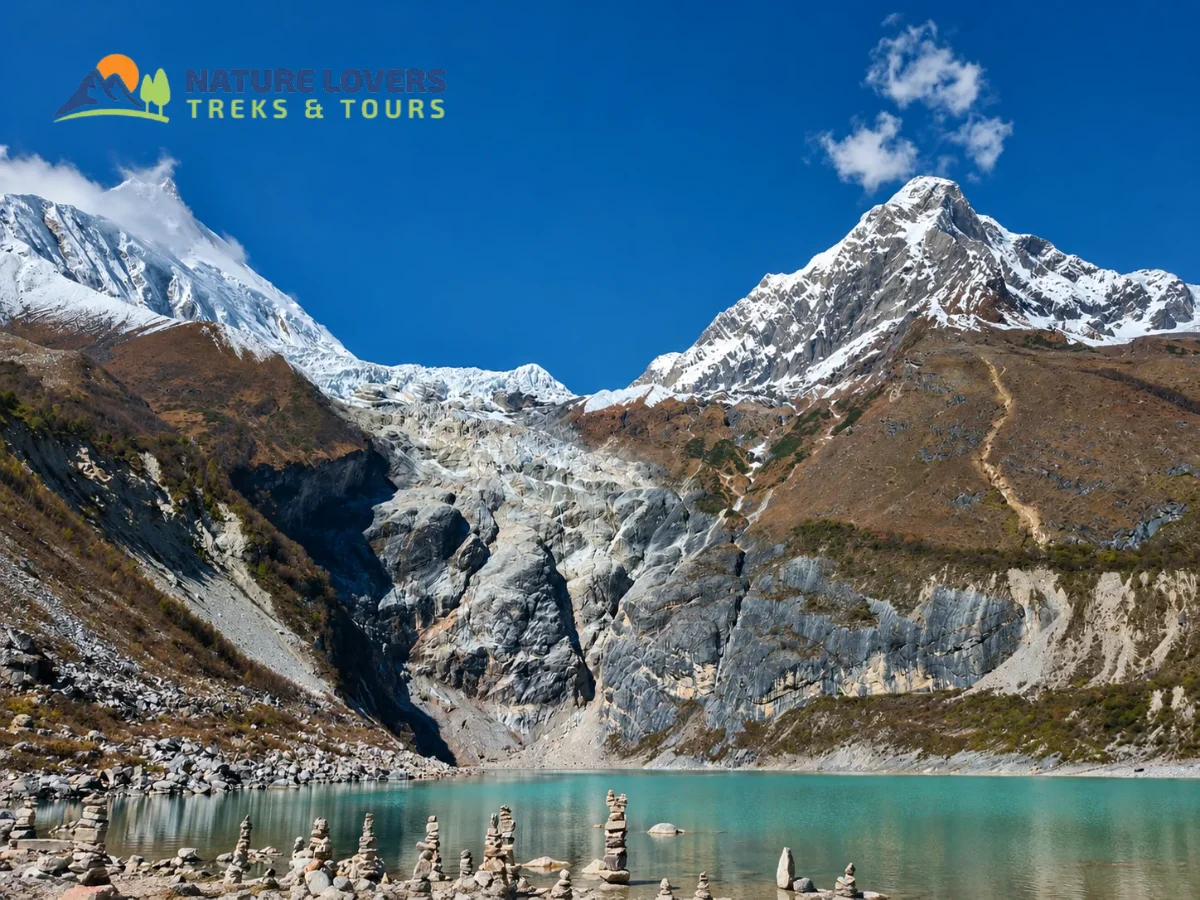
Manaslu Circuit Trek weather conditions in spring depend on altitude. The lower-elevation villages such as Machhakhola and Jagat offer stable weather and warm temperatures. But as trekkers reach Samdo and Dharamsala, over 3,800 m above sea level, the nights become much colder. Early spring is colder, and trekkers can notice pre-monsoon rain in late May.
Daytime and nighttime temperatures
During spring, daytime temperatures below 3,000 m on the Manaslu Trek range from 15°C to 25°C, and nighttime temperatures range from -5°C to -10°C. As altitude increases, temperature drops significantly on the Manaslu Trek. Daytime temperatures above 3,500 m on the Manaslu Trek in spring are around 10°C to 13°C, and nighttime temperatures are around -10°C to -20°C.
Snow and ice near Larkya La Pass
Spring starts in March and lasts until May, the best time to explore the rocky Manaslu Trails and cross Larkya La Pass. Trekkers may notice the Larkya La Pass trails covered in snow because early spring still holds leftover snow from winter. Mid-spring starts in April, bringing more stable weather and dry trails, making it easier to cross Larkya La Pass. Late May brings pre-monsoon clouds that block mountain views and can cover Larkya La Pass in a thick layer of snow during the Manaslu Circuit Trek in spring.
Spring rain, wind, and changing conditions
Early spring carries leftover snow and cold air from winter at higher altitudes on the Manaslu Trek, but trails are less crowded for solitude-seeking trekkers. April brings warm temperatures, longer daylight hours, dry trails, clear skies, and stable weather perfect for crossing Larkya La Pass on the Manaslu Circuit Trek in spring, but trails are more crowded than in early March. Late May brings pre-monsoon rain at lower altitudes, blocking the mountain views and making trails slippery. The Larkya La Pass (5,106 m), the highest point of the Manaslu Circuit Trek, has trails covered in a thick layer of snow.
How does weather affect daily walking on the Manaslu Trek?
Trekkers will spend multiple days above 3,500 m above sea level on the 14-Day Manaslu Circuit Trek. Trekkers walk 6 to 7 hours daily, crossing villages, bridges, and monasteries on the rocky mountain trails, gaining altitude on the Manaslu Trek. So, warm temperatures, stable weather, and longer daylight hours make daily walking slightly easier on the Manaslu Circuit Trek.
What to pack for the Manaslu Trek in Spring?
Trekkers should keep their day backpack light, avoiding unnecessary clothes, equipment, and gear.
- Base layers and insulating clothes.
- A waterproof, windproof shell jacket.
- Trekking boots and spare socks.
- Gloves, hat, and neck protection.
- Sunglasses and sunscreen.
- Trekking poles.
- Water treatment and reusable bottles.
- A first aid kit and personal medication.
- Equipment for snowy trail conditions.
Spring month comparison: March vs. April vs. May
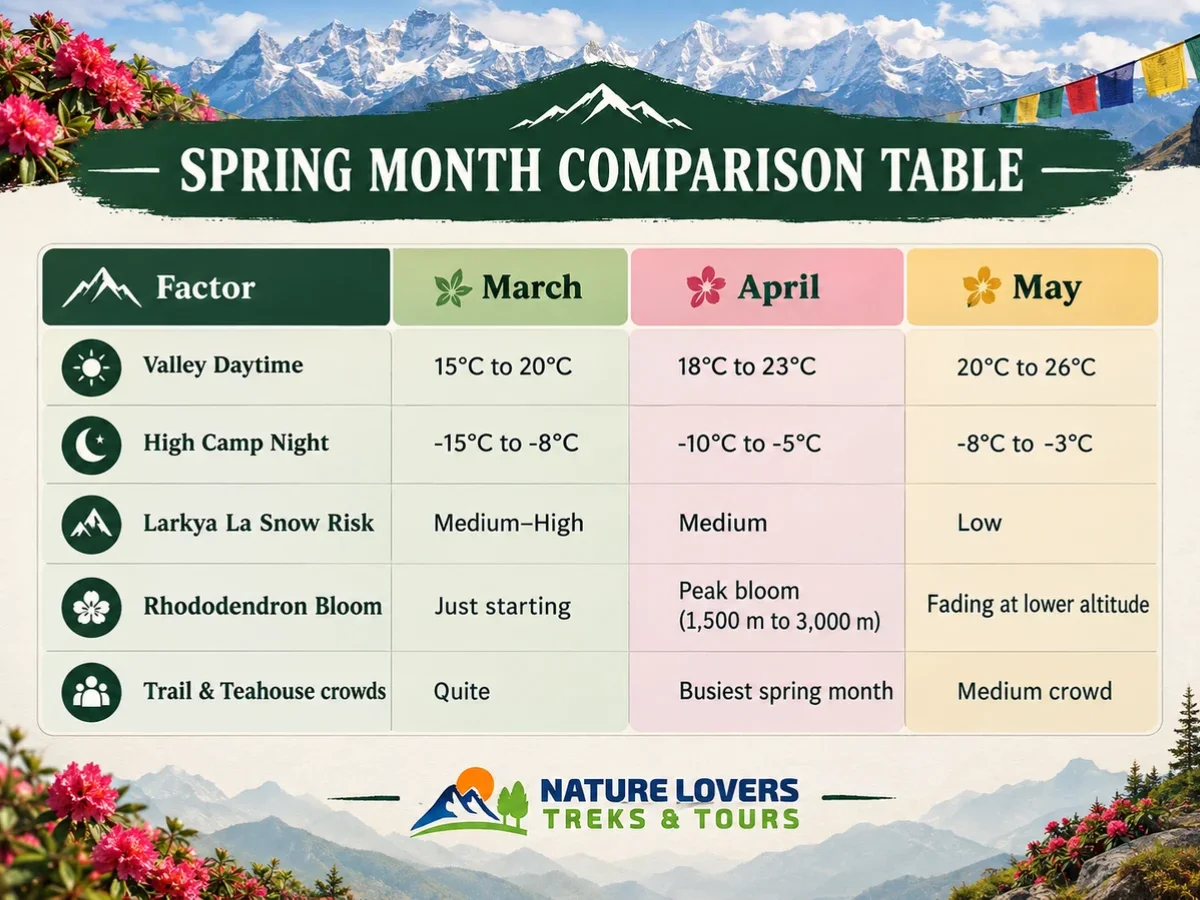
Spring is considered the best season for the Manaslu Circuit Trek because of stable weather, warm temperatures, clear skies, and longer daylight hours. The comparison table below shows March, April, and May for the Manaslu Trek in spring.
Manaslu Trek in March
March is the starting month for spring trekking in Nepal, so trails are less crowded and still hold winter leftovers. March's quiet trails, the first bloom of rhododendrons, and spring wildflowers at lower altitudes suit exploring the Manaslu region. The Manaslu Circuit Trek in March has a higher chance of snow near the Larkya La Pass and on higher-altitude trails.
What to expect on the trail
March offers quieter trails and less crowded teahouses, so it is easy to get rooms without prebooking. The lower valley forest is starting to be covered with a variety of flora and fauna in the Manaslu region. But higher-elevation nights can be colder, so pack for variable weather conditions.
Who should choose the Manaslu Circuit Trek in March?
Trekkers who prefer quiet trails and can handle the cold high-altitude weather can choose the Manaslu Circuit Trek in March. Crossing Larkya La Pass can be difficult because trails might still be covered in winter snow. Higher-altitude weather does not guarantee clear skies, so follow your trekking guide's instructions properly.
Manaslu Trek in April
April is the best month for the Manaslu Trek in spring because it offers stable weather, warm temperatures, and clear skies with breathtaking mountain views. The forests are covered with different shades of rhododendron and other wildflowers in the lower valley. But remember, it is the peak month, so trails are crowded, and most teahouses are pre-booked by other trekkers.
What to expect on the Manaslu Trek in April?
Trekkers can expect crowded trails and teahouses on the Manaslu Trek in April. But it offers warm temperatures at lower altitudes and dry high-altitude trails perfect for crossing Larkya La Pass. The lower-altitude forests below 3,000 m fill the air with a mesmerizing scent of rhododendron and other wildflowers.
Who should choose the Manaslu Circuit Trek in April?
Trekkers who have pre-booked their accommodation and prefer clear skies over quiet trails can choose the Manaslu Circuit Trek in April. The warm weather, longer daylight hours, and dry trails are favorable for beginner high-altitude trekkers.
Manaslu Trek in May
May is the last month of spring trekking in Nepal and has the lowest risk of snow at the Larkya La Pass. But in May, afternoon pre-monsoon clouds block the mountain views, so plan an early-morning trek schedule. Trekkers can also enjoy the clearest Larkya La Pass trail in May.
How to prepare for the Manaslu Trek in May?
Trekkers can expect pre-monsoon rain, so pack a waterproof shell for afternoon trekking, a cold-weather jacket, waterproof shoes, and a warm sleeping bag for high-altitude cold nights. Do not assume warm temperatures at lower altitudes stay the same as altitude increases, and prepare for all situations.
When to consider an alternative date
If you want to avoid pre-monsoon clouds and prefer clear skies for the best mountain views, trekkers may choose March and April. Remember, April offers the best mountain views for photography, but the trails and teahouses are more crowded than in March and May.
Manaslu Circuit Trek Difficulty in Spring
The Manaslu Circuit Trek difficulty in spring is graded as challenging because of high altitude and longer walking days on rocky mountain trails.
Is the Manaslu Circuit Trek difficult?
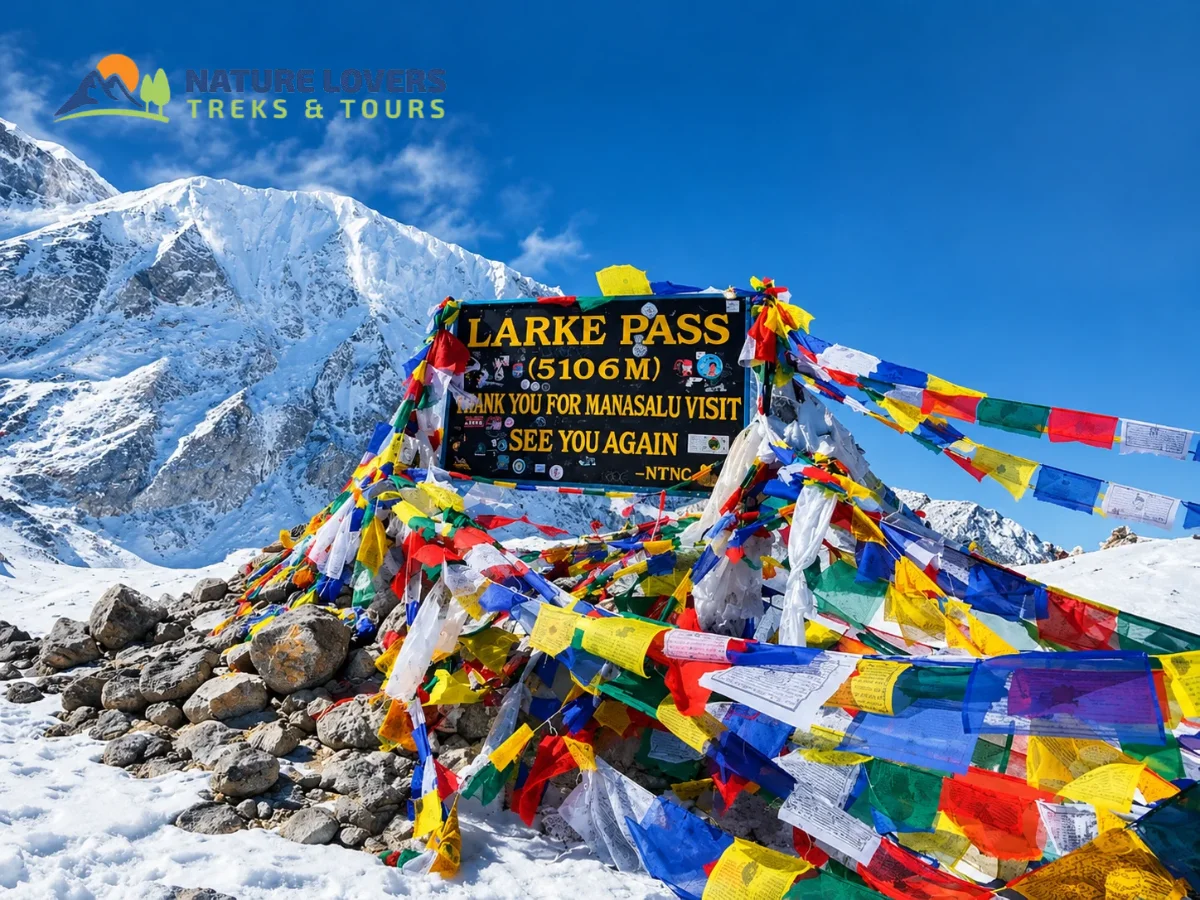
Yes, the Manaslu Circuit Trek is graded as challenging because the trails are physically demanding and do not require technical mountaineering skills. Trekkers walk for 6 to 7 hours daily on the rocky trails of the Manaslu region. Crossing Larkya La Pass is the most difficult part of the journey because trekkers start an early-morning (4 am or 5 am) ascent from Dharamsala to Larkya La Pass and descend back to Bhimthang. Trekkers walk for 8 to 9 hours, depending on trail conditions and walking pace.
Daily walking hours and elevation gain
Normally, trekkers have to walk 6 to 7 hours daily and 8 to 9 hours when crossing Larkya La Pass (5,106 m), the highest point of the Manaslu Circuit trek. Trekkers will spend multiple days above 3,500 m, and altitude sickness at Larkya La Pass is common on the Manaslu Circuit trek.
High altitude and physical demands
Trekkers will spend six of the fourteen days above 3,500 m and walk 6 to 7 hours on the rocky mountain trails. Trekkers will reach above 5,000 m when crossing the pass and walk 8 to 9 hours, with a high risk of altitude sickness on the Larkya La Pass.
Why should trekkers do an early morning hike to Larkya La Pass?
Trekkers will start a Larkya La Pass hike from Dharamsala around 3 am or 4 am for the following reasons:
- Reach the pass before the afternoon weather changes.
- Allow enough daylight for the long crossing.
- Take advantage of cooler morning weather.
- Enjoy clear Himalayan views.
- Reduce the pressure of a demanding trekking day.
- Safer snow and trail conditions.
- Avoid the strong freezing high-altitude wind.
- Pace and fatigue management.
- Sufficient daylight for long ascent and descent.
Is Manaslu suitable for first-time trekkers?
Yes, first-time trekkers with good physical condition, proper preparation, and a professional trekking guide can complete the entire Manaslu Trek. But pre-trekking or hiking experience holds a slight advantage over first-timers.
How difficult is the Larkya La Pass crossing?
Trekkers start a 3 am to 4 am hike from Dharamsala to Larkya La Pass and descend to Bhimthang on the same day. It is the most physically demanding day of the entire journey. Trekkers walk for around 8 to 9 hours, reaching 5,106 m above sea level, the highest point of the Manaslu Trek.
Manaslu Circuit Trek Permits and Cost
Trekkers require four permits and one mandatory trekking guide for the Manaslu Circuit Trek.
Manaslu Restricted Area Permit (MRAP)
The MRAP is the most important permit to access the restricted trails of the Manaslu region. Trekkers must hire a licensed guide through a registered trekking agency to apply for the restricted area permit. The Manaslu Restricted Area permit costs around USD 75 for the first 7 days and USD 10 per extra day. Trekkers require an MRAP permit from Jagat through to the Dharapani section.
Manaslu Conservation Area Permit (MCAP)
The MCAP is the second permit for the Manaslu trek because trekkers will enter the Manaslu Conservation Area from Philim to Larkya La. The Manaslu Conservation Area Permit (MCAP) costs around NPR 3,000 per person.
Annapurna Conservation Area Permit (ACAP)
Trekkers require an Annapurna Conservation Area Permit (ACAP) because they will exit through Dharapani inside the Annapurna Conservation Area. The ACAP costs around NPR 3,000 per person.
Chumnubri Rural Municipality Fee (local area permit)
The Chumnubri Rural Municipality Fee, also known as the local area permit, is a small fee used for trail management and local development in the Manaslu region. The Chumnubri local permit costs around NPR 2,000 per person.
Can you trek Manaslu independently?
No, trekkers must hire a licensed guide from a registered trekking agency to apply for the Manaslu Restricted Area Permit (MRAP) to access a restricted area of the Manaslu region. As of March 22, 2026, the Nepal Department of Immigration removed the minimum two-trekker requirement for restricted area permits.
Who arranges the permits?
Trekking agencies manage Manaslu Trek permits, licensed guides, accommodation, transport, food, and logistics as part of the booking.
Is the Manaslu Circuit Trek in Spring Worth It?
Yes, the Manaslu Circuit Trek in spring is worth it because the forest is covered in a variety of wildflowers and rhododendrons. Spring offers stable weather, warm temperatures, longer daylight hours, and clear skies, which is best for exploring the restricted Manaslu region. Longer daylight hours make crossing Larkya La Pass easier, the highest point of the Manaslu Trek. Do not rush your itinerary and ask for the proper acclimatization days to adjust to the new environment. So what are you waiting for? Plan your Manaslu Circuit Trek in spring and explore rocky Himalayan trails surrounded by beautiful snow-capped peaks alongside Mount Manaslu.