Why Is Spring a Good Time for the Everest Base Camp Trek?
Spring (March to May) is a good time for the Everest Base Camp Trek because of longer daylight, dry trails, warm temperatures, stable weather, and blooming forests for high-altitude trekking in Nepal.
March to May Weather Conditions
In early March, trekkers can still experience the cold chill of winter at high altitudes above 3,500 m. In March, night temperatures can drop well below freezing in places like Dingboche and Lobuche. By late April and early May, nights are warmer, perfect for long walking days on rocky trails of the Everest region. Spring brings suitable weather for the Lukla flight, making it the most popular time for Everest region trekking.
Clear Morning Mountain Views
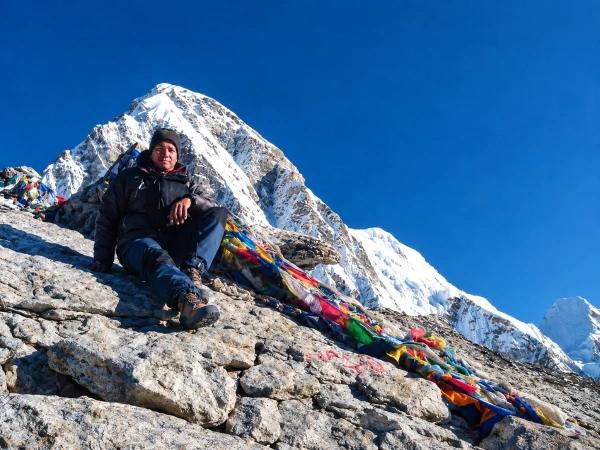
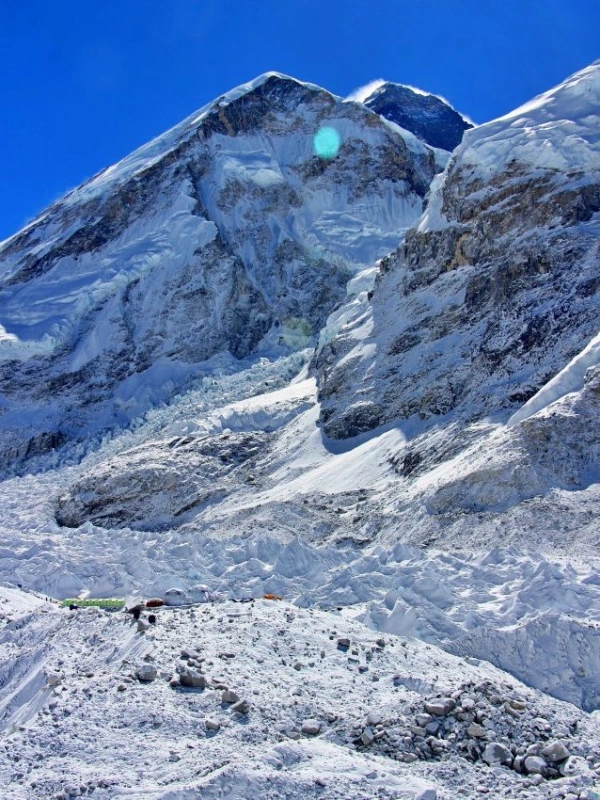
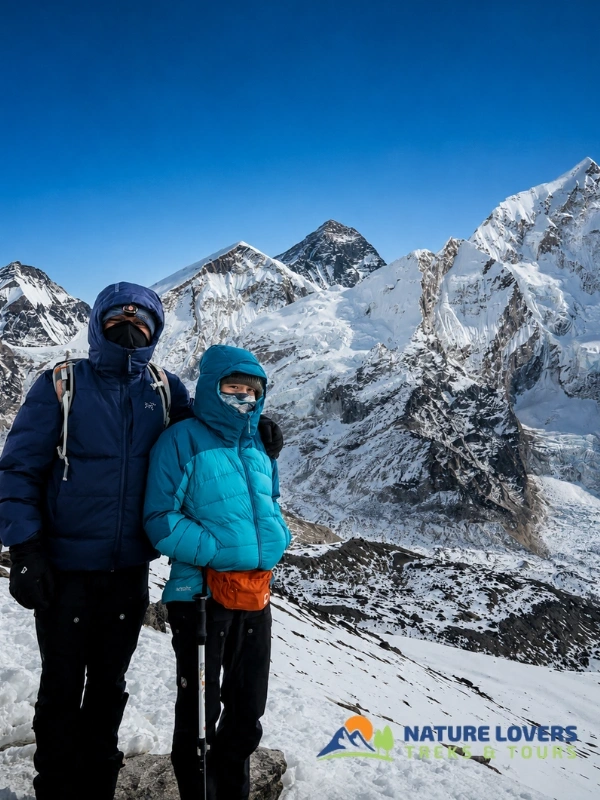
Trekkers can enjoy the clear mountain views under the blue skies from March to May. Kala Pathhar at 5,545 m above sea level is the highest viewpoint of the EBC trek in spring that offers a clear view of the world’s tallest mountain, including Mount Everest (8,848 m).
Longer Daylight Hours and Rhododendron Flowers Along the Trail
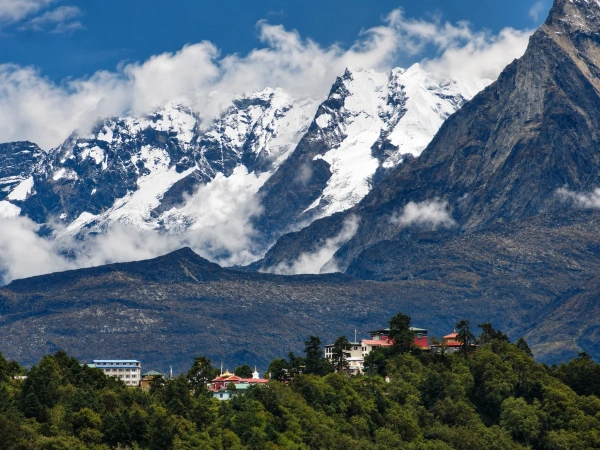
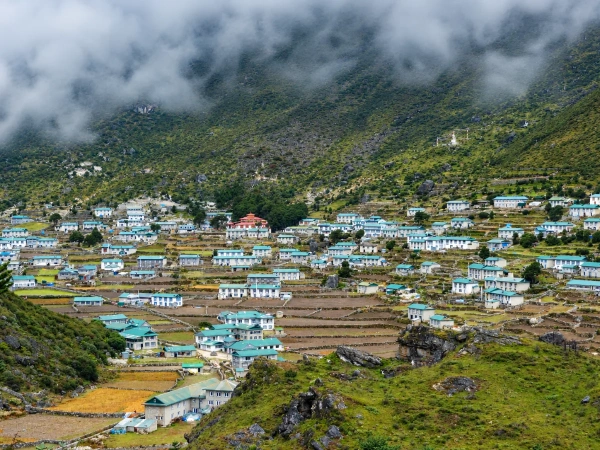
Spring (March to May) offers longer daylight hours, perfect for high-altitude trekking and navigating rocky trails in the Everest region. The forest, trails, and villages at lower altitudes are covered with different shades of rhododendron around Phakding, Monjo, and Namche Bazaar. Rhododendron is also Nepal's national flower, locally known as lali gurans.
Everest Expedition Season
Spring is the busiest time on the mountain trails. The Everest summit attempts take place in May, when the jet stream is less active on the summit. From mid-May, Base Camp on the Nepal side of the mountain is filled with expedition tents. During the peak of the climbing season, trekkers walk the same trail and visit the same teahouse with climbing teams, Sherpas, and porters.
What Makes Spring Different From Autumn?
Spring (March to May) brings more daylight hours and forests covered with rhododendron and other wildflowers. Autumn (September to November), on the other hand, is the busiest time on this route, with clear skies and stable weather for Lukla flights.
Key Takeaway: Choose spring to enjoy long walking days and rhododendron forests, or autumn for the best mountain views under the clear skies of the Everest region.
Everest Base Camp Trek in March
March is an early month ofspring trekking in Nepal and offers quieter trails. Temperatures during the day in Namche and the lower parts are comfortable for walking on the rocky trails of the Everest region. Trekkers can expect around 8 to 12°C, or 0 to 5°C above Dingboche, and overnight temperatures drop to 15°C.
Is March a Good Month for the EBC Trek?
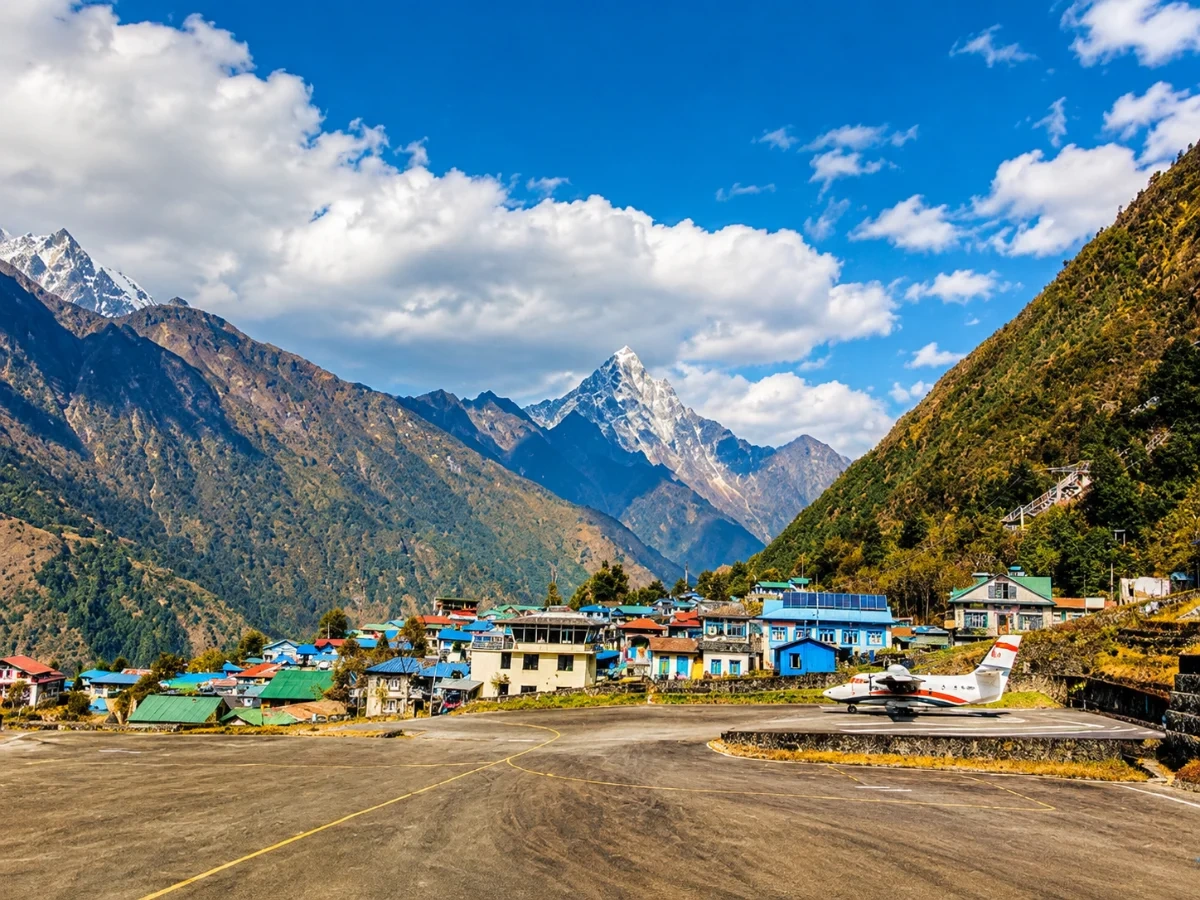
Yes, March is a good month for the EBC trek for people who can handle the cold nights. The trails are less crowded, so mountain lodges and teahouses are easily available. But in early March, direct flights to Lukla are not available, so trekkers take a short drive from Kathmandu to Ramechhap Manthali Airport.
Everest Base Camp Trek in April
April is the most popular and the busiest month for the Everest Base Camp Trek. Popular mountain lodges and teahouses at Namche, Tengboche, and Dingboche are mostly pre-booked. The forest between Phakding and Tengboche is covered with wildflowers, such as Himalayan blue poppies and magnolia primroses, alongside different shades of rhododendron in April. The daytime temperatures below Namche reach around 15 to 18°C, and above Gorak Shep around 5 to 15°C in April.
Why Is April Popular for the EBC Trek?
April brings stable weather, warm temperatures, blooming forests, and clear skies, offering breathtaking mountain views. The comfortable daytime temperatures and dry trails make navigation easier for trekkers. The trails are crowded, and most of the accommodations are pre-booked or already occupied.
Everest Base Camp Trek in May
In early May, the trails are still crowded, and also the last month of the Everest Base Camp Trek in spring. Daytime temperatures are around 18 to 20°C at Namche and 0 to -6°C above Dingboche. Compared to March and April, clouds cover clear skies more quickly in the afternoon, blocking mountain views.
Is May Too Late for Everest Base Camp?
No, the Everest Base Camp trek in May is not too late, but the weather can be different from March and April. Early March still has the same warm temperatures and stable weather, but the second half invites pre-monsoon rain and unpredictable weather in the lower part of the Everest region.
Everest Base Camp Trek in Spring Weather
Spring is one of the best trekking seasons in Nepal, offering clear mountain views, dry trails, stable weather, and warm temperatures perfect for long walking days on rocky mountain trails. But it is important to know the EBC trekweather conditions in spring to pack wisely.
Daytime Weather
In early March, the daytime weather at lower altitudes (Lukla and Namche Bazaar) is around 10°C to 20°C, and 0°C to 10°C at higher altitudes (Gorak Shep and Base Camp). In spring, temperatures drop faster above Dingboche and Base Camp.
Nighttime Temperatures
Late March to early May offers warm temperatures, but in early March and late May, nighttime temperatures drop to 0°C to -20°C.
Weather at Namche Bazaar
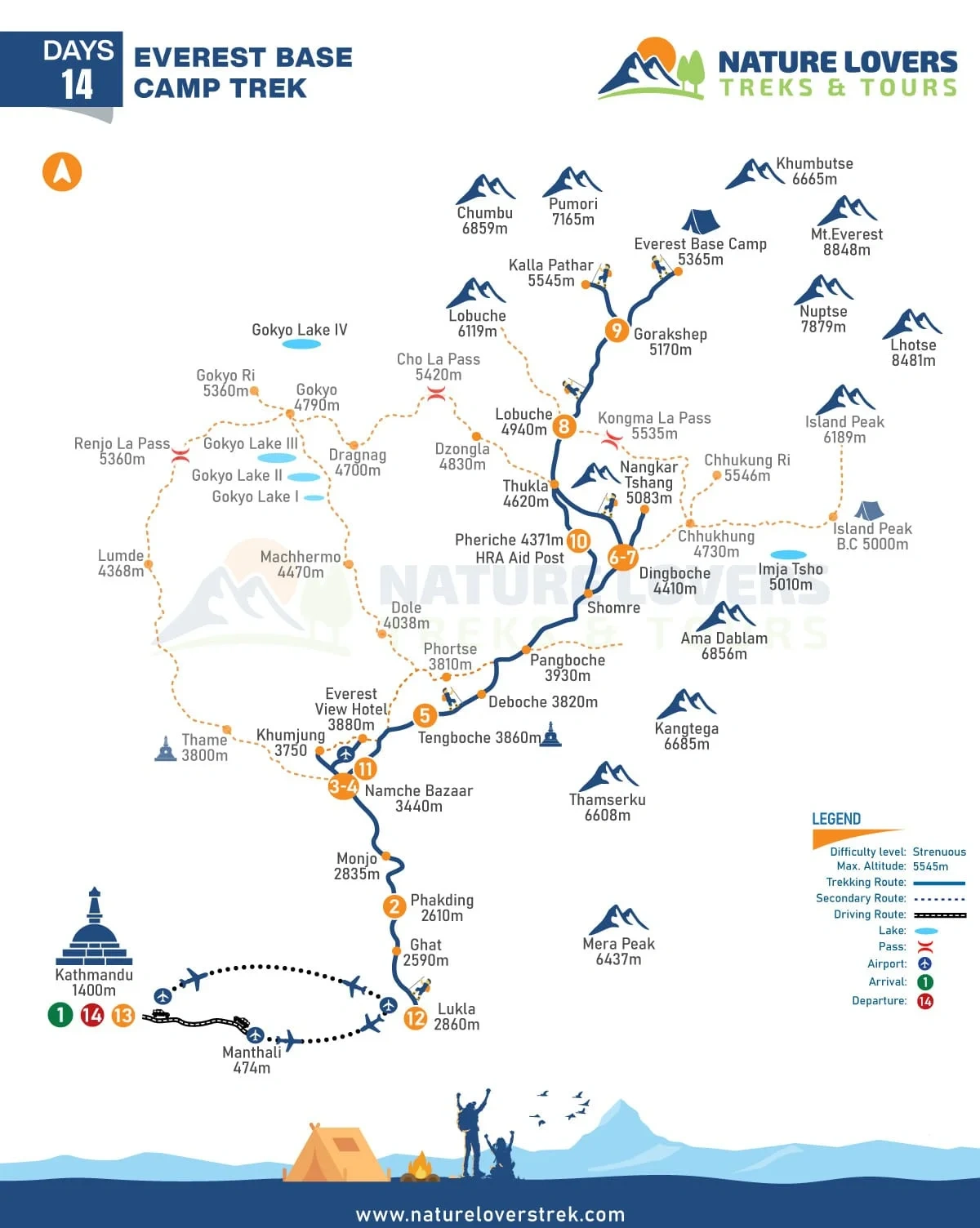
Namche Bazaar is located at 3,440 m above sea level. Daytime temperatures are around 8 to 18°C, and -8°Cat night during the spring season.
Weather at Dingboche
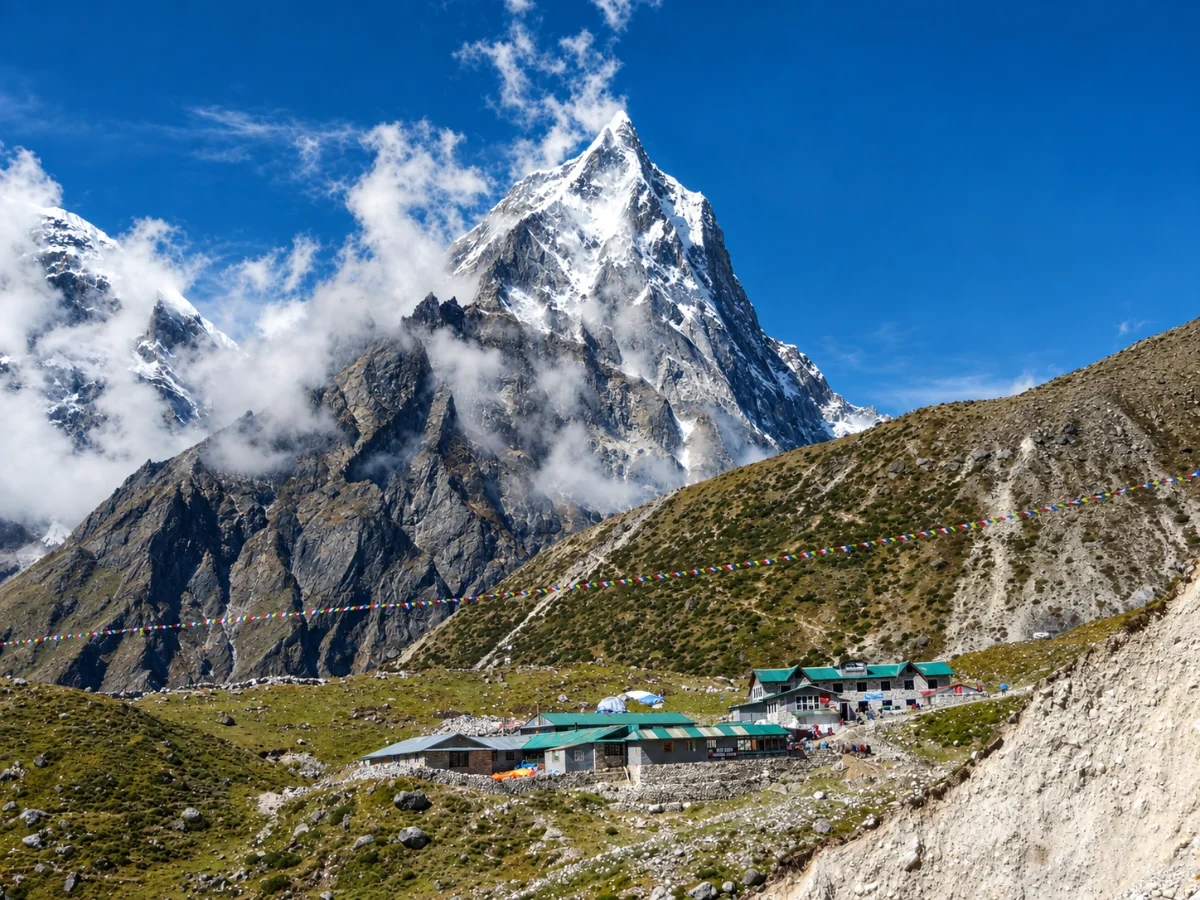
Dingboche is located 4,410 m above sea level. Daytime temperatures at Dingboche are 8 to 18°C and drop below -8°C at night during the spring season.
Weather at Lobuche
Lobuche is located at 4,940 m above sea level. Daytime temperatures at Lobuche are around 8°C and drop below -18°C at night during the spring season.
Weather at Gorak Shep
Gorak Shep is located at 5,164 m above sea level. Daytime temperatures at Gorak Shep are around 0°C to 5°C and drop below -14°C at night during spring.
Weather at Everest Base Camp
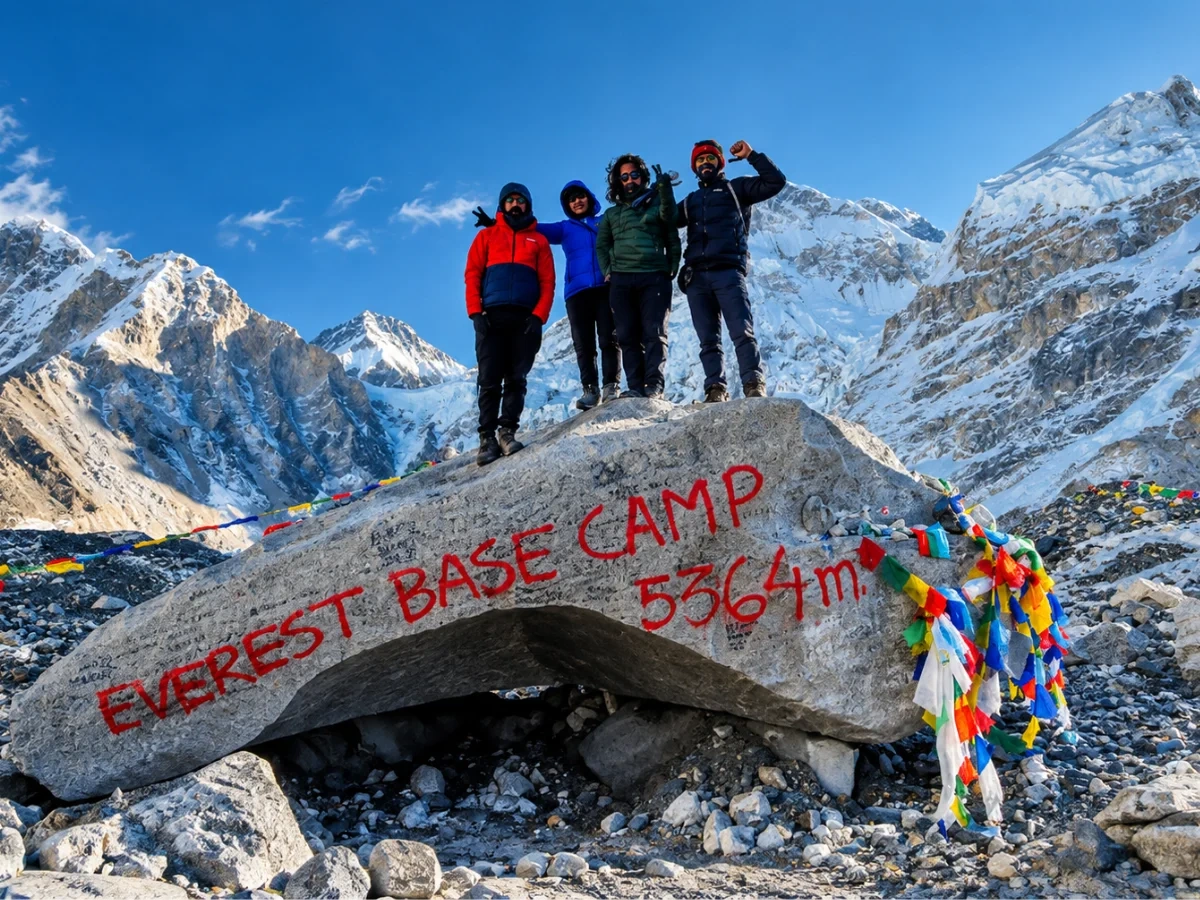
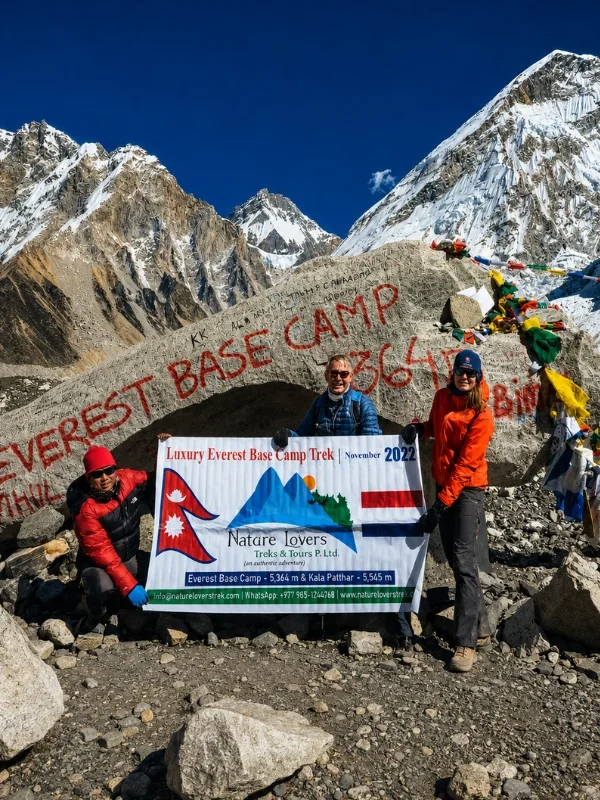
Everest Base Camp is located at 5,364 m above sea level. The 14-day Everest Base Camp Trek itinerary includes only daytime hikes, and trekkers can still feel the cold wind but descend to Gork Shep for the night.
How Fast Can Weather Change in the Everest Region?
At higher altitudes in the Everest region, weather changes quickly, so guides will plan their route accordingly rather than trying to avoid it. A clear morning at Gorak Shep can be full of clouds covering the mountain views within thirty minutes, so summit climbs start early in the morning or before dawn.
March vs April vs May for the Everest Base Camp Trek in Spring
The table below shows Everest Base Camp trekking conditions by spring month, making it easy to choose your ideal month for exploring the rocky trails surrounded by the beautiful mountains of the Everest region.
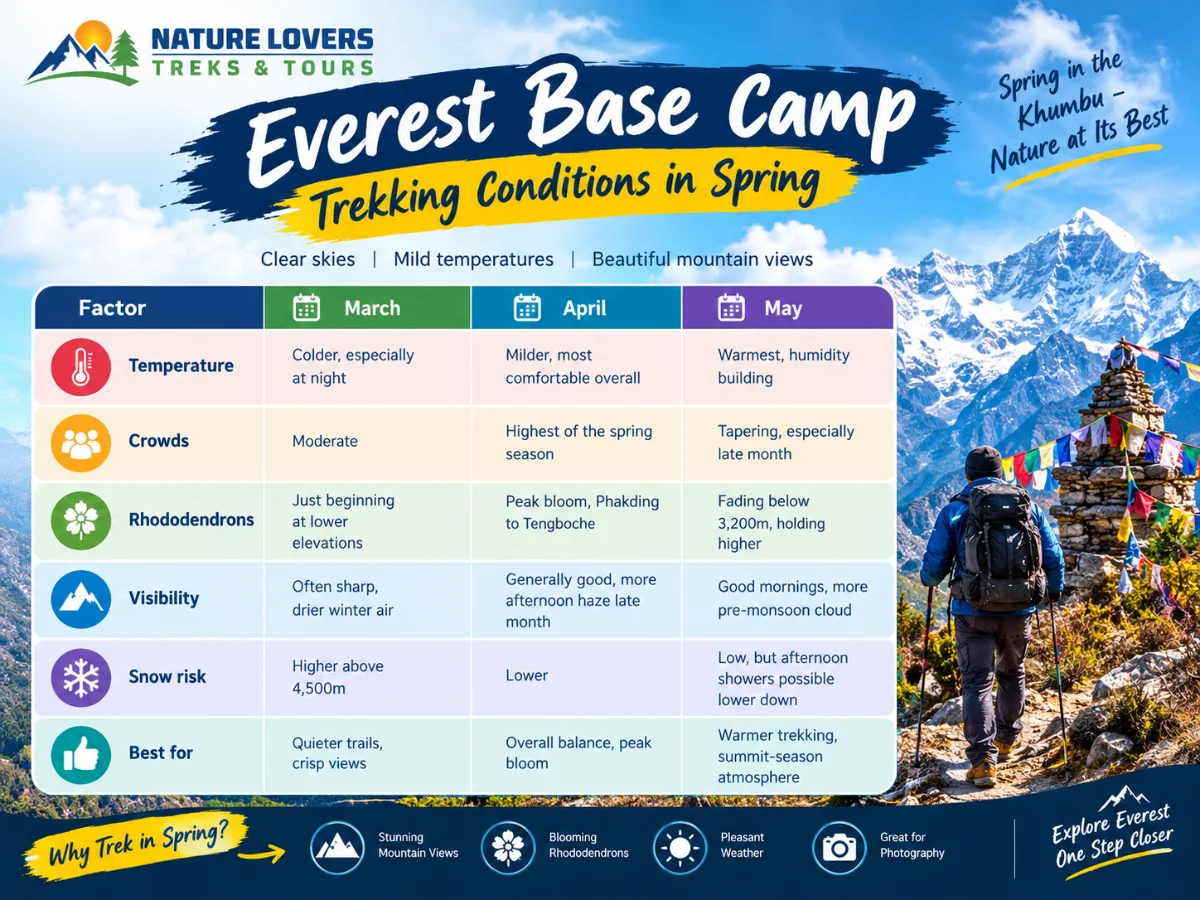
April is considered the best month for spring trekking in Nepal because it offers the most comfortable temperatures and weather for Everest region trekking. But the trails are crowded, and most of the mountain lodges and teahouses are already occupied or pre-booked. But none of the three is perfect. Early March and late May offer less crowded trails but higher snow and rainfall risk.
Is the Everest Base Camp Trek Difficult in Spring?
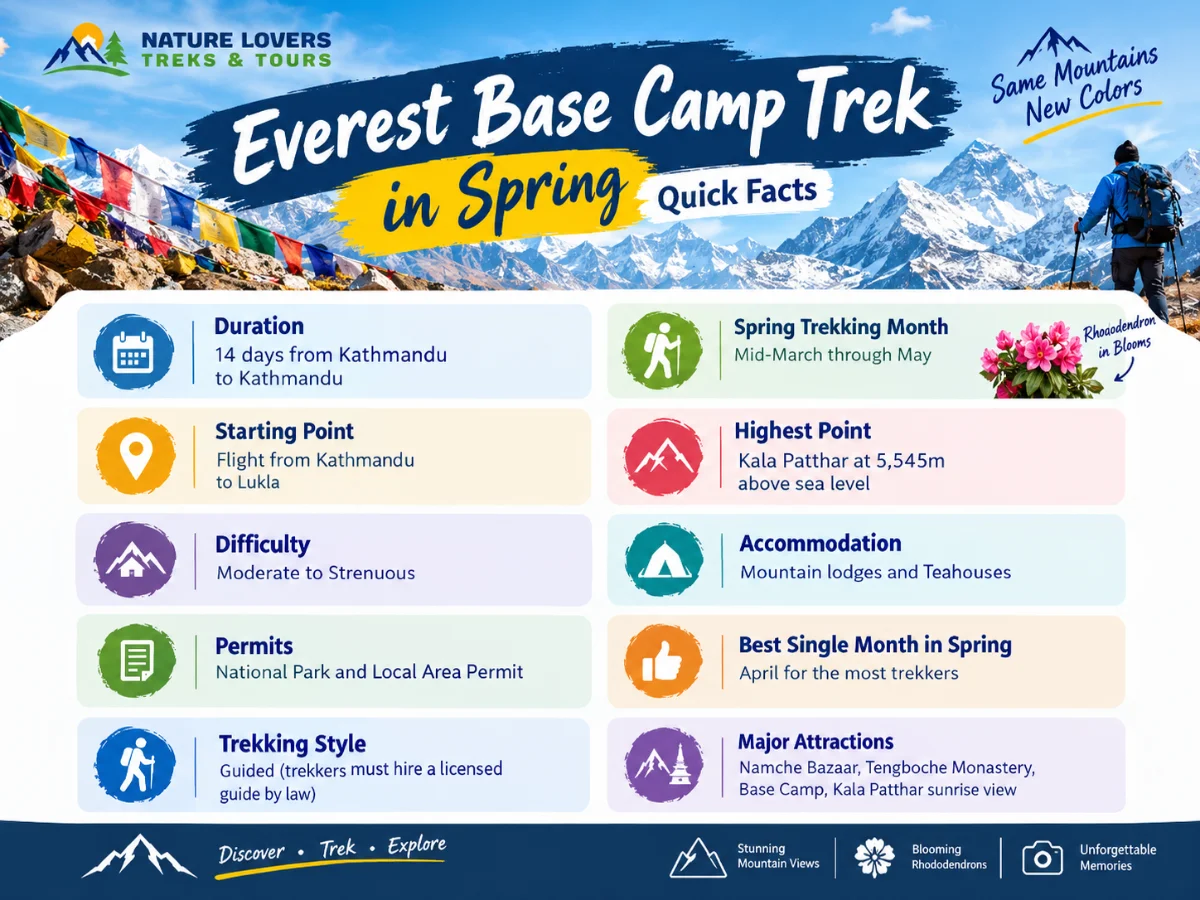
Yes, the Everest Base Camp Trek difficultyis considered moderate to strenuous in spring. The trails are physically demanding, not technically. Trekkers will walk 6 to 7 hours daily and cover around 130 km within a 14-day itinerary. The trails do not demand any high-altitude climbing with ropes or ice axes. But trekkers will spend multiple daysabove 4,000 m, with a risk ofaltitude sickness on the Everest Base Camp Trek.
Overall Trek Difficulty
Everest Base Camp Trek in spring is physically demanding rather than technical. The trails are considered moderate to strenuous because of the high altitude and long walking days in the itinerary. But physically healthy trekkers can complete the entire trek with the help of a proper trekking guide.
Daily Walking Hours
Trekkers will walk around 6 to 7 hours daily on the rocky trails of the Everest region. The Base Camp and the Kala Patthar sunrise hike are the most physically demanding days. It takes around 9 to 10 hours, depending on your walking pace.
Steep Ascents and Descents
Trekkers climb 10 to 15 km, gaining around 500 m in altitude daily on the rocky mountain trails. Namche Bazaar and Dingboche are the two steepest climbing days, and both are followed by acclimatization (rest) days.
High Altitude Challenges
Altitude sickness on the Everest Base Camp trek is common because trekkers will climb above 5,000 m and spend multiple days above 3,500 m. As altitude increases, atmospheric pressure drops and the air holds less oxygen, making breathing difficult.
Cold Nights Above 4,000 Meters
The altitude makes sleeping difficult because of the low oxygen supply. Trekkers at Lobuche and Gorak Shep experience colder nights, and less oxygen makes sleeping uncomfortable.
Fitness Level Required
Trekkers do not require an athletic level of fitness to complete the EBC trek. Trekkers with good physical health who can walk 6 to 7 hours on rocky trails with a daypack are sufficient for the Everest Base Camp Trek in spring.
Can Beginners Complete the EBC Trek in Spring?
Yes, beginners with good physical health can complete the 14-day Everest Base Camp Trek in spring with a proper trekking guide and acclimatization days. The trails are physically demanding and do not require any technical mountaineering skills.
Everest Base Camp Trek Permits and Guide Rules in Spring
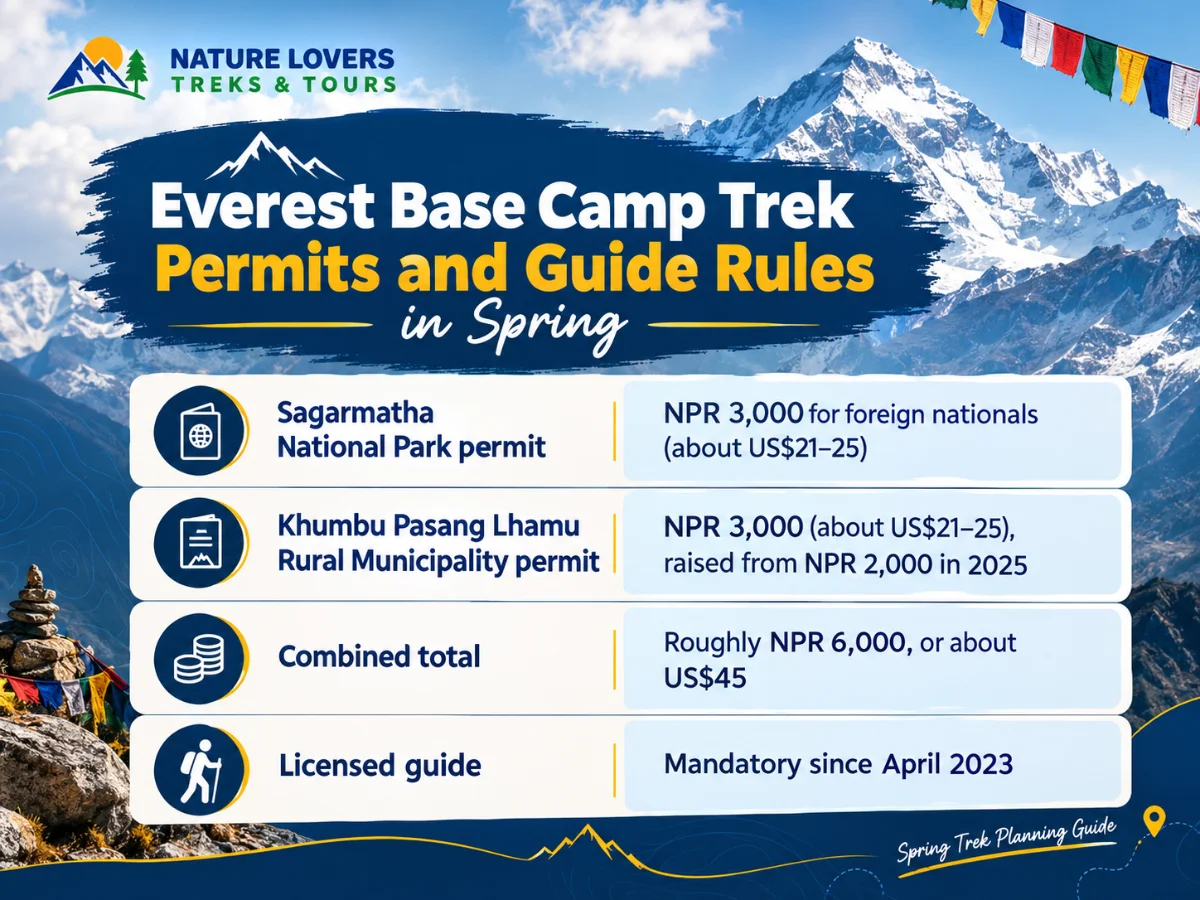
The Sagarmatha National Park Permit and a Khumbu Pasang Lhamu Rural Municipality Permit are the two required permits for the Everest Base Camp Trek. The permits cost around USD 45 or NPR 6,000 per person for all foreign nationals.
Sagarmatha National Park Permit
The Sagarmatha National Park Permit is important for trekkers to enter the park. The permit costs NPR 3,000 for foreign nationals, NPR 1,500 for SAARC nationals, and NPR 100 for Nepali citizens. Trekkers can apply for the permit at the Nepal Tourism Board in Kathmandu or directly in Lukla.
Khumbu Pasang Lhamu Rural Municipality Entry Permit
The Khumbu Pasang Lhamu Rural Municipality Entry Permit is a local area permit specific to Everest region treks in Nepal. Trekkers have to apply directly for the permit in Lukla or Monjo, costing around NPR 3,000 per person for all nationalities.
Do You Need TIMS for the Everest Base Camp Trek?
No, trekkers do not require the Trekkers Information Management System (TIMS) card for the Everest Base Camp Trek in Nepal. In the Everest region, the local area permit system has replaced the TIMS card requirement.
Is a trekking guide required for an EBC trek?
Yes, from April 1, 2023, a licensed trekking guide is mandatory for all foreign trekkers in the Everest region. Trekkers can still do a private trek without joining a group by hiring a private guide. But the private trek is more expensive than trekking in a small/large group.
Who Arranges the Trekking Permits?
The registered trekking agencies handle all required permits for the EBC Trek in spring. Your agency also hires a licensed guide, and other logistics are required for the journey so trekkers can focus on creating beautiful memories.
Final Thoughts on the Everest Base Camp Trek in Spring
Yes, the Everest Base Camp Trek in spring (March to May) is perfect for beginner trekkers who want to experience the high-altitude adventure in Nepal. The comfortable weather, warm temperatures, dry trails, forests filled with flowers, and longer daylight hours are suitable conditions for exploring the rocky trails of the Everest region, surrounded by beautiful mountains. The trails are physically demanding and do not require technical mountaineering skills, so even healthy beginners can complete the trek with proper guidance and acclimatization days. So what are you still waiting for? Contact our Nature Lovers Treks and Tours team and book your next Everest Base Camp Trek in spring at the most budget-friendly cost without compromising your comfort.