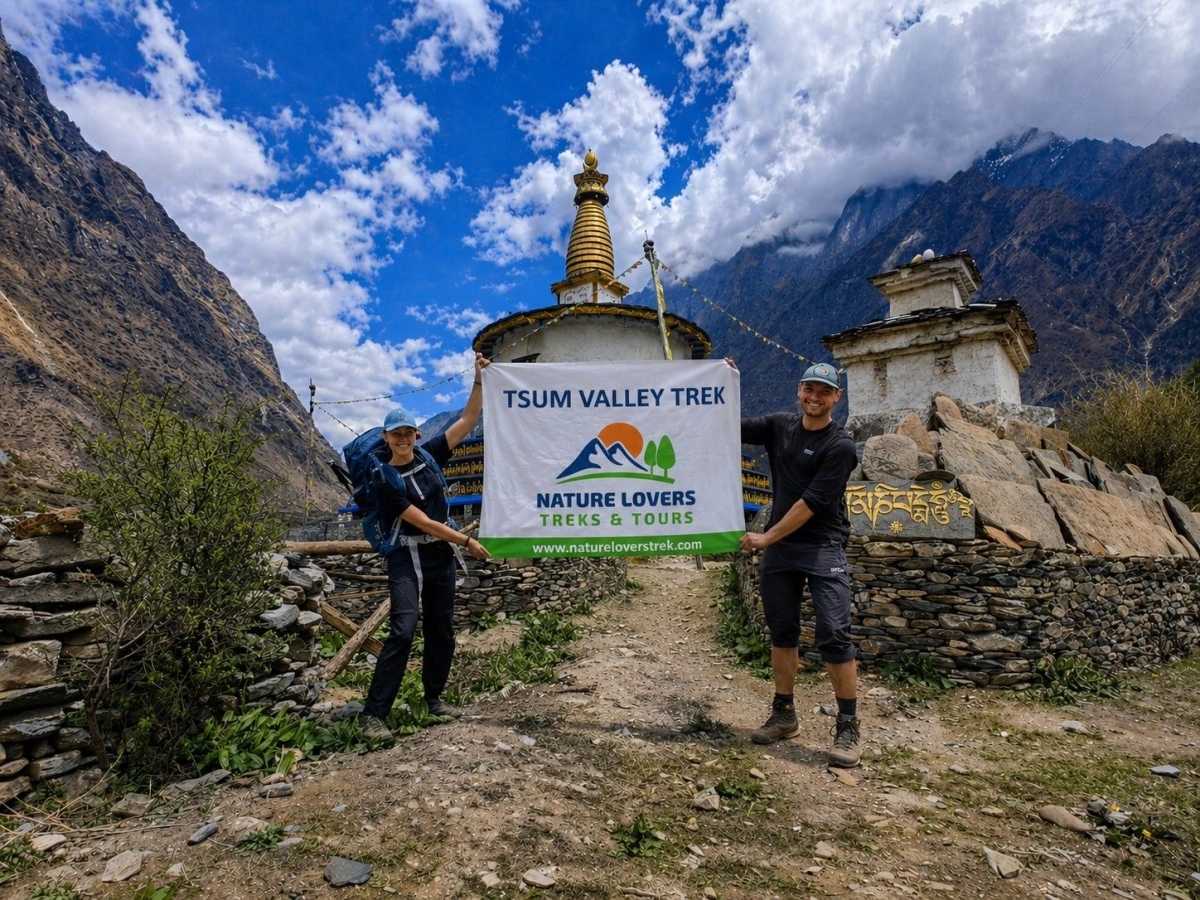
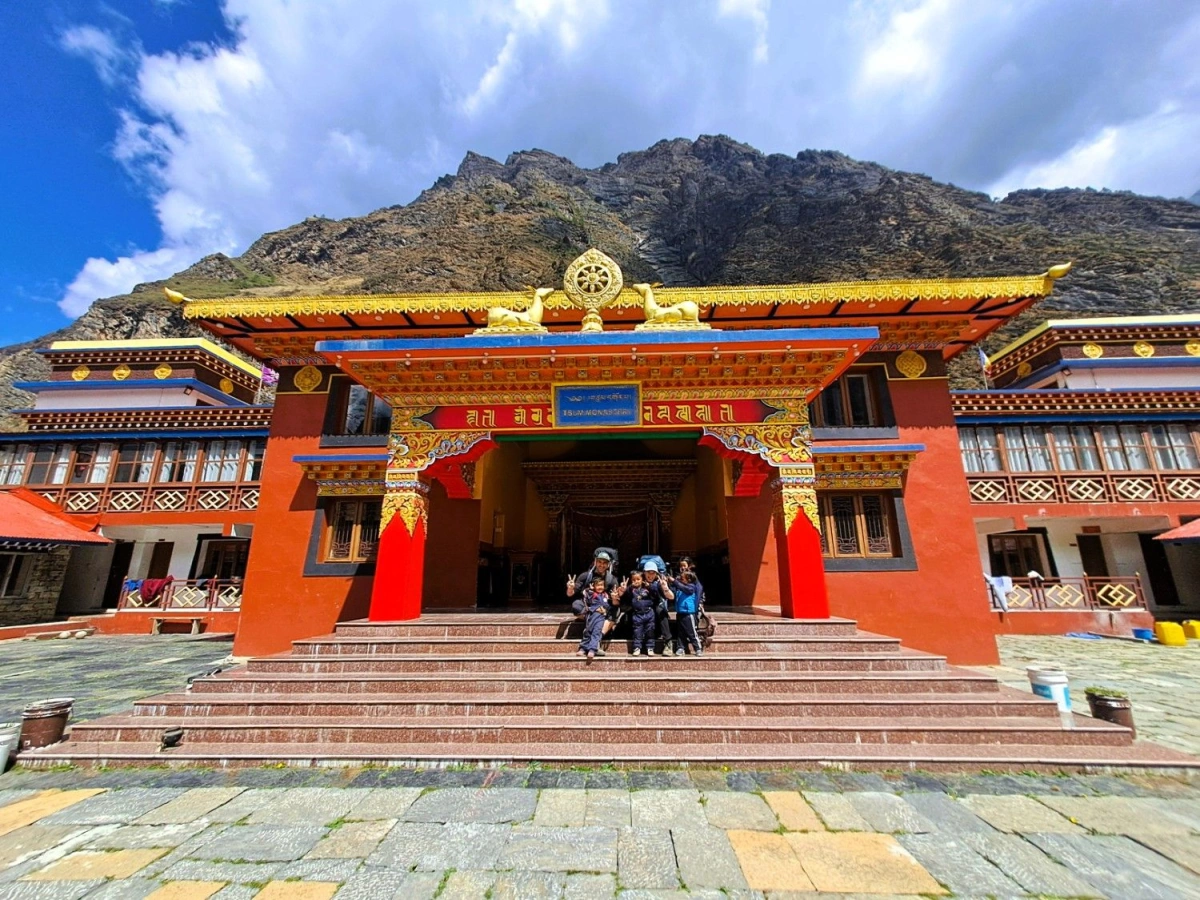
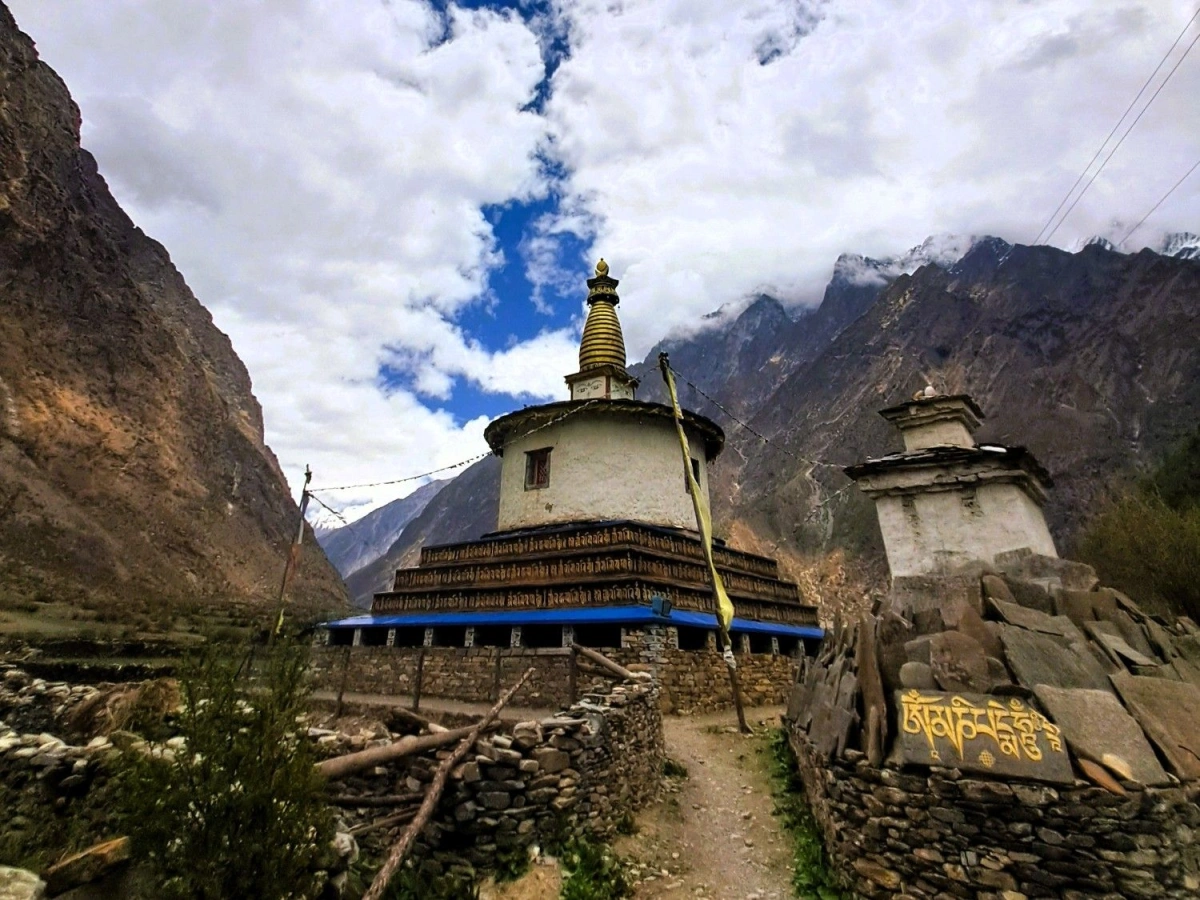
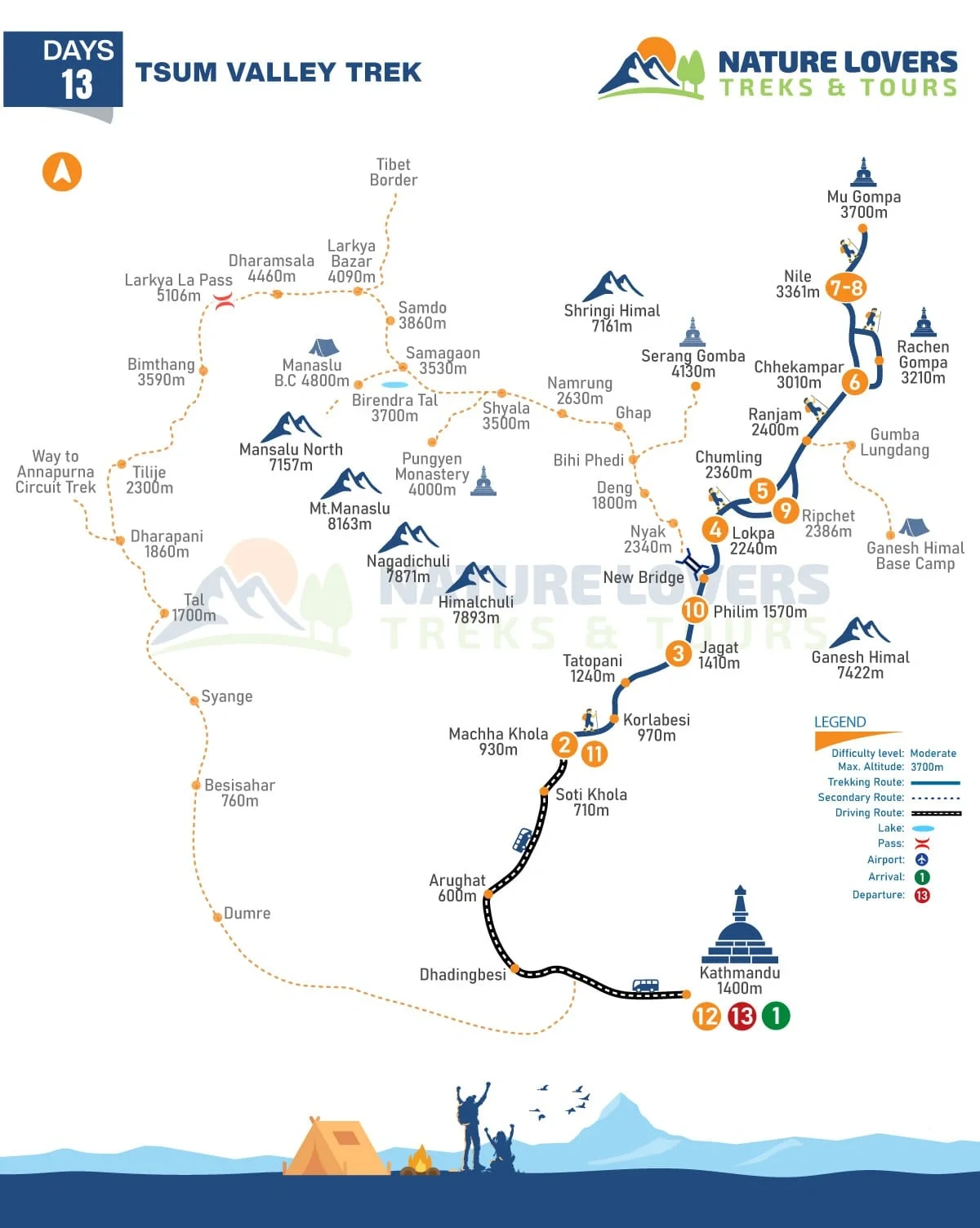
The 13-day Tsum Valley Trek is a carefully crafted itinerary that takes you far beyond the reach of mainstream trekking routes, delivering a journey that is equal parts physical adventure, cultural discovery, and spiritual awakening. From the lush subtropical forests of the lower Budhi Gandaki valley to the wind-swept highland meadows near the Tibetan border, every day brings dramatic shifts in landscape, altitude, and atmosphere. You will move through a landscape shaped by both ancient geology and centuries of human habitation, encountering environments that feel genuinely untouched by modern tourism.
This trek is ideally suited for seasoned trekkers who seek something genuinely off the beaten path. You will walk through centuries-old mani walls, ancient chortens, and traditional stone villages largely untouched by modernisation. The towering peaks of Ganesh Himal, Sringi Himal, and Baudha Himal frame your path at every turn, creating a visual spectacle that is simply unmatched in the Himalayan trekking world. The valley's restricted area status ensures that visitor numbers remain low, preserving both the natural environment and the cultural integrity of the communities you will encounter.
Your Tsum Valley adventure begins in Kathmandu with a scenic overland drive to Machha Khola, from where the trek follows the Budhi Gandaki River corridor deeper into the restricted zone. The highlight is your day trip to Mu Gompa, the valley's highest and most revered monastery. Perched at 3,700 metres above sea level, Mu Gompa offers sweeping views of Himalayan giants and an atmosphere of extraordinary tranquility that few places on earth can match.
Why Choose the 13-Day Tsum Valley Trek in Nepal?
The Tsum Valley Trek is unlike any other trekking experience in Nepal. Beyond its raw scenic beauty and physical challenge, this trail takes you through a living museum of Tibetan Buddhist culture, where ancient traditions continue to shape every aspect of daily life.
Here are the most compelling reasons to lace up your boots for this extraordinary journey:
Enter Nepal's Sacred Hidden Valley: The Tsum Valley is a beyul, a hidden sacred land described in ancient Tibetan Buddhist texts as a place of refuge and spiritual power. Its long seclusion has preserved a way of life that has all but vanished elsewhere in the Himalayan world, making it one of Asia's most authentic cultural trekking destinations. The valley's inhabitants, known as the Tsumba people, maintain traditions that stretch back over a thousand years, including the practice of polyandry, a distinct local dialect, and seasonal festivals rooted in Tibetan Buddhism.
Visit Mu Gompa, the Valley's Crown Jewel: The day trip to Mu Gompa at 3,700 metres is the spiritual and scenic highlight of the entire trek. This ancient monastery is home to a thriving community of monks and nuns who follow strict monastic routines amid some of the most spectacular high-altitude scenery in the Himalayas. The monastery commands breathtaking panoramic views of Himalayan peaks rising above the Tibetan plateau, and the opportunity to witness or participate in morning prayers offers a profoundly moving experience that remains with trekkers long after they return home.
Unspoiled Himalayan Landscapes: From subtropical river gorges and dense rhododendron forests to high-altitude alpine meadows carpeted with wildflowers, the scenery transforms dramatically with every gain in elevation. The sheer variety of natural environments encountered across the 13-day itinerary makes each trekking day feel entirely different from the last, maintaining a sense of discovery and visual freshness throughout the journey.
Rich Tibetan Buddhist Heritage: Encounter intricately carved mani stones, spinning prayer wheels, ancient stupas, and cliff-face monasteries that date back many centuries. The valley's inhabitants speak a distinct Tibetan dialect, observe centuries-old festivals that mark the agricultural and spiritual calendar, and maintain a relationship with the land and with their Buddhist faith that is genuinely inspiring to witness.
Panoramic Views of Himalayan Giants: The Ganesh Himal, Sringi Himal, Baudha Himal, and Himalchuli massifs form a stunning and ever-changing backdrop throughout the trek. These peaks, several of which remain unclimbed, provide jaw-dropping views from numerous vantage points along the trail, offering exceptional opportunities for photography at sunrise, midday, and during the golden afternoon light.
Off-the-Beaten-Path Experience: Unlike the Everest Base Camp or Annapurna Circuit routes, the Tsum Valley receives relatively few trekkers each year due to its restricted area status. This ensures a peaceful, personal journey through the wilderness. You will encounter local families and herders who are genuinely delighted to meet travellers, offering an authenticity and warmth that is increasingly rare on Nepal's more frequented trekking corridors.
Responsible and Sustainable Trekking: The restricted area permit system limits the total number of visitors each year, protecting the valley's fragile ecosystem and ensuring that trekking revenue is channelled into the local economy. Choosing the Tsum Valley Trek is a meaningful and conscious step toward responsible Himalayan tourism that benefits both the environment and the communities that call this extraordinary landscape home.
A Typical Day on the 13-Day Tsum Valley Trek in Nepal 2026/2027
The Tsum Valley Trek follows a rhythm shaped by early starts, long trails, and warm teahouse evenings. Days begin with the first light filtering through the mountains. Your guide will wake you in time to enjoy a hot breakfast before the day's trek commences, typically around six or seven in the morning depending on the distance and terrain ahead. Mornings are cool and crisp at higher elevations, making them ideal for covering ground efficiently before the midday sun rises overhead.
Breakfast at your teahouse typically features a generous spread of local staples. Expect Tibetan bread baked fresh over a wood fire, tsampa porridge made from roasted barley flour, boiled eggs, and sweet butter tea brewed in the Tibetan style. Many teahouses along the route also offer porridge, instant noodles, and pancakes for trekkers with different preferences. After the meal, you pack your daypack and set off into the valley trails with your professional guide, following river paths, stone-paved mule tracks, and forested ridgelines. The trail is well-marked but demands steady attention, particularly on the narrower cliff paths that traverse the sheer walls of the Budhi Gandaki River gorge.
Around midday, you arrive at a small teahouse or community rest stop where a hearty lunch of dal bhat, noodle soup, or fried rice awaits. This mid-trail pause is a wonderful opportunity to engage with fellow trekkers or local porters, share observations from the morning's walk, and recharge for the afternoon's stretch. Afternoon trekking stages are typically shorter and more relaxed, allowing you to arrive at your teahouse well before dusk with enough daylight to explore the village, photograph the landscape in the warm afternoon light, or simply rest and recover.
Evenings in the Tsum Valley are quietly magical. The villages are small and free of artificial light, and the star-filled Himalayan sky overhead is one of the trek's most memorable rewards. Dinner at the teahouse is typically a full meal of Nepali or Tibetan cuisine, often accompanied by warming butter tea or sweet milk tea. After dinner, your guide will brief you on the next day's route, discuss any acclimatisation considerations relevant to the altitude ahead, and answer questions about the terrain, culture, or wildlife you may have encountered during the day. By nine o'clock most evenings, trekkers are gratefully settled into their sleeping bags for a well-earned rest.
Cost of the Tsum Valley Trek: Permits, Guides, Porters, and Transport 2026/2027
The Tsum Valley is a restricted trekking area, which means all trekkers are legally required to hold a special Tsum Valley Restricted Area Permit in addition to the standard Manaslu Conservation Area Project (MCAP) permit and the Tsum-Nubri Rural Municipality entry permit. These permits are compulsory and are arranged entirely on your behalf by Nature Lovers Treks and Tours before your trek begins, so you can arrive in Kathmandu knowing that all essential paperwork is in order.
Our 13-day Tsum Valley Trek package is thoughtfully designed to cover all essential logistics from start to finish. This includes ground transport between Kathmandu and Maccha Khola in comfortable sharing/private vehicles, the services of a professional government-licensed English-speaking trek guide, full-board teahouse meals throughout the trek, standard teahouse accommodation in the best available lodges along the route, and all necessary trekking permits. The total package cost can vary depending on your preferred accommodation style, group size, porter requirements, and any additional customisation services you wish to include.
For a personalised cost breakdown and a detailed discussion of any customisations, don't hesitate to get in touch with our travel experts directly. We are committed to providing transparent, itemised pricing with no hidden charges so that you can plan your Tsum Valley adventure with complete confidence and financial clarity.
Major Highlights of the 13-Day Tsum Valley Trek
- A long but richly rewarding overland drive from Kathmandu through Nepal's rural heartland, passing terraced farmland, river gorges, and traditional Gurung and Magar villages on the way to the trek's starting point at Maccha Khola
- Trekking through the dramatic Budhi Gandaki river gorge, one of Nepal's most scenically impressive river corridors, flanked by towering canyon walls, roaring rapids, and dense subtropical vegetation.
- Crossing into the Tsum Valley restricted zone and entering one of the world's last intact Himalayan sacred valleys, a landscape where the rhythms of daily life remain deeply connected to the land and to Tibetan Buddhist tradition.
- Visiting the atmospheric village of Chumling, the acknowledged gateway to the inner Tsum Valley, with its ancient monasteries, centuries-old mani walls, and traditional stone architecture decorated with Buddhist motifs.
- Exploring the high-altitude villages of Chekampar and Nile, perched above the valley floor with commanding views of the Himalayan summits to the north and the open plateau of the inner valley stretching out below.
- A full-day excursion to Mu Gompa at 3,700 metres, the most sacred and visually stunning monastery in the Tsum Valley, offering sweeping panoramic views and the rare chance to observe an active monastic community in its natural high-altitude setting.
- Sweeping and unobstructed panoramic views of Ganesh Himal, Sringi Himal, Baudha Himal, and Himalchuli throughout the journey, with exceptional photography opportunities at multiple viewpoints along the route.
- Immersive cultural encounters with the Tsumba people, including visits to ancient mani stone walls, spinning prayer wheels, ornate chortens, and remote cliff-hugging monasteries that have served as centres of spiritual practice for centuries.
- A rewarding and reflective descent through the valley on the return journey, experiencing familiar landscapes from new angles as the afternoon light transforms the textures and colours of the terrain.
- Comfortable teahouse stays at the best available lodges throughout the trek, with full-board meals included and the convivial atmosphere of the trail's small but welcoming hospitality community.
Overland Transport Information for the Tsum Valley Trek
Unlike the Everest Base Camp or Annapurna Circuit Trek, which typically begin and end with domestic flights into mountain airstrips, the Tsum Valley Trek begins and concludes with an overland road journey from and back to Kathmandu. The drive from Kathmandu to Maccha Khola takes approximately eight hours and follows the Prithvi Highway before veering north through the Budhi Gandaki River valley. This route traverses some of Nepal's most scenically rich highway corridors, passing through market towns, riverside settlements, and forested foothills that provide an excellent preview of the terrain you will soon be trekking through on foot.
All road transfers are conducted in comfortable, air-conditioned private vehicles arranged and managed by Nature Lovers Treks and Tours. Our vehicles are well-maintained, our drivers are experienced on mountain roads, and your comfort and safety during the journey are our first priority. The return drive from Maccha Khola to Kathmandu on Day 12 follows the same route in the opposite direction, bringing your trekking adventure full circle and providing a final opportunity to absorb the landscapes of the Budhi Gandaki valley as you make your way back to the capital.
Both legs of the road journey are scheduled for an early morning departure to take advantage of the best road conditions during the cooler morning hours and to maximise your trekking time on arrival. Due to the nature of mountain roads in Nepal, minor delays caused by ongoing road construction works, seasonal weather, or local traffic are occasionally possible. Our logistics team closely monitors road conditions and coordinates all transport schedules in advance to ensure the smoothest possible start and end to your Tsum Valley adventure.
Customised Tsum Valley Trek 2026/2027
At Nature Lovers Treks and Tours, we understand that every traveller brings a unique set of goals, physical capabilities, available time, and personal preferences to their trekking experience. Our standard 13-day Tsum Valley Trek Itinerary has been carefully optimised over many years to balance daily trekking distance, natural acclimatisation, and meaningful cultural exposure at key points along the route. However, we also offer a fully customisable version of this trek for those who wish to spend additional time in the valley, incorporate specific side trips, or upgrade their accommodation experience.
Popular customisation options for the Tsum Valley Trek include an extended stay of one or two extra nights at Nile or Mu Gompa to allow more time for exploration and photography, the addition of a hike to Rachen Gompa, an impressive nunnery located on a clifftop above the valley floor, and the option to combine the Tsum Valley Trek with the classic Manaslu Circuit for trekkers who have the time and physical conditioning for a longer adventure. Accommodation upgrades to premium lodge rooms, where these are available along the route, can also be arranged on request. Helicopter emergency evacuation contingency planning is available for all trekkers who wish to have this additional layer of security in place.
Please contact our travel experts to discuss your specific requirements in detail. We will craft a bespoke itinerary that perfectly aligns with your trekking ambitions, available timeline, preferred pace, and budget.