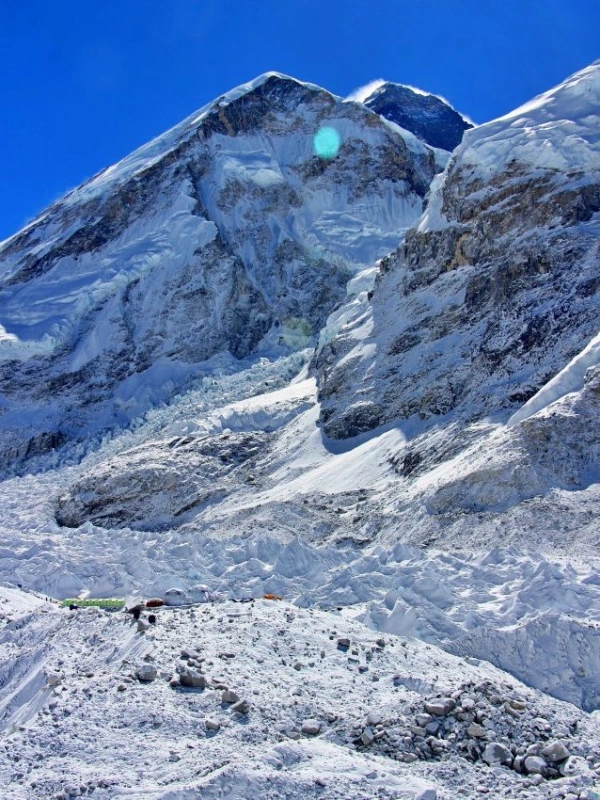
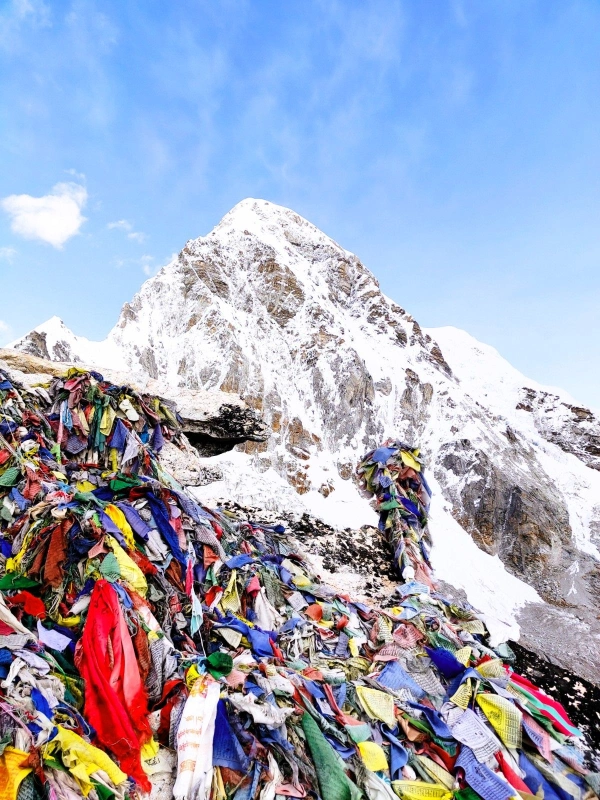
The Everest Base Camp with Cho La circuit is more than just a trek. It is an expert’s way to skip the crowded trails of the classic Everest Base Camp route. While the standard EBC trek has become a well-marked highway, the Cho La circuit takes you to the wild, western side of Sagarmatha National Park, where the landscapes feel far more raw and untouched.
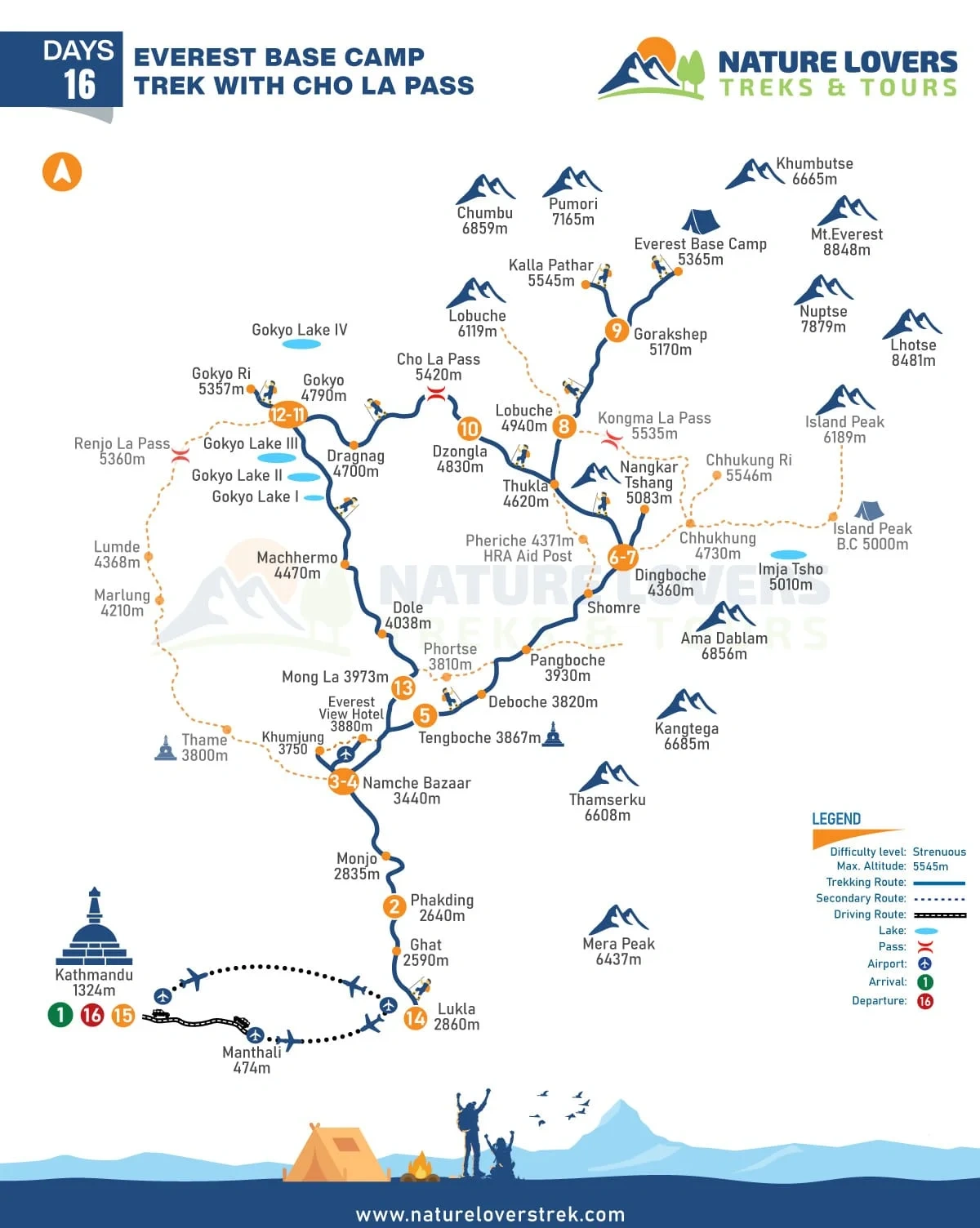
Your trek begins with the standard ascent to Namche Bazaar and the spiritual heart of Tengboche. However, after the high-altitude push to Gorak Shep and Khumbu Icefall, the itinerary takes a dramatic turn. Leaving the classic EBC route and the massive crowd behind, your journey continues toward Dzongla, the gateway to Cho La Pass.
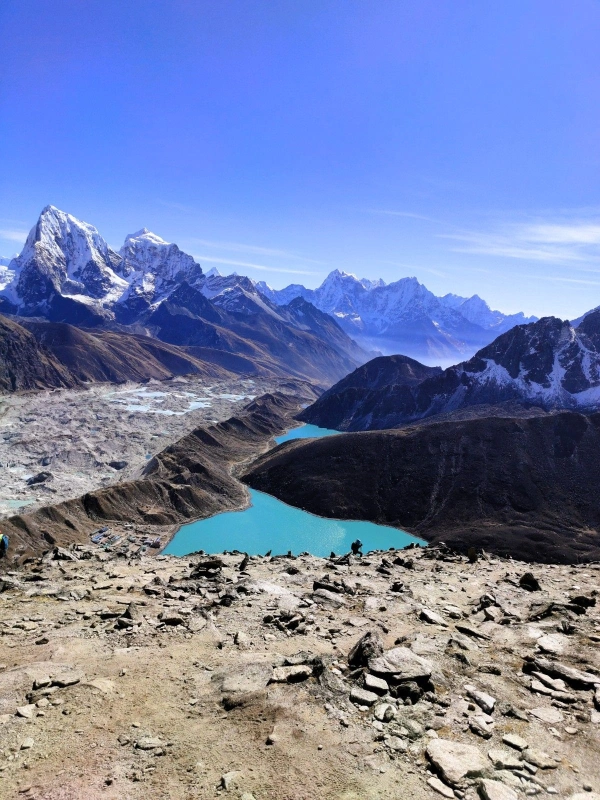
Crossing the Cho La Pass at 5,420 meters is a challenge that demands respect rather than technical mountain gear. Our guides live by the mantra bistarai-bistarai (slow pace). This is not just a saying here; it's a key to managing your heart rate and actually surviving the thinning air of the pass. On the other side, the breathtaking Gokyo Valley, Ngozumpa Glacier (the longest in the Himalayas), and the six sacred sapphire Gokyo Lakes await.
Join Nature Lovers Treks and Tours in this once-in-a-lifetime adventure. Everest Base Camp Trek with Cho La Pass slots are limited for 2026/2027. Book yours today!
Why Go on the Everest Base Camp Trek with Cho La Pass?
Skip the monotony of the out-and-back standard EBC route. The Cho La circuit takes you on a complete mountain journey in Nepal. Experience the classic Everest Base Camp touchdown and the authentic wilderness of the Himalayas.
Nature Lovers Treks and Tours offers a deep dive into the Khumbu region. Here are the top reasons to book this 14-day Everest Base Camp Trek with Cho La Pass adventure in 2026/2027.
Completing the Grand Circle: While most trekkers retrace their steps back down the same dusty trails they just climbed, our trek diverts to Dzongla and crosses the Cho La Pass. This ensures the majority of your journey covers entirely new ground. On the way up, you will find the vertical Khumbu and the sapphire-blue glacial lakes of Gokyo greet you on the way down.
The Big Four Panorama: While the Kala Patthar viewpoint is a conventional way to take in the close-up view of Everest, veteran guides often brag about the superior view from the 5,357-meter Gokyo Ri. From this vantage point, you will find the four 8000ers (Everest, Lhotse, Makalu, and Cho Oyu) in a single frame.
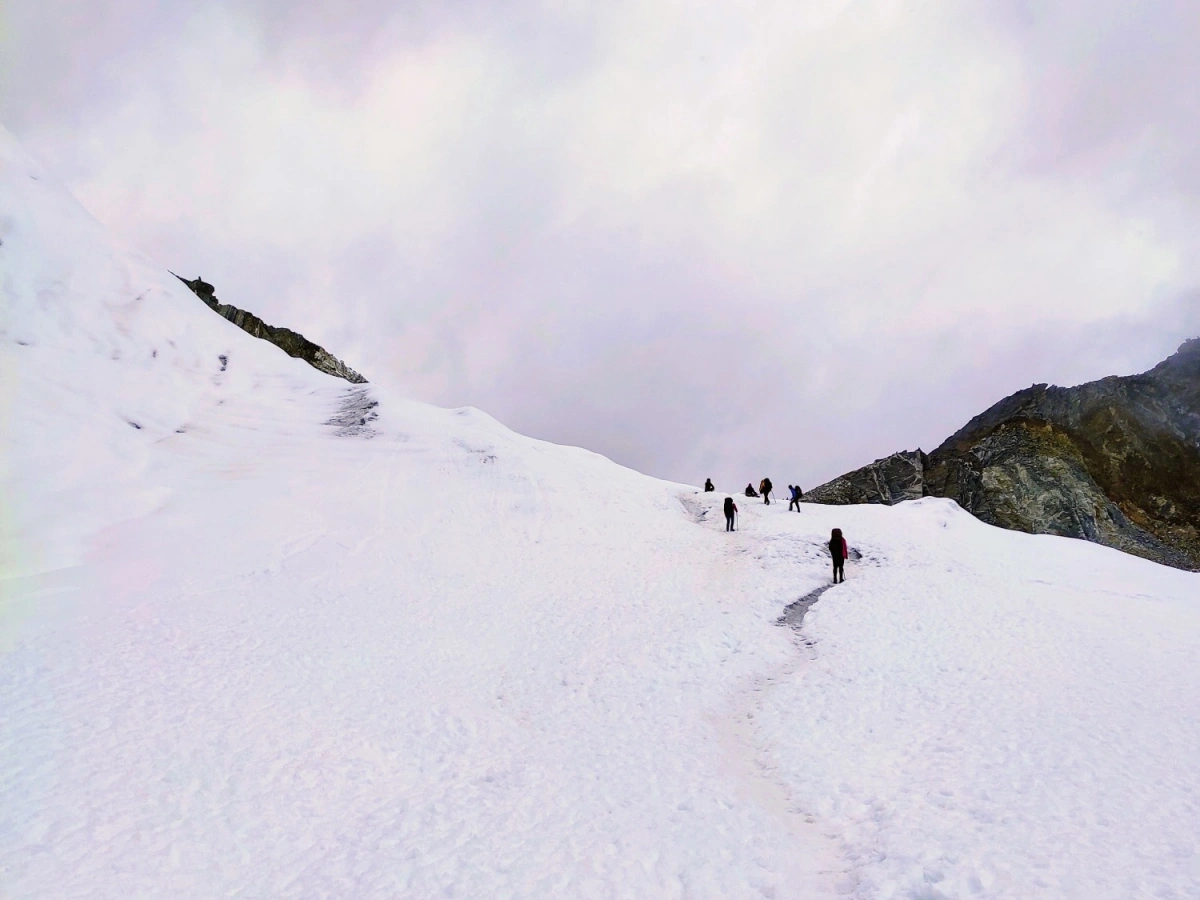
A True Glacial Trek: Crossing the Cho La Pass involves a strenuous journey across the blue glaciers. Underneath your boots, you will hear the ice creaking, a sound that is reserved only for high-altitude climbers. You don’t need technical gear, but navigating the icy paths along the “living” glacier gives you a genuine sense of mountaineering.
Escaping the Human Highway: Human traffic jams along the main EBC route are quite common. By the time you reach Lobuche, you will have had enough of the constant queues of hikers and yak caravans. The beauty of the EBC with the Cho La circuit is the diversion to Dzongla. While most of the crowd head back to Pheriche, you will turn west into the silent valley where the trails are narrower, and the lodges are quieter.
A Typical Day During the Everest Base Camp Trek with Cho La Pass in Nepal
Each day of your trek starts at around 6:30 AM with a sharp wake-up call and a hot mug of “Bed Tea.” In the high-altitude villages like Dzongla or Lobuche, the rooms are usually less insulated, and the tea is the only reason you will find to crawl out of your cozy sleeping bag. After tea, breakfast is served, usually consisting of a mix of porridge, eggs, or local Tibetan bread.
You will head the trail at 8:00 AM. The goal is to move before the “Zopkio” caravans take over the trails. In case a caravan passes by you, step aside and stay on the cliff side, or you risk being nudged off the edge.
Your guide lives by the mantra of “Bistarai, Bistarai” (slowly, slowly). In the 4,500+ meter altitude of the Himalayas, even the fittest of trekkers can succumb to altitude sickness if they don’t show respect to the mountains.
Lunch is served in a lodge along the trail. Try the secret weapon, a bowl of garlic soup, after the staple Dal-Bhat to keep your energy high and risks of altitude sickness low. By 3:00 PM, the piercing Himalayan chill settles in. You should aim to reach your lodge by then. Upon checking in, you will head to the dining hall and surround yourself with the central stove fueled by dried yak dung.
In the evening, your guide will perform the mandatory “Oximeter Check” after dinner. On the night before the Cho La Pass trek, the briefing is more focused.
Everest Base Camp Trek with Cho La Pass: Cost for Transportation, Permits, Guides, and Porters
The 14-day Everest Base Camp Trek with Cho La Pass is a serious commitment. It demands complex logistics as the circuit crosses the standard EBC trek, into the more remote Cho La and Gokyo Valley. Nature Lovers Treks and Tours manages all logistical arrangements, from the probable Manthali diversion to ensuring your permits for both the Everest and Gokyo sections.
Our package includes a 1-porter-per-2 trekker ratio, ensuring you can focus more on the trekking experience. While most arrangements are made in advance, we always suggest carrying extra local cash. You will spend some rupees on battery charging, the Everest Link Wi-Fi card, or the celebratory drink at one of the legendary bars in Namche Bazaar once the trek is over.
Everest Base Camp Trek with Cho La Pass Highlights 2026/2027
- Complete the "Grand Circle" of the Khumbu.
- Conquer the 5,420-meter Cho La Pass, over the crunching blue ice of the pass’s high-altitude glacier.
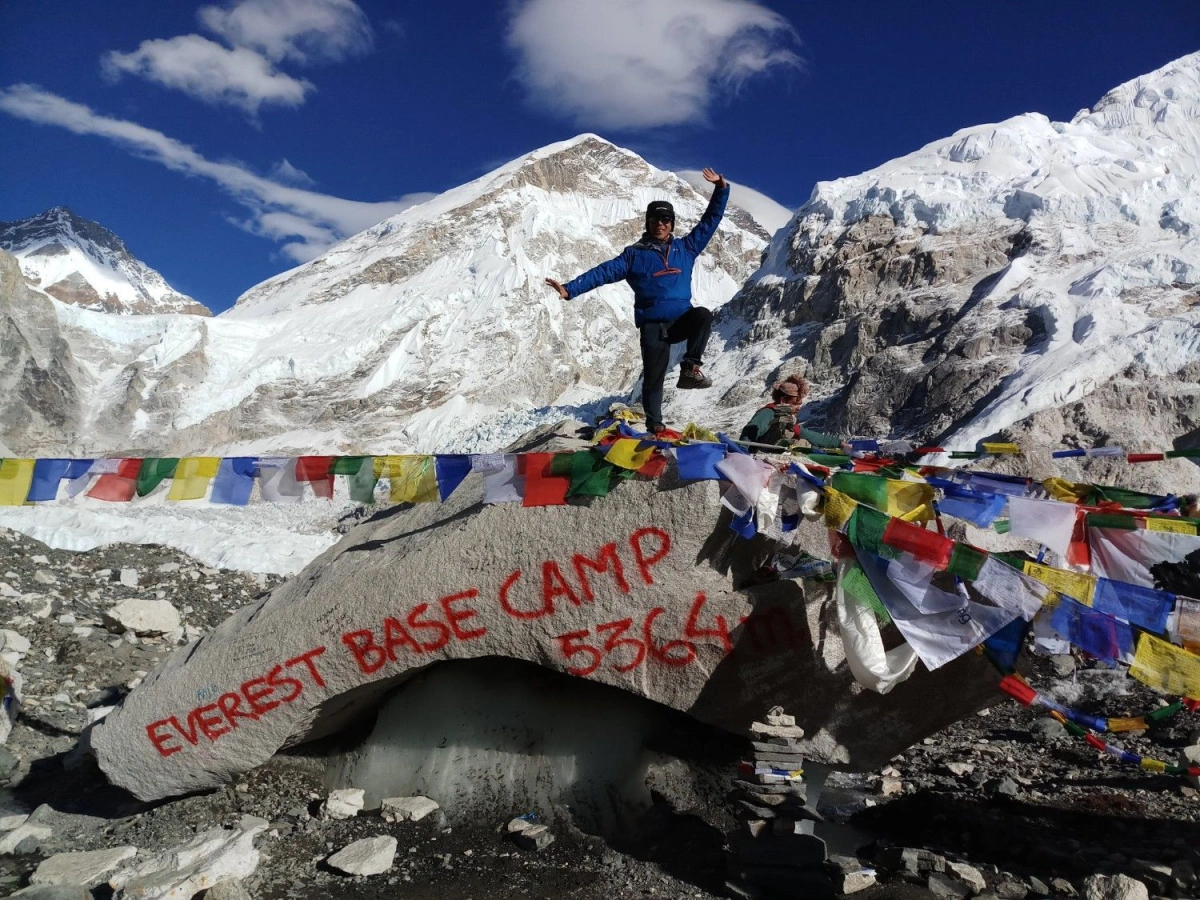
- Stand at the legendary Everest Base Camp and listen to the groans of the shifting Khumbu Icefall.
- Summit Gokyo Ri for a massive 360-degree panorama featuring four 8,000-meter giants: Everest, Lhotse, Makalu, and Cho Oyu.
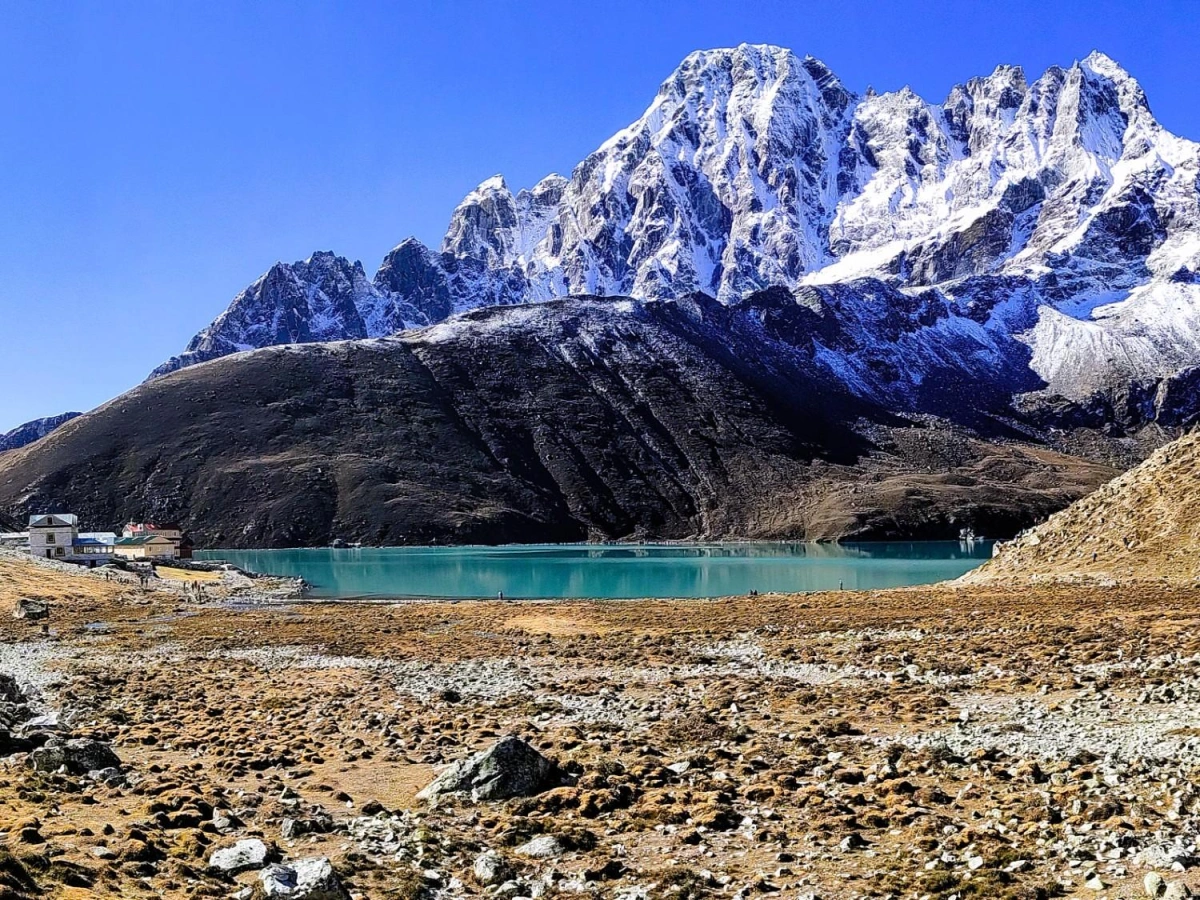
- Visit the sacred sapphire-blue waters of the Gokyo Lakes, the highest freshwater system on the planet.
- Reach the 5,545-meter vantage point of Kala Patthar to sunrise over the Everest summit.
- Navigate the edge of the Ngozumpa Glacier, the longest river of ice in the Himalayas.
- Explore the Ngozumpa glacier and take in a surreal world of debris-covered moraines and turquoise meltwater pools.
- Attend an afternoon prayer ceremony at the Tengboche Monastery, the spiritual heartbeat of the Sherpa community since 1916.
- Rest and re-climatize in the vertical streets of Namche Bazaar.
Customized Everest Base Camp Trek with Cho La Pass
The Everest Base Camp Trek with Cho La Pass is a comprehensive journey that includes the high-altitude Cho La Pass and the pristine Gokyo Lakes. While Nature Lovers Treks and Tours delivers a seamless itinerary, we understand no two trekkers share the same rhythm at 5,000 meters.
To cater to different needs and interests, we offer a fully customizable EBC with the Cho La Pass package. With this option, you can spend extra nights at Gokyo Lakes or opt for a helicopter exit to save your knees from the grueling descent.
Discuss your interests with Nature Lovers Treks and Tours travel experts, and together we will craft an itinerary that specifically meets your goals.