Ruby Valley Trek – 6 Day Nepal’s Best off-the-beaten-path

171 Reviews in TripAdvisor
57 Reviews in Google

The Ruby Valley trek is an underrated trekking destination in a hidden district of Dhading. The six-day adventurous journey follows the route through the Ganesh Himal. The trails pass through the traditional Tamang and Gurung villages located between the Langtang National Park and Manaslu Conservation Area. Trekkers will start their journey from Syabrubesi and reach Pangsang Pass, located at Dhading Besi, after climbing 3,842 m above sea level

What makes the Ruby Valley Trek demanding isn’t altitude. But a point-to-point trek itinerary offers a peaceful journey and an escape from the crowded trekking destinations. The Pangsang Pass, located at 3,842 m,  is the highest point of the Ruby Valley trek. Compared to Annapurna Base Camp, Everest Base Camp, and Thorong La Peak, the altitude is relatively lower. But the remoteness of this trek raises the difficulty for your entire journey.

Trekkers will spend most of their nights in family homestays rather than teahouses. After crossing Gatlang, you will have no mobile signal for 1 to 2 days, depending on your planned itinerary. The Ruby Valley adventure has a lower altitude than Manaslu and Langtang Valley, but in logistics, never take the journey lightly. Nature Lovers Treks and Tours has brought you a 6-day planned itinerary, permits, and cost guide for the Ruby Valley trek.

Duration
6 Days
Trip Grade
Moderate
Country
Nepal
Max Altitude
3,842m, Pangsang La Pass (Day 4)
Starts
Syabrubesi
Ends
Darkha Phedi / Dhading Besi
Group Size
Flexible ( Private / Group)
Activities
Trekking and Hiking
Best Time
Autumn (Sept - Dec) and Spring ( Mar - May)

What is the Ruby Valley Trek?

The Ruby Valley Trek follows a route that involves homestays and walking through the trails of Ganesh Himal. The trails also connect the cultural Tamang and Gurung villages of Chalish Gaun for 6 days in the Rasuwa and Dhading districts. The remote nature of the trek offers peaceful trails combined with mesmerizing views of the Himalayan region.

Where is Ruby Valley located?

Ruby Valley is located in the north-central part of the Rasuwa and Dhading districts of Nepal, forming Ruby Valley Rural Municipality. In 2017, it changed its local government and combined the Lapa, Sirtung, and Tipling village committees. It changed Ruby Valley into a single six-ward municipality, with Sirtung serving as the administrative center. The Ruby Valley fills the huge gap between Langtang National Park and Manaslu Conservation Area

Why is it called Ruby Valley?

The valley is named after the historical mines located near Somdang that produce zinc, copper, tin, and minerals, including ruby. According to the documents of the Paiputang mine, a 1.4 km tunnel was dug deep into the mountainside. Due to safety concerns and other political disputes, the project was closed, but they are planning to reopen the entire operation.

What makes Ruby Valley unique?

The four things that make Rubby Valley unique compared to other popular trekking routes. 

  • The short and easy itinerary
  • Spending nights at comfortable homestays rather than compact teahouses
  • Exploring the quite remote trails, enjoying the Tamang, Gurung, and Ghale cultures. 
  • The scenic alpine lake is combined with the Paiputang gem mine.

Even in the crowded season, you will have comfortable accommodation while walking through the least explored land of Nepal. Ruby Valley is a remote trekking region in Nepal, making it a perfect high-altitude adventure for travelers.

Ruby Valley Trek Overview

Trek Duration and Distance

The itinerary follows a  6-day adventure from Kathmandu to Syabrubesi, Gatlang, Somdang, Tipling, Chalish Gaon, Darkha Phedi, and back to Kathmandu, completing the Ruby Valley Trek. Trekkers have to cover around 70 km in five days. On the first day, you will take a ride from Kathmandu to reach Syabrubesi, located at 1,503 m above sea level. Syabrubesi is the starting point, and Darkha Phedi, also known as Dhading Besi, is the end point of your adventurous journey.

Maximum Altitude on the Trek

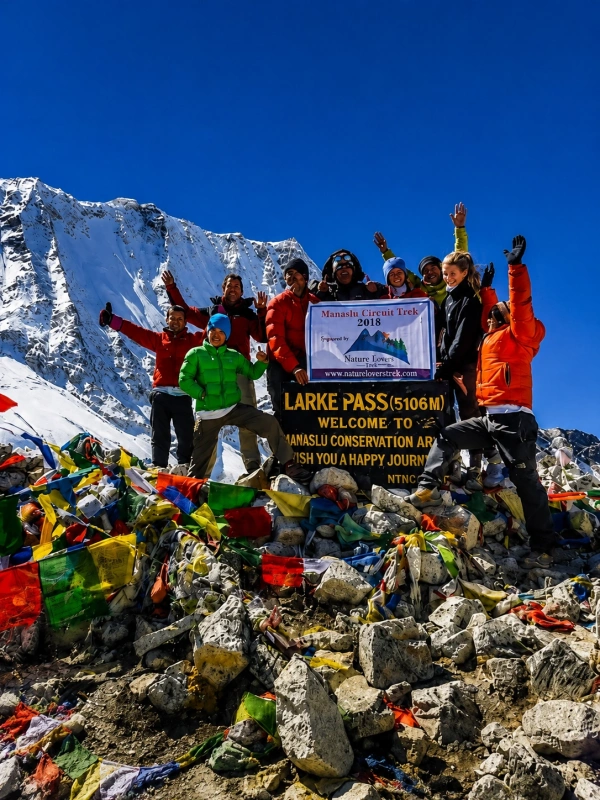
Pangsang La Pass is the highest point of the Ruby Valley trek, located at 3,842 m above sea level. It is around 1,500 lower than Everest Base Camp​​​​​​ (5,364 m), Thorong La(5,416 m)​​​​​​and Larkya La (5,106 m). The trek offers Nepal's best high-altitude trekking experience, while exploring the Himalayan region's culture and traditions for all adventure seekers.

Trek Region and Accessibility

The Ruby Valley Trek connects the routes of the Ganesh Himal, located around 150 km from Kathmandu Valley. It takes around 7 to 8 hours to drive from Kathmandu to Syabrubesi via the Trishuli River Valley. The trekkers will end this adventurous journey at Dhading Besi. It is not a popular route, so most of the trekkers and travelers will have the opportunity to experience something new.

Why Choose the Ruby Valley Trek?

Less Crowded than Other Popular Trekking Routes

The Ruby Valley Trek is a newly discovered high-altitude adventure trekking route filling the gap between theLangtang Valley Trek and theManaslu Circuit Trek. Compared to the Everest Base Camp and the Annapurna Base Camp trek, the trails are less crowded, with comfortable accommodation options even in peak season.

Authentic Tamang and Gurung Culture

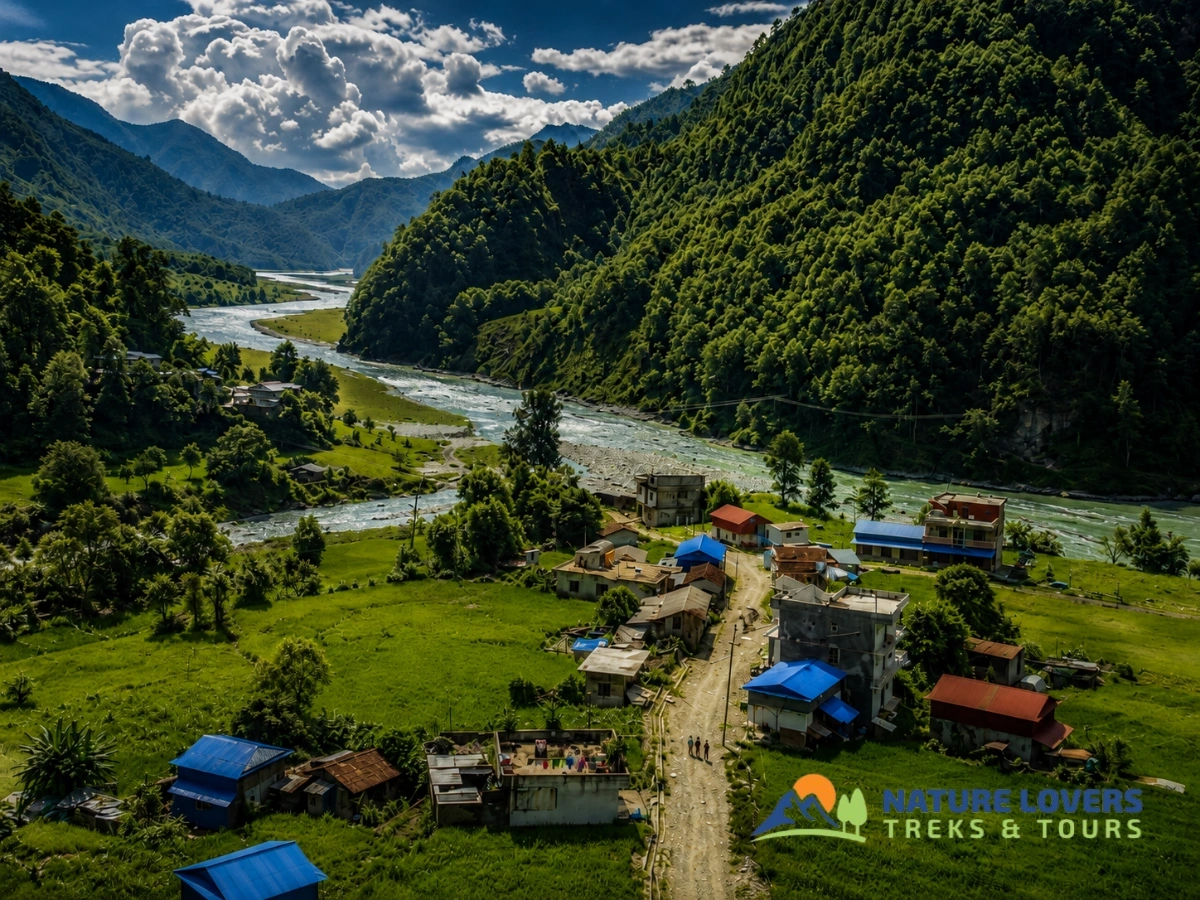
Trekkers will spend most of their nights in homestays rather than hotels and teahouses. The upper villages, such as Gatlang, Somdang, and Tipling, will give you the true Tamang culture experience. The other villages, such as Chalish Gaon and Shertung, are influenced by Gurung families. The journey is the perfect blend of Buddhist and Hindu culture with an opportunity to enjoy Ghatu dance and Dohori singing.

Stunning Ganesh Himal mountain views

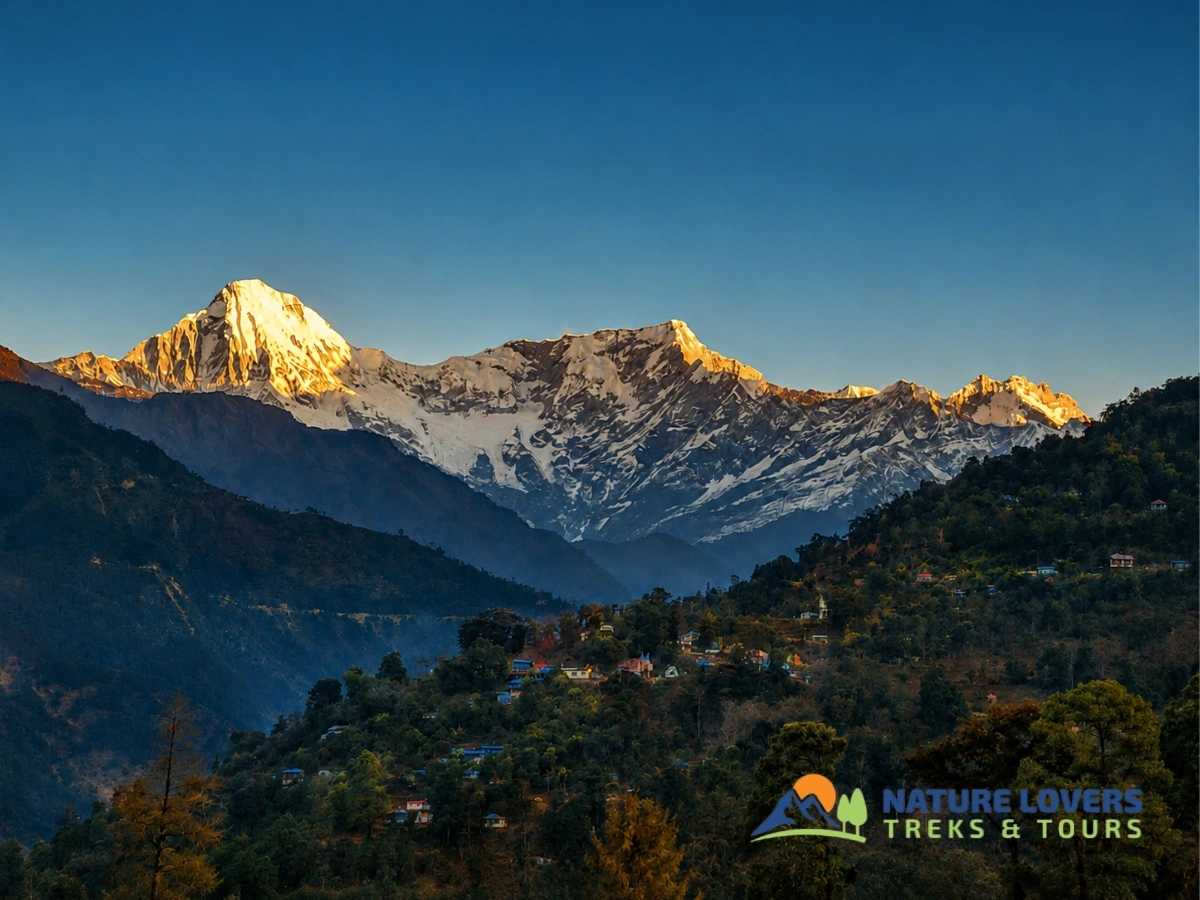
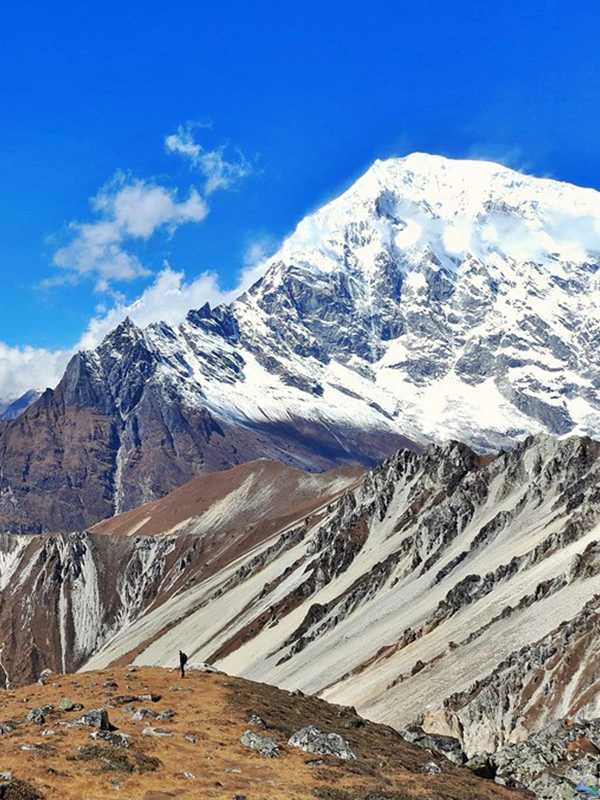
The Pangsang Pass, the highest point of the Ruby Valley trek, offers a majestic view of Ganesh Himal(7,422 m) with Langtang Lirung (7,227 m) and Mount Manaslu (8,163 m) to the east. You can also enjoy the majestic view of the other 23 snow peaks from different points of the trek.

Natural Hot Spring and Remote Villages

The trails also offer trekkers a day to enjoy the natural hot springs on their journey. You can reach Tatopani in around a 30-minute walk from Shertung. The word “Tato” means "hot," and "pani" means “water” in the Nepali phrase. You can enjoy the hot spring, but there are no lodges available, so you must carry your own lunch for this side trip.

Key Highlights of the Ruby Valley Trek

The Ruby Valley Trek is one of Nepal’s best off-the-beaten-path high-altitude journeys and offers an authentic Himalayan region culture experience. Here are a few key highlights of the Ruby Valley Trek

  • Pangsang La Pass (3,842 m) is the highest point of this trek.
  • Parvati Kunda, a religious site near Gatlang.
  • Enjoy the breathtaking view of mountains such as Ganesh Himal, Langtang Himal, Manaslu, and Annapurna. 
  • Peaceful trekking trails offering authentic Tamang and Gurung villages with rich local culture. 
  • Beautiful forest filled with rhododendron and Somdang’s old mines.
  • Natural hot springs and waterfalls near Shertung.
  • Less challenging and shorter trekking itinerary.

Short Itinerary & Altitude

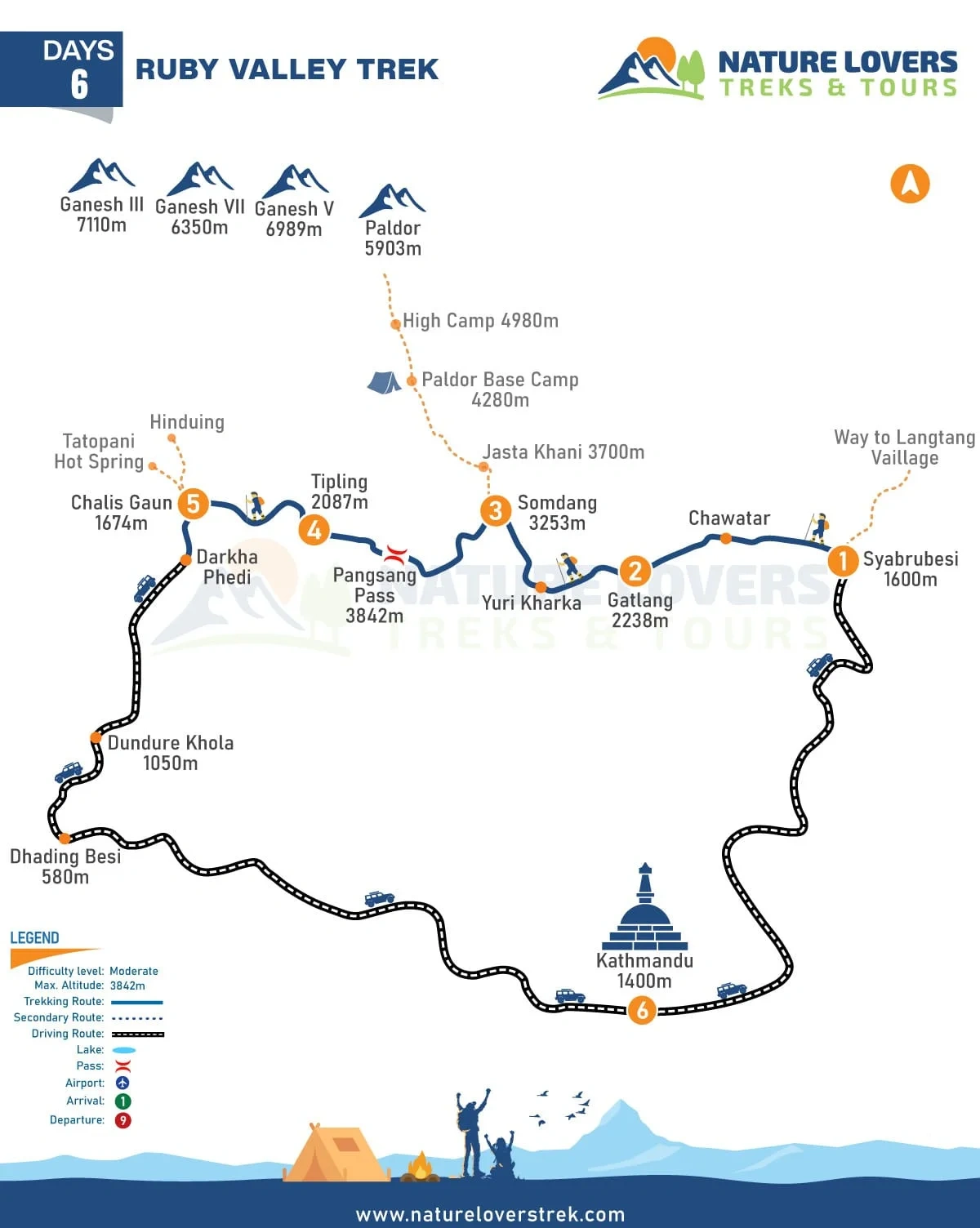
ruby valley trek map

Ruby Valley Trek – 6 Day Nepal’s Best off-the-beaten-path Detailed Itinerary

Nature Lovers Treks and Tours has planned a 6-day itinerary for the Ruby Valley Trek. Trekkers will cross Pangsang Pass, the highest point of the journey, and then return to Kathmandu on the sixth day, creating unforgettable memories.

Day 1

Direct drive from Kathmandu to Syabrubesi (1,503 m)

The first day of the journey starts with a long drive from Kathmandu through the Trishuli River valley to reach Syabrubesi. The journey takes around 7 to 8 hours to reach Syabrubesi, connecting both the Langtang Valley and the Manaslu region. 

Day 2

Trek to Gatlang (2,238 m)

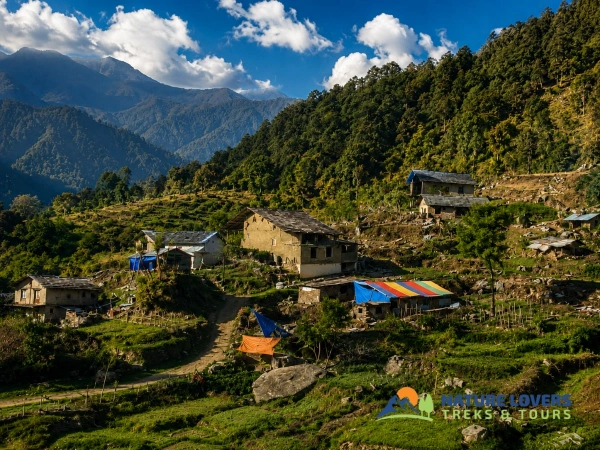
Now you will officially start your climb from Syabrubesi, crossing forests and Bahun Danda to reach Gatlang at the end of the day. Trekkers can enjoy the Tamang-influenced villages. The stone-built architecture of the village separates the Tamang Heritage trails, and the last village on this route is perfect for hot showers.

Day 3

Trek to Somdang (3,253 m)

The third day of your journey follows the route, passing through Parvati Kunda and climbing through rhododendron forest to reach Somdang. The trek takes around 6 to 7 hours, and trekkers can explore the old mining settlements and the popular Paiputang mine tunnel.

Day 4

Trek to Tipling (2,087 m)

The most physically demanding day of the entire trekking journey. Trekkers have to walk for 7 to 8 hours to climb Pangsang Pass (3,842 m), the highest point of the Ruby Valley Trek. The route was also used for trading Himalayan salt from Tibet. Trekkers can also enjoy rare species of wildlife, and they can also encounter Nepal's national bird, the Himalayan monal

Day 5

Trek to Chalish Gaon (1,674 m)

It's the second-to-last day of your trek, and trekkers have to walk only 4 to 5 hours to reach Chalish Gaon. The village is also known as the “place of gold” or Shertung's sister village. Gurung and Tamang villages are known for their traditional Dohori singing and their hospitality.

Day 6

Trek to Darkha Phedi and drive back to Kathmandu

The final day of your journey starts from Chalish Gaon. The jeep will pick up trekkers for the ride to DhadingBesi. After a 3- to 4-hour ride, you will reach Kathmandu. Now you can return to your country or spend time exploring Kathmandu Valley

Still Confused?
No worries. Our team is ready to guide you every step of the way.

Cost Details

Includes

  • Airport pick-up and drop-off  vehicle
  • Tourist bus transportation from Kathmandu to Syabrubesi
  • Accommodation in cultural family homestay
  • Hotel accommodation in Kathmandu
  • All meals during the trek including breakfast, lunch, and dinner 
  • Licensed trekking guide with high English language fluency throughout the trek
  • Covers salary, food, accommodation, and insurance for the trekking guide
  • Langtang National Park Permit
  • Complimentary  route map, company t-shirt, and certificate of appreciation
  • First Aid Medical Kit Bag
  • All government taxes and office service charges

Excludes

  • International airfare and Nepal entry visa fee (payable on arrival at Kathmandu airport)
  • Personal expenses during the trek such as laundry, phone calls, battery charging, Wi-Fi, hot showers, hot/cold beverages, snacks, or souvenirs
  • Travel and medical insurance (mandatory, must include emergency helicopter evacuation)
  • Personal trekking gear and equipment
  • Porter services
  • Gratuities to the field staff (highly expected)
  • Extra accommodation and meals behind schedule
  • Meals and sightseeing in Kathmandu
  • Any extra nights and accommodation not included in the itinerary
     

Equipment Lists

Packing List for the 6-day Ruby Valley Trek off-the-beaten-path Nepal trek.

Head
+
  • Sun hat or wide-brim trekking hat
  • Warm wool or fleece beanie
  • Buff or neck gaiter
  • Lightweight scarf (optional)
  • UV-protection sunglasses (Category 3 or 4)
  • Headlamp with extra batteries
Upper Body
+
  • 2–3 moisture-wicking trekking T-shirts
  • 1 long-sleeve hiking shirt for sun protection
  • Lightweight fleece jacket
  • Down or insulated jacket
  • Waterproof and windproof shell jacket
  • Lightweight thermal base layer (for colder months)
  • Sports bra (if applicable)
Hands
+
  • Lightweight trekking gloves
  • Insulated gloves for cold mornings and evenings (spring, autumn, and winter)
  • Waterproof outer gloves (optional during monsoon
Lower Body
+
  • 2 trekking pants
  • 1 thermal base layer (autumn, winter, or early spring)
  • 1 pair of hiking shorts (optional)
  • Comfortable camp pants or lightweight trousers
  • 3–4 pairs of moisture-wicking underwear
Foot Wear
+
  • Waterproof trekking boots with ankle support
  • Lightweight sandals or camp shoes
  • 3–4 pairs of trekking socks
  • 1 pair of warm wool socks
  • Gaiters (recommended during monsoon or snowy conditions)
Travel Documents
+
  • Passport (valid for at least six months)
  • Nepal visa (if applicable)
  • Travel insurance covering trekking
  • Trekking permits
  • Passport-size photos (2–4 copies)
  • Flight tickets or e-tickets
  • Emergency contact information
  • Hotel booking confirmation
  • Cash in Nepalese Rupees (ATMs are unavailable along the trail)
  • Credit or debit card (for use in Kathmandu)
Sun Stuffs
+
  • SPF 30–50 sunscreen
  • SPF lip balm
  • Sunglasses with UV protection
  • Sun hat
  • After-sun moisturizer (optional)
Toiletries
+
  • Toothbrush and toothpaste
  • Biodegradable soap
  • Shampoo (travel size)
  • Quick-dry towel
  • Wet wipes
  • Hand sanitizer
  • Toilet paper
  • Tissues
  • Nail clippers
  • Comb or hairbrush
  • Moisturizer
  • Deodorant
  • Feminine hygiene products (if needed)
Bag Packs
+
  • Water bottles or hydration bladder (2–3 liters)
  • Snacks and energy bars
  • Rain jacket
  • Camera, Phone, and Power bank
  • Personal medications
  • Sunglasses, sunscreen, gloves, and hat
  • Backpack rain cover
  • Dry bags or waterproof packing cubes
  • Zip-lock bags for electronics and documents
Climbing Equipments
+
  • Trekking poles
  • Sleeping bag (rated to -10°C for colder seasons)
  • Camera with spare batteries
  • Portable charger or power bank
  • Universal travel adapter (Type C, D, and M for Nepal)
  • Lightweight notebook and pen
  • Binoculars
  • Reusable shopping bag
  • Small repair kit (needle, thread, duct tape)
Medical & First Aid
+
  • Prescription medicines
  • Pain relievers
  • Allergy medicine
  • Anti-diarrheal tablets
  • Motion sickness tablets
  • Oral rehydration salts (ORS)
  • Insect repellent
  • Water purification tablets or portable water filter
  • Electrolyte tablets
  • Face masks (optional)
  • Hand sanitizer

Essential Information

Best Time to Start Your Ruby Valley Trek

Spring and autumn are the best times to start your Ruby Valley trek. Choosing the right time for any journey really matters. But if you want to join a high-altitude trekking adventure exploring the mountains and the Himalayan region's culture, choosing the right time will help travelers enjoy an authentic Himalayan experience. 

Spring Season (March to May)

Spring starts in March and lasts till May, bringing suitable temperatures for any high-altitude adventure. The forests are filled with different shades of rhododendron, and moderate temperatures will offer a clear view of the surrounding snow-peaked mountains.

Autumn Season (September to November)

Autumn starts in September, bringing stable weather and clear skies, offering mesmerizing snow-capped mountain views. The important festivals in Nepal, such as Dashain and Tihar, bring an entirely different trekking experience.

Winter Season (December to February) 

Winter brings cold temperatures, and sometimes trails are filled with a thick layer of snow. This can make crossing Pangsang Pass harder for beginners and intermediate trekkers, so winter is not the best time. But winter brings excitement and challenges for professional trekkers to experience new adventures. But make sure to check the weather and trail conditions before starting your winter journey

Monsoon Season (June to August)

Monsoon is the worst season for any high-altitude adventure. The heavy rain starts from June, making the trails slippery, and a forest filled with blood-sucking leeches can ruin your entire trekking experience. The uncertain weather conditions and dark clouds block the entire view of the mountains.

Permits Required for the Ruby Valley Trek

Trekkers need a Langtang National Park permit and a TIMS card (not compulsory) to join the Ruby Valley trek. The valley is located between Langtang Valley and the Manaslu Region. This trek is the most underrated and least explored destination that every trekker must experience.

Langtang National Park Permit

Trekkers must apply for the Langtang National Park permit, which costs around USD 30 per person. The Ruby Valley Rural Municipality cannot be called either a conservation area or a national park. Exploring Gatlang, Somdang, Tipling, and Chalish Gaon does not require any permits. The trek starts from Syabrubesi, a southern entrance connecting to Langtang National Park.

TIMS Card Requirements (not compulsory)

The Trekkers' Information Management System (TIMS card) costs around USD 17 per person. It is not a compulsory permit according to the Nepal Tourism Board. You must apply for this permit through a licensed guide and trekking agency. The TIMS card helps the government store data and information of foreign trekkers 

Important Note: Trekkers must carry two passport photos and physical copies of required permits. Checkpoints require physical copies of your permits because they do not accept digital picture submissions. 
 

You May Also Like

short and scenic
8-Day Langtang Valley Trek
Less-Crowded
Manaslu Circuit Trek
5.0(4 Reviews)

Manaslu Circuit Trek - 14 Days

From
US$950
US$1499
Need Help? Call Us+977 9851254172