Why the Mardi Himal Trek Is One of Nepal's Best Family Adventures
Yes, the Mardi Himal Trek is one of Nepal's best family adventures. Many people immediately think of theEverest Base Campor Annapurna Base Camp Trek when planning a Himalayan holiday. While these iconic treks are incredible, they can be physically demanding, involve higher altitudes, and have longer itineraries that may not suit every family.
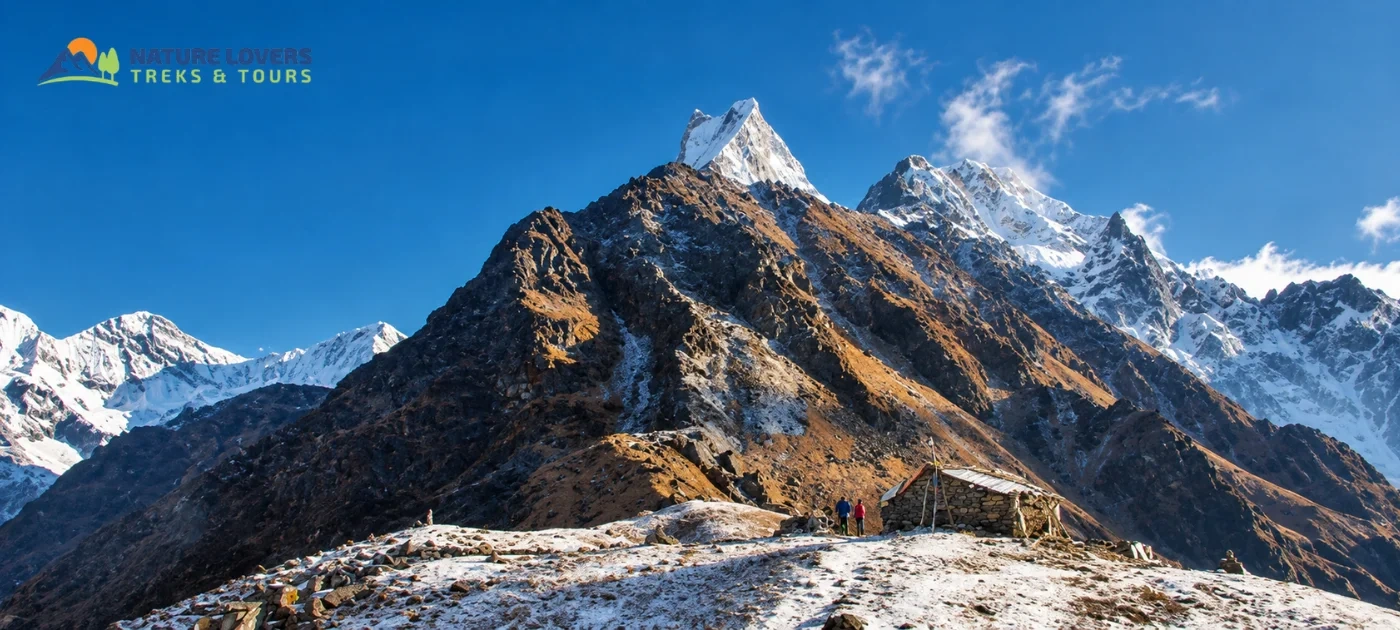
But the Mardi Himal Trek for Families offers something different. It combines spectacular Himalayan scenery with a shorter, quieter, and more manageable route, making it especially appealing for families seeking adventure without committing to a two-week expedition. Spring and autumn offer trekkers unforgettable views of Machhapuchhre (Fishtail) (6,993 m), Annapurna South (7,219 m), Hiunchuli (6,441 m), and Mardi Himal (5,587 m).
Can Children Join the Mardi Himal Trek?
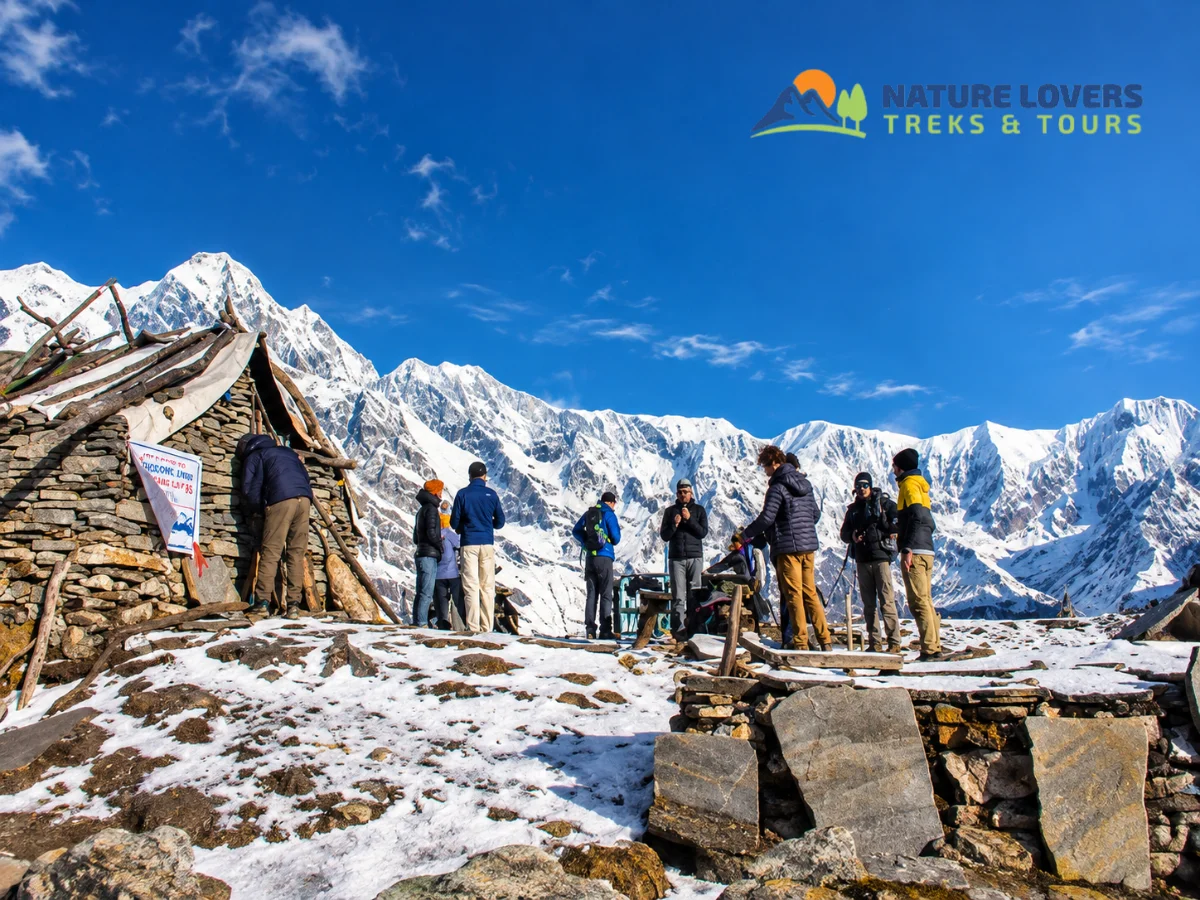
Yes, Mardi Himal is one of the best child-friendly treks in Nepal. However, the success depends heavily upon the child's age, fitness, and trekking experience. But generally, most guides and family trekking operators suggest children aged 8 and above are best suited for this trek, since they can walk independently for several hours a day with rest breaks.
Kids can typically enjoy the following
- The forest sections between Kande, Pitam Deurali, and Forest Camp feel like an adventure trail, with birds, monkeys, and changing tree cover.
- Bring cards to play, a book, or a journal while experiencing no WiFi and no screen time.
- During the teahouse, kids can enjoy the wood stoves and play with other trekkers' children.
- Meeting warm local Gurung families.
Can Teenagers Complete the Trek?
Yes, teenagers can complete the Mardi Himal trek easily because usually they are the strongest members of a trekking group. If they are reasonably active, they often adapt very well to the daily walking distances. The Mardi Himal trek gives an excellent opportunity for teenagers to disconnect from technology and enjoy outdoor adventure while learning teamwork, resilience, and responsibility. Many families choose Mardi Himal as their children's first Himalayan trekking experience before attempting longer routes such as the Annapurna Circuit or Everest Base Camp.
Is this Trek Suitable for Senior Family Members?
Yes, every year many trekkers in their 50s, 60s, and even 70s complete theMardi Himal Trek with the support of experienced guides and a comfortable itinerary. Many senior trekkers actually perform better than younger travelers because they maintain a steady walking rhythm and avoid rushing. Age alone should never determine whether someone can trek or not. Physical condition, preparation, and pacing are important factors for families.
Things seniors and their families should plan before joining the family trek to Mardi Himal. Not only Mardi Himal or any other trekking destination in Nepal, but elderly people also need more frequent medical checkups for heart conditions, knee issues, joint strain, and other concerns.
Note: Hiring a guide can help seniors control their pace.
Is altitude a concern for families on Mardi Himal?
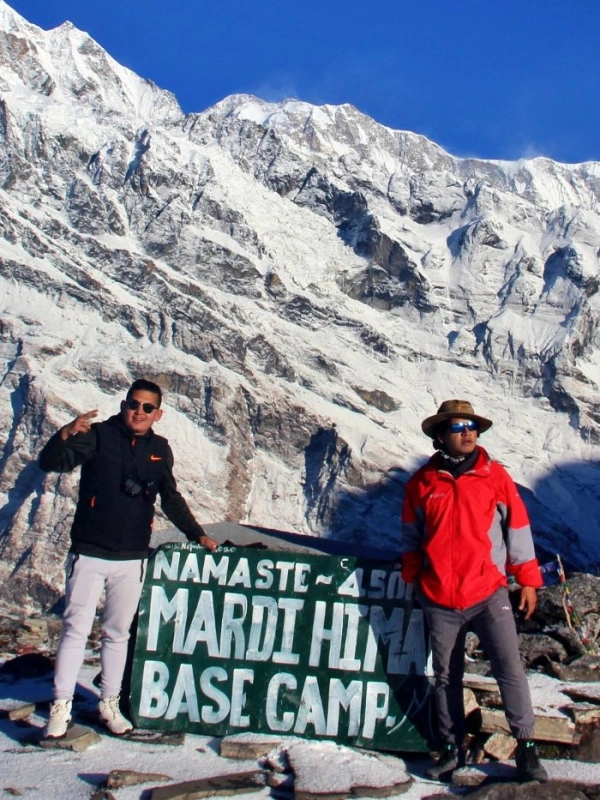
Yes, the trek reaches 4,500 m at Mardi Himal Base Camp, high enough that both children and adults can develop altitude sickness. At this elevation, oxygen levels drop, and the body needs time to adjust.
Common symptoms include headache, loss of appetite, fatigue, mild dizziness, difficulty sleeping, and nausea. Fortunately, most trekkers complete the Mardi Himal Trek without serious problems by ascending gradually, staying hydrated, eating well, and listening to their bodies.
Children can also develop altitude sickness. They don't know how to describe symptoms clearly, so parents should observe them closely rather than rely on self-reporting. Ghorepani Poon Hill, Ruby Valley, and the Langtang Valley Trek are alternative trekking destinations for family treks.
Note: For children, it's usually best to have an assistant guide. They can help in case of any problems or difficulties.
Tips to Reduce Altitude Risk on Mardi Himal Trek
Our experienced guides usually recommend these points to reduce the risk of altitude sickness during the Mardi Himal trek for families and others:
- Walk slowly and steadily.
- Drink 3–4 liters of water daily.
- Avoid alcohol during the trek.
- Eat enough carbohydrates and warm meals.
- Get adequate sleep.
- Never ignore symptoms of altitude sickness.
- Descend immediately if symptoms become severe.
Note: Hiring an experienced local guide is particularly valuable for families, as guides are trained to recognize early signs of altitude-related illness and make informed decisions if conditions change.
How fit should your family be to complete the Mardi Himal Trek?
The Mardi Himal trek for families does not require much athletic ability or mountaineering skills, but basic fitness makes the experience much more enjoyable. Even a few weeks of regular walking, stair climbing, or light hiking before arriving in Nepal can significantly improve endurance.
Is the Mardi Himal Trek Suitable for First-Time Trekkers?
Yes, the Mardi Himal trek is suitable for first-time trekkers. It is also famously known as a beginner-friendly trek in Nepal. It offers a short trek duration with excellent trail conditions and moderate altitude. It is an alternative trekking destination to Ghorepani Poon Hill and Annapurna Base Camp.
Best Time for the Mardi Himal Trek with Family
Choosing the right season can make a significant difference when planning the Mardi Himal Trek for families. Spring (March to May) and autumn (September to November) are considered the best seasons for families because they offer the most favorable trekking conditions in the Annapurna region.
Mardi Himal Trek for Families in Autumn Season (September to November)
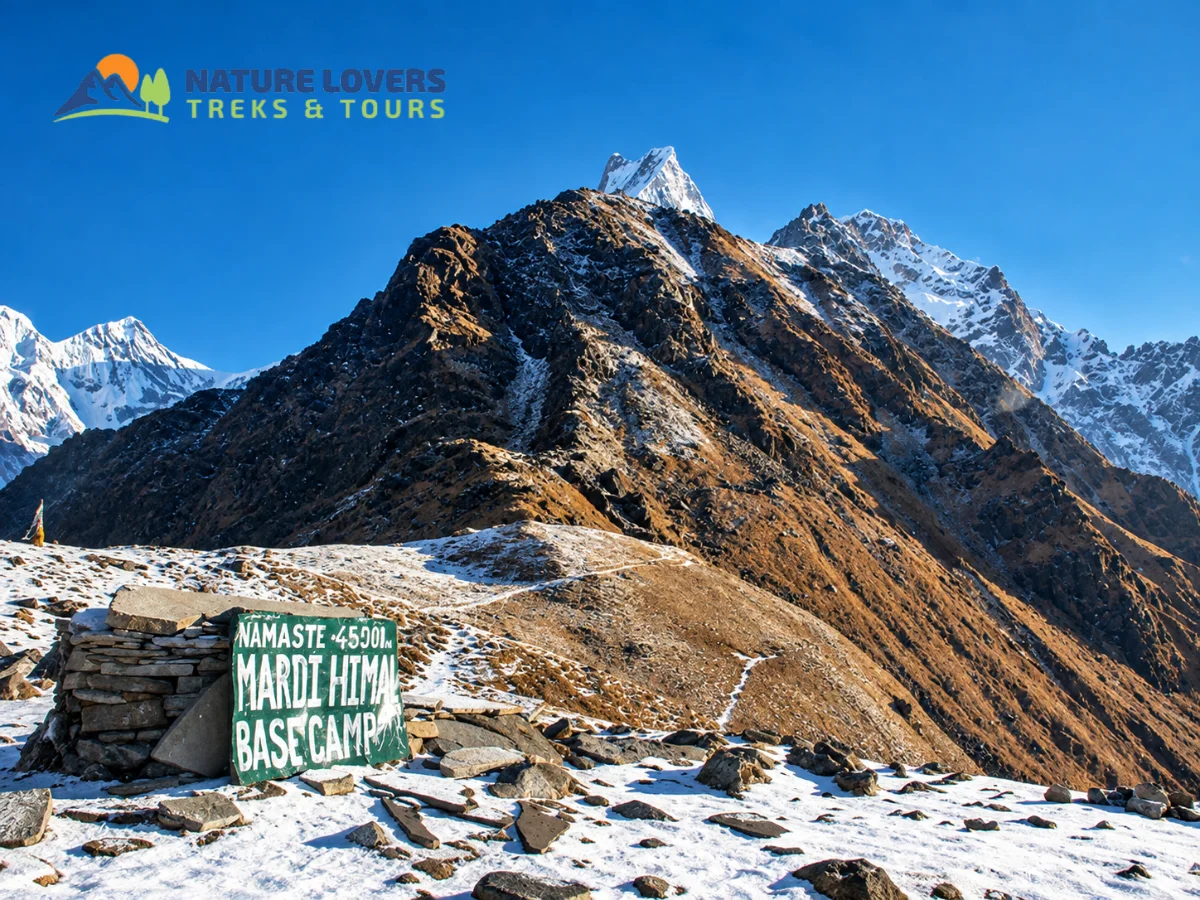
Autumn is considered the best trekking season for the Mardi Himal Trek for families. The stable weather has comfortable daytime temperatures reaching 12°C to 18°C (day) and -5°C to 5°C (night). The trails are in good condition, with clear mountain viewsof Machhapuchhre, Annapurna South, Hiunchuli, and Mardi Himal. Families appreciate the dry trails, stable weather, and predictable conditions, making it easier to plan each day's walk.
Note: During peak season, tea houses are full. So, early booking is recommended. Here are the best autumn treks in Nepal.
Mardi Himal Trek for Families in Spring Season (March to May)
Spring is also a perfect time to visit the Mardi Himal trek for families. As winter fades, the forest blooms with rhododendrons (red, pink, and white) and fresh greenery, marking the start of spring. The colorful trails make kids joyful. The days are warm at lower elevations, 10°C to 20°C. At night, it drops to 0°C or 5°C at high camp and base camp. During spring, weather is generally stable, with excellent visibility on most mornings. The snow remains on the surrounding Himalayan peaks, creating stunning contrasts against the clear blue sky. However, in the afternoon, the weather can change slightly. Also, here are a few other of the best spring treks in Nepal.
Mardi Himal Trek for Families in the Winter Season (December to February)
Although the Mardi Himal trek is possible in the winter, it is not recommended for children and older people. The days are clear, with temperatures around 0°C to 9°C, but nights are colder, reaching -10°C to -15°C. The trails will be icy above the low camp, and some higher teahouses may have limited facilities or close briefly during the coldest weeks. The winter Mardi Himal trek is only for intermediate and professional trekkers.
Mardi Himal Trek for Families in Monsoon Season (June to August)
The monsoon is one of the hardest seasons in Nepal, with heavy rain. Leeches are on lower trails, slippery stone steps, and muddy trails. Even the mountain views are blocked due to the unpredictable weather. During the day, the temperature reaches 25°C and drops to 5°C-10°C at night. It is not recommended for families or others.
Family-Friendly 9-Day Mardi Himal Trek Itinerary
One of the biggest advantages of choosing the Mardi Himal Trek for families is that the itinerary can be completed at a comfortable pace without feeling rushed. Compared to longer Himalayan treks like Upper Mustang, Mansalu Tsum Valley Trek, and others, this route allows families to enjoy the journey while spending quality time together in nature.
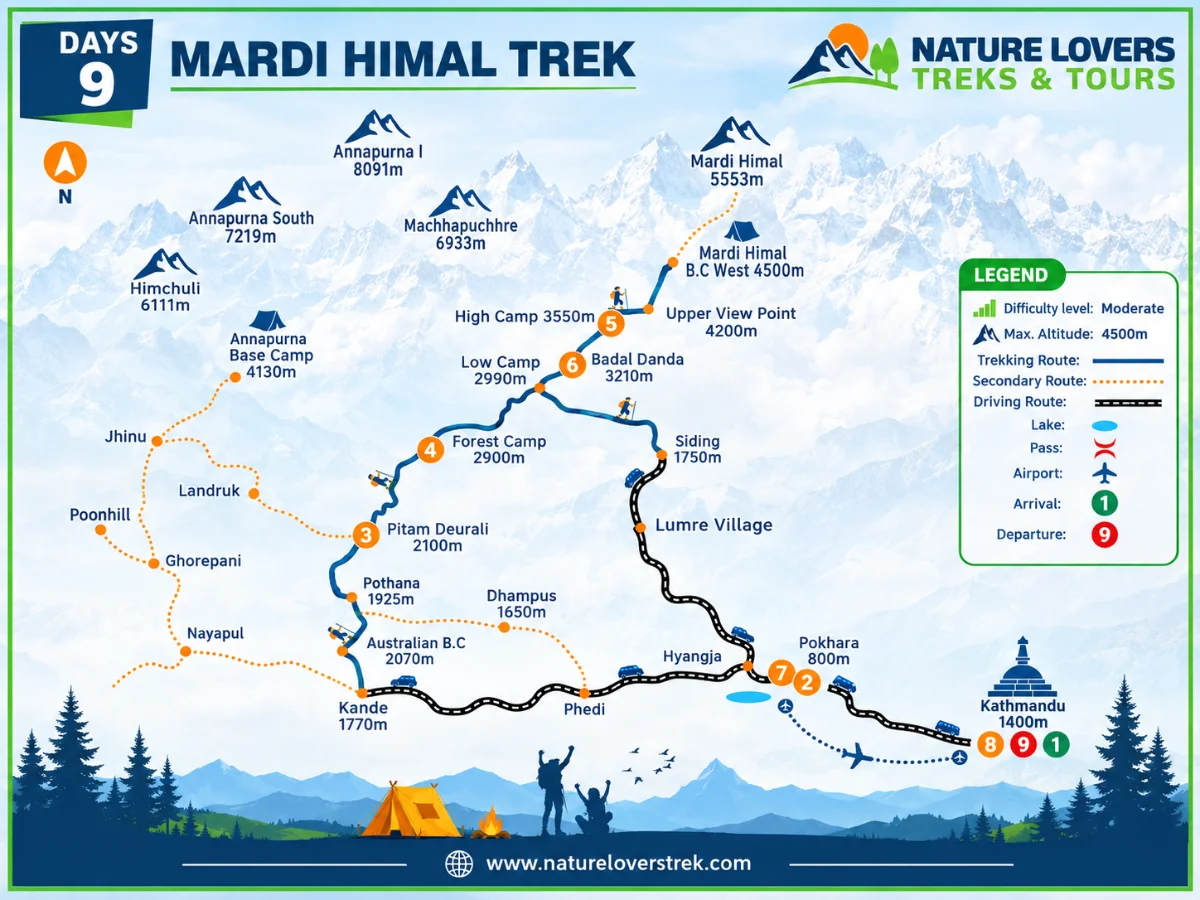
Day 1: Arrival at Tribhuvan International Airport (1,400 m) and transfer to hotel
Our representatives will be waiting for you at the arrival gates and then transfer you to the hotel in Kathmandu (Thamel). After checking into your hotel, you can relax and explore the Thamel area at your own pace. In the evening, you will meet our company representatives in the lobby for the trek briefing.
Day 2: Drive from Kathmandu to Pokhara (800 m)
After breakfast, your journey from Kathmandu to Pokhara begins by tourist bus or private vehicle. The drive takes you through terraced farmlands, small villages, flowing rivers, hills, and distant mountain peaks such as Machhapuchhre. Upon arrival in Pokhara, check into your hotel and take some time to relax. In the evening, you can spend time exploring the lakeside area, essential trekking gear, and a short briefing by your guide.
Day 3: Drive from Pokhara to Kande (1,770 m) & Trek to Pitam Deurali (2,100 m)
After breakfast, we drive for roughly 45 minutes to an hour from Pokhara to Kande. From here, the trek begins with a steady, sometimes steep, climb through forest and stone stairways up to Australian Camp and onward to Pitam Deurali. Walking time is around 3 or 4 hours.
Day 4: Trek from Pitam Deurali to Forest Camp (2,600 m)
Today's trail is a little deeper into rhododendron and oak forest, then gradually towards Forest Camp. The dense canopy keeps the walk cool and shaded, and kids often enjoy spotting birds and langur monkeys along the way. Walking time is roughly 4 to 5 hours at a family pace, with plenty of breaks. This is a good day to slow down deliberately, since it also serves as a gentle acclimatization.
Day 5: Trek from Forest Camp to High Camp (3,550 m) via Low Camp (2,970 m)
The day begins with a thin forest as you climb from Forest Camp to Low Camp and then continues upward to High Camp. The tree cover finally gives way to an open ridgeline and close-up views of Machapuchare and the Annapurna range. This is a longer day, around 5 to 6 hours of walking, and the steepest sustained climbing of the trek so far.
Note: Families should set a slow, steady pace and take a proper lunch break at Low Camp before continuing. High Camp's exposed ridge location makes it noticeably colder at night, so warm layers become essential from this point on.
Day 6: Early Morning Hike to Mardi Himal Base Camp & Trek Down to Badal Danda (3,210 m)
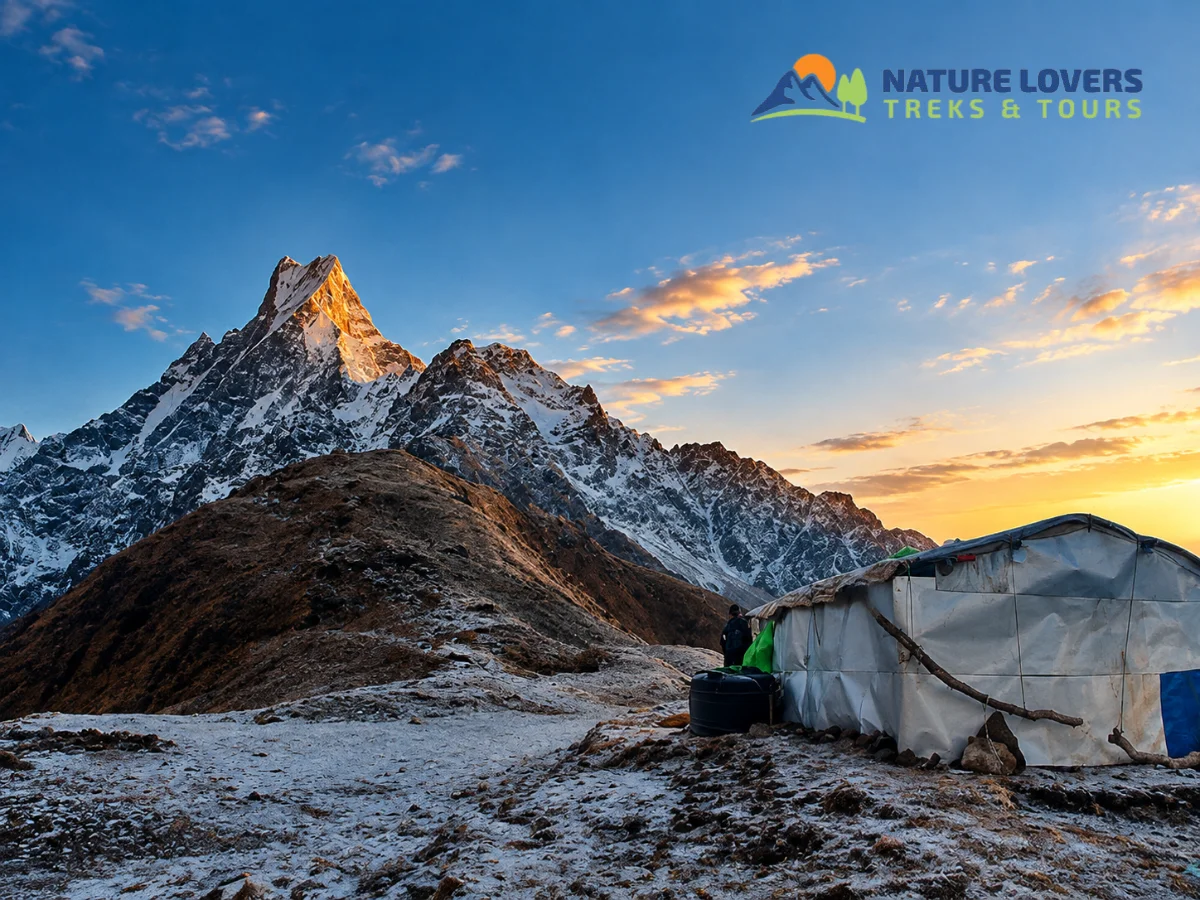
This is the highlight day. Families set off before sunrise (often around 4:30–5:00 AM) for the roughly 2- to 3-hour climb to the Mardi Himal Viewpoint and Base Camp (around 4,200–4,500 m) to catch sunrise lighting up Machhapuchhre and the surrounding peaks. After the views and photos, the group descends back through High Camp and continues down to Badal Danda. Total walking time for the day, including the ascent, is typically 6 to 7 hours.
Day 7: Trek from Badal Danda to Siding (1,700 m) & Drive Back to Pokhara
The final trekking day descends steadily through forest back toward the village of Siding, where a jeep or vehicle meets the group for the drive back to Pokhara. Walking time is around 3 to 4 hours, mostly downhill, so trekking poles are valuable for protecting knees, especially for seniors. By afternoon, the family is back in Pokhara for a hot shower and a good meal, and the itinerary is complete
(Note: Some families choose to add a rest or buffer day at High Camp or Low Camp if a child or senior needs extra acclimatization time so that guides can adjust this on the ground without disrupting the overall trip.)
Day 8: Drive from Pokhara to Kathmandu
On this day, we will be returning to Kathmandu after breakfast. Either drive back to Kathmandu in 6 to 7 hours, depending on road conditions, or take a scenic 30-minute flight from Pokhara with an additional cost for family ease. After arriving in Kathmandu, you will check in at the hotel, have a complimentary dinner with our team, and receive a certificate.
Day 9: Final departure
Your 9-day Mardi Himal Base Camp trek officially concludes today. Our representatives will assist in transferring you to Tribhuvan International Airport in a private vehicle.
Mardi Himal Trek Cost for Families
The Mardi Himal Trek for Families costs around USD 380 to USD 800 per person. Budget planning is one of the most important steps when organizing a Mardi Himal trek for families. The trek is considered one of the more affordable adventures in the Annapurna region. Total cost depends on several factors, including family size, preferred level of comfort, the season, and whether you choose a guided package or plan the trip independently.
For most families, booking a trekking package with a local company offers the best value. It simplifies the planning process by including permits, transportation, accommodation, meals, and the support of experienced guides and porters. After completing this trek, families try other trekking destinations in Nepal, and here are a few cost guides for the Manaslu Circuit Trek and Everest Base Camp Trek.
Permits Required for the Mardi Himal Trek
Before starting the Mardi Himal Trek, every foreigner must obtain the permits to enter the protected area. Since the trail lies entirely within the Annapurna Conservation Area, permits are checked at official checkpoints.
Annapurna Conservation Area Permit (ACAP)
The Annapurna Conservation Area is a protected area administered by the National Trust for Nature Conservation (NTNC) under the Government of Nepal. While travelling through the conservation area in Nepal, all trekkers are required to carry their permits. This is likely the ticket to the Mardi Himal trek. Revenue collected from the ACAP permit helps fund conservation projects, wildlife protection, trail maintenance, waste management, and community development throughout the Annapurna region. The ACAP is checked at Pothana, after Kande and before Forest Camp.
ACAP Permit Cost
- ACAP Permit Cost for Foreign Nationals: NPR 3000
- Permit Cost of ACAP for SAARC Nationals: NPR 1000
- Children under 10 years are free.
Trekkers Information Management System (TIMS)
Information about the TIMS requirement for Mardi Himal has varied in recent years, with some sources stating it is required while others report that only the ACAP permit is currently enforced on this route. Because trekking regulations can change, it's best to confirm the latest requirement with your trekking agency or the Nepal Tourism Board before your trek.
Note: If you're booking with a registered trekking company, they will usually arrange all necessary paperwork on your behalf.
Machhapuchhre Rural Municipality Permit (MRMP)
The Mardi Himal Trek passes through Machhapuchhre Rural Municipality, where a local permit has been introduced to support tourism development, trail maintenance, and community projects.
MRMP Permit Cost
- Permit Cost of MRMP for Foreign Nationals: NPR 500
- Permit Cost of MRMP for Nepali Citizens: NPR 100
Tea Houses, Food & Accommodation on the Mardi Himal Trek for Families
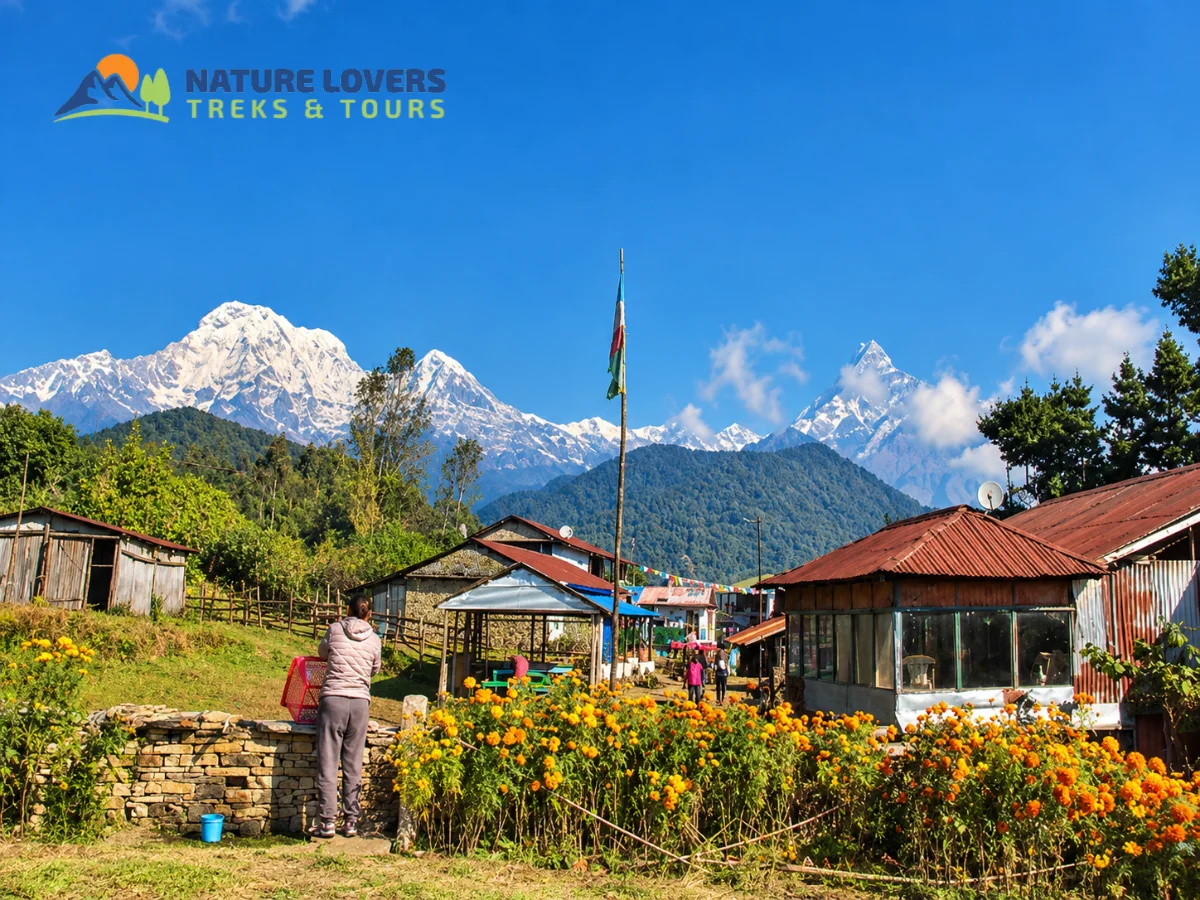
When trekking in Nepal, most families are concerned about tea houses, food, and accommodations. Fortunately, the Mardi Himal Trek for families offers comfortable tea house accommodation throughout the route, allowing trekkers to enjoy the trek without carrying any camping equipment.
The facilities are simple compared to hotels in Kathmandu or Pokhara, but they provide everything most families need. Warm hospitality, freshly prepared meals, and cozy dining rooms create a welcoming atmosphere.
What Are Tea Houses in Mardi Himal?
During the Mardi Himal trek for families, tea houses play a vital role. Tea houses are locally owned by mountain lodges or families that provide accommodation, meals, and basic services for travellers. They are the backbone of trekking in the Annapurna region and offer an authentic glimpse into the lifestyle of Nepal's mountain communities.
Room facilities on the Mardi Himal Trek
Rooms along the Mardi Himal Trek are clean, simple, and designed for comfort after a day of trekking. Most feature twin beds with mattresses, pillows, and blankets, but bringing your own sleeping bag is recommended, especially during colder months. In lower elevations, some tea houses offer attached bathrooms; as you gain altitude, shared bathrooms become more common. For the final push to base camp or upper viewpoint, trekkers usually leave their bags at the lodges and pick them up on the return.
Are Tea Houses Comfortable for Families?
Yes. Many families are surprised by how welcoming and comfortable the tea houses are. Hosts are often happy to accommodate families by arranging rooms close together whenever possible. Some tea houses can also provide extra blankets or adjust meal times for children if requested in advance. The dining room quickly becomes the center of attraction, where everyone gathers around a warm heater to enjoy dinner, play cards, or chat with fellow trekkers in the evening.
Food on the Mardi Himal Trek
Most trekkers are often surprised by the variety of food available during the trek. Every tea house menu offers both traditional Nepali dishes and international options. Last time, our guest was also shocked that they could eat pizza during their trek. The vegetables are fresh and cultivated in their own fields. While the choices become slightly more limited at higher elevations, you'll still find plenty of nutritious meals to keep your family energized.
Note: Don't forget to try Dal Bhat, which provides you with 24 hours of power.
Hot showers, toilets, and bathroom facilities
Although you can find Western-style toilets and bathroom facilities attached to rooms at lower elevations, at higher altitudes you have to share them with others. The same goes for hot showers: the higher the altitude, the more the teahouse charges, as it has limited options. But the facilities are always in good condition so that travelers don't have any problems.
Final Thoughts on Mardi Himal Trek for Families
The Mardi Himal trek for families is undoubtedly one of the best family-friendly treks in Nepal. The Mardi Himal trek for families is more than a holiday; it's an opportunity to move away from busy schedules, connect with nature, and create unforgettable memories together. It offers the Himalayan adventure without the extended duration or technical challenges of some of Nepal's more demanding trekking routes. The comfortable tea houses, welcoming local communities, and flexible itinerary are well suited for active children, parents, and seniors alike.
Mardi Himal Trek for Families FAQs
Is the Mardi Himal Trek suitable for families?
Yes. The Mardi Himal Trek is one of the most family-friendly treks in Nepal. With a well-planned itinerary, experienced guide, and reasonable fitness level, children, parents, and active seniors can all enjoy this beautiful Himalayan adventure.
What is the recommended minimum age for children on the Mardi Himal trek?
There is no official age limit, but most trekking guides recommend the trek for children aged 8 years and above who enjoy walking and outdoor activities.
Some younger children can also complete the trek with additional preparation, shorter walking days, and strong family support.
Can senior citizens complete the Mardi Himal Trek?
Absolutely. Many trekkers in their 50s, 60s, and even 70s complete the trek every year. Good health, reasonable fitness, proper acclimatization, and a comfortable walking pace are much more important than age.
How difficult is the Mardi Himal Trek for families?
The trek is generally rated as moderate. Although there are some long uphill sections, particularly between Rest Camp and High Camp, there are no technical climbing sections. Families who prepare well and walk at a comfortable pace usually find the trek challenging yet achievable.
What is the highest point of the Mardi Himal trek?
The highest point on this itinerary is Mardi Himal Base Camp (4,500 meters), offering panoramic views of Machhapuchhre, Annapurna I, Annapurna South, Hiunchuli, and the surrounding Himalayan range.
How many days does the family itinerary take in Mardi Himal?
For families, it usually takes 8 to 9 days to complete the Mardi Himal.
What is the best season for the Mardi Himal trek for families?
The best seasons are spring (March to May) and autumn (September to November). Spring offers pleasant temperatures and blooming rhododendron forests, while autumn provides clear skies and stable weather with beautiful mountain views.
What kind of accommodation is available in Mardi Himal?
During the Mardi Himal trek, accommodation is available in comfortable tea houses throughout the trek. Rooms are simple but clean, with twin beds, blankets, and shared dining areas. Most tea houses also serve freshly prepared meals and hot drinks.
Do we need a guide and porter for the Mardi Himal trek?
Although it depends on the trekker, hiring a porter and guide is highly recommended for families. Instead of carrying heavy backpacks, parents and children can focus on enjoying the trek. Guides also provide you with knowledge about the flora, fauna, and more.
Is altitude sickness common in Mardi Himal?
Most trekkers complete the Mardi Himal Trek without serious issues. However, because the trek reaches 4,500 meters, proper acclimatization, adequate hydration, and a gradual pace are essential.
Always inform your guide immediately if anyone develops symptoms such as severe headache, dizziness, nausea, or unusual fatigue.
What permits are required for Mardi Himal?
For the Mardi Himal trek, you'll generally need the Annapurna Conservation Area permit (ACAP), the Trekkers Information Management System card (TIMS), and the Machhapuchhre Rural Municipality permit (MRMP). If you trek with a company, it can arrange all necessary permits before the trek begins.
Is travel insurance necessary for Mardi Himal?
Yes. Comprehensive travel insurance covering trekking up to 4,500 meters, emergency medical treatment, and helicopter evacuation is strongly recommended.
Do we need prior trekking experience as a family for Mardi Himal?
No formal experience is required, but some prior hiking or walking fitness makes the trek noticeably more enjoyable, especially for children and seniors.
Can we customize the itinerary for a slower pace during the Mardi Himal Trek?
Yes. Most guides and agencies are happy to add buffer days, shorten daily walking distances, or split longer days into two, particularly for families with young children or seniors.
What should children carry in Mardi Himal?
Children should carry only lightweight items, such as a water bottle, rain jacket, warm hat, gloves, snacks, and a small camera (optional). Parents or porters should carry heavier equipment.
Is there a mobile network and Wi-Fi in the Mardi Himal Trek?
Yes, there is mobile network and Wi-Fi during the Mardi Himal Trek. But the mobile network doesn't provide much signal at higher elevations. So, many tea houses also offer Wi-Fi for an additional charge, but the connection may be slow.
Can Mardi Himal be done during the winter season?
Yes, the Mardi Himal trek can be done during the winter season. But it is only recommended for young, experienced, and strong family members with proper gear and equipment.