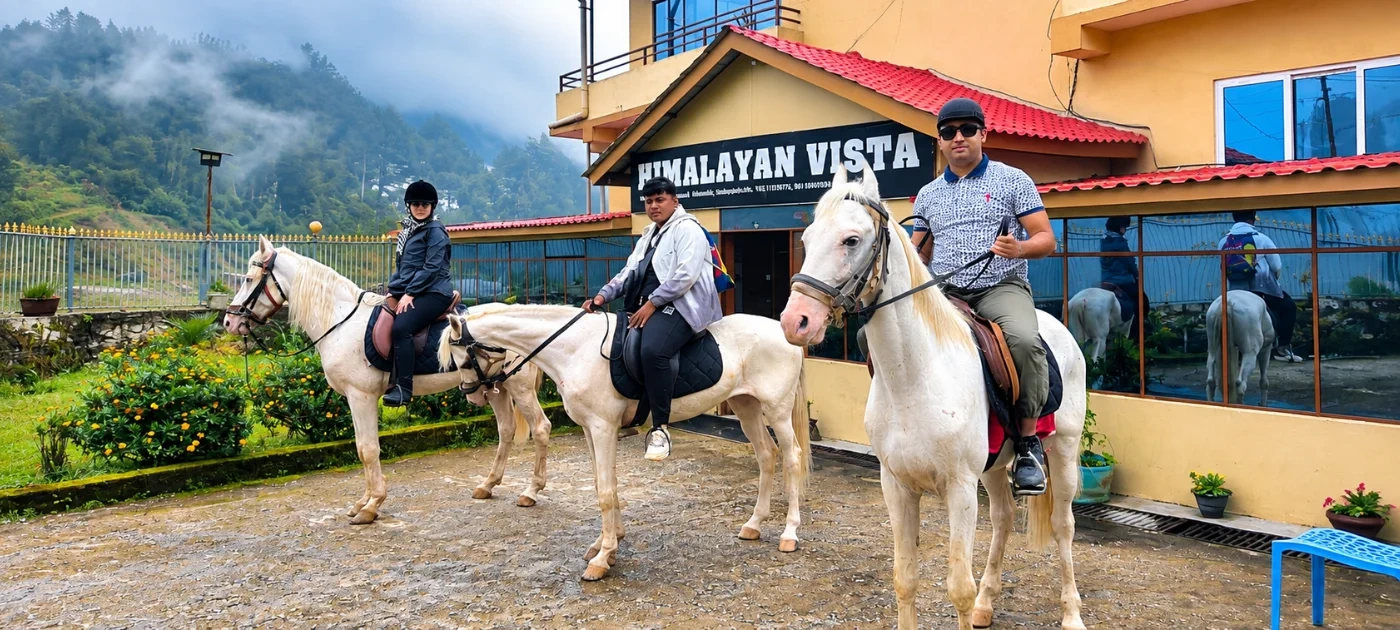
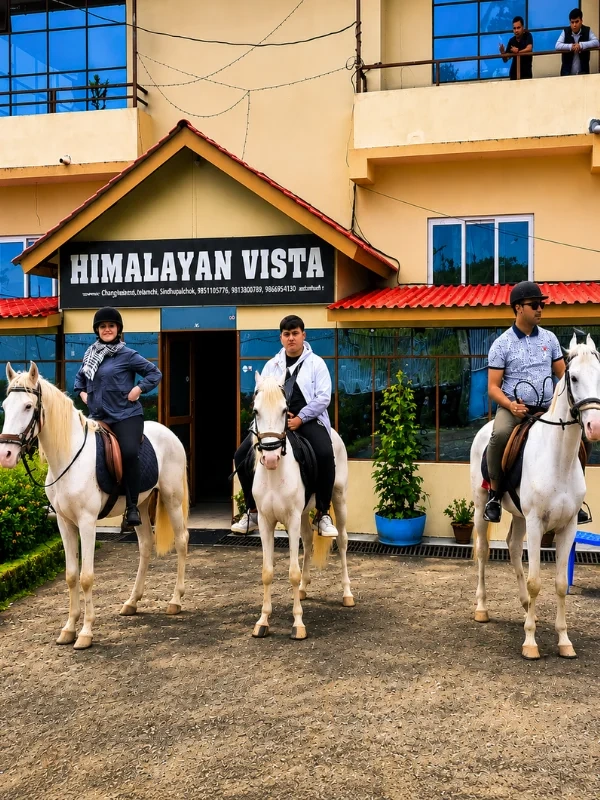
What is horse riding in Nepal?
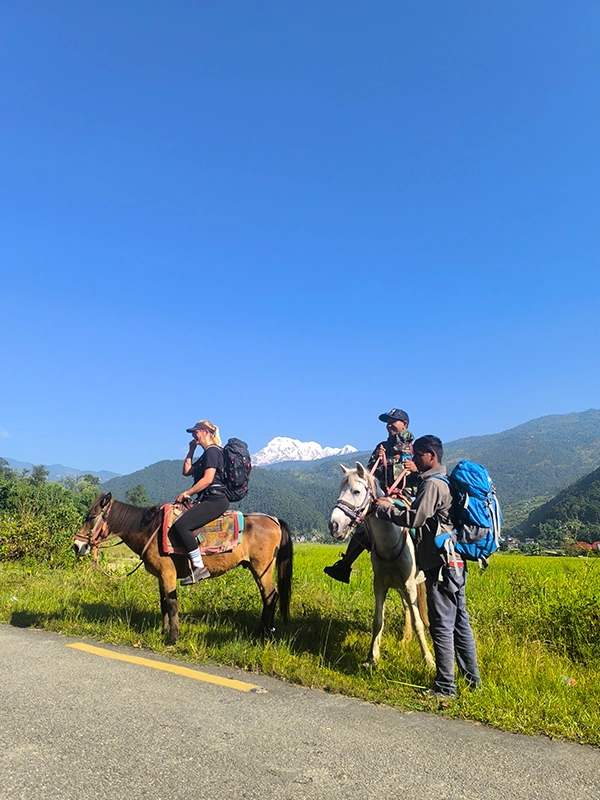
Horse riding in Nepal is a diverse and ancient practice that involves the art of sitting on, guiding, and controlling a horse. This activity relies on a unique partnership between human and horse, requiring the rider to communicate through subtle body shifts, leg pressure, and rein tension.
Beyond a casual hobby or a means of historical transportation, horse riding is a physically demanding sport that improves core strength, balance, and coordination. However, horse riding in Kathmandu is not very demanding because the horses are well-trained.
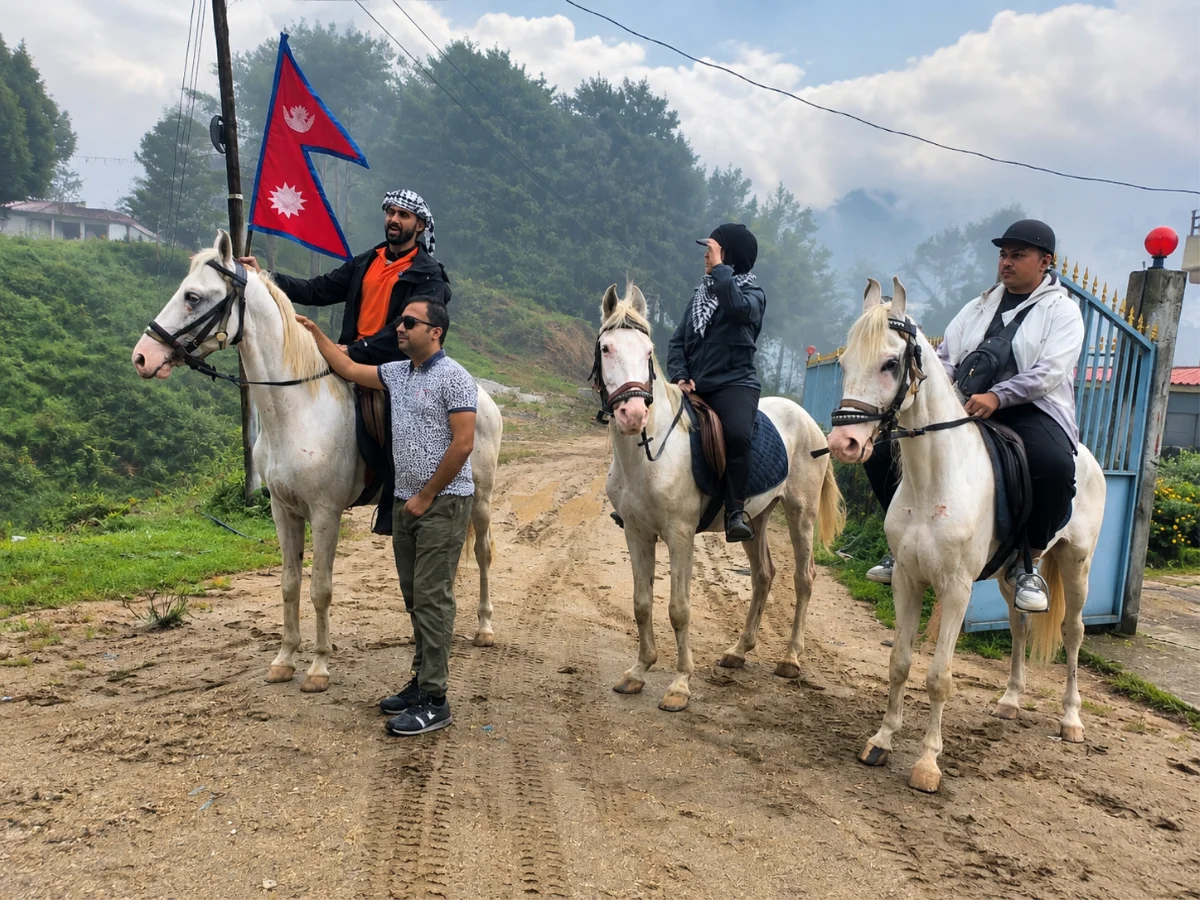
Why Choose Horse Riding Around Kathmandu?
- Explore the hills beyond the city.
- Enjoy Himalayan and valley views.
- A relaxing alternative to trekking
- Suitable for different experience levels
- Experience the Nepalese countryside on horseback.
Best places for horse riding in Kathmandu
Kathmandu is surrounded by hills that provide excellent opportunities for outdoor adventurers. Horse riding in Nepal is one of the best outdoor adventures, letting travelers explore trails through peaceful forests, villages, open hillsides, and countryside landscapes. Here are three of the best places for horse riding in Kathmandu.
Chisapani to Nagarkot Horse Riding
Chisapani to Nagarkot horse riding in Kathmandu is one of the best choices for travelers seeking a scenic ride around Kathmandu. The Chisapani to Nagarkot route is approximately 60-70 kilometers. The trail passes through a protected area, Shivapuri Nagarjun National Park, with waterfalls, oak-pine forests, and terraced fields.
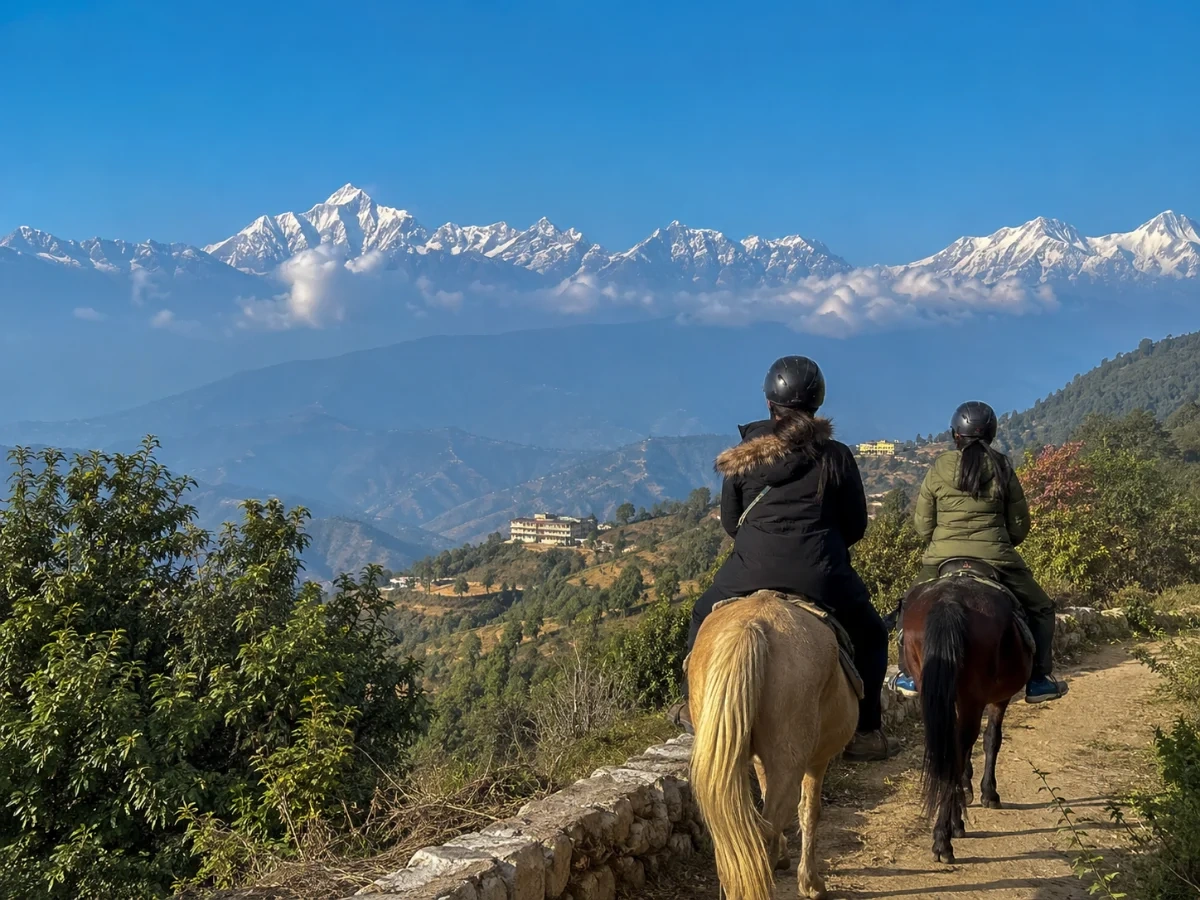
Chisapani to Nagarkot is one of the most well-known viewpoints in Kathmandu. Chisapani to Nagarkot is one of the most rewarding places for horse riding in Kathmandu Valley. It also offers a panoramic view of the Langtang range, Ganesh Himal, Dorje Lakpa, and, on a clear day, distant views of Mount Everest.
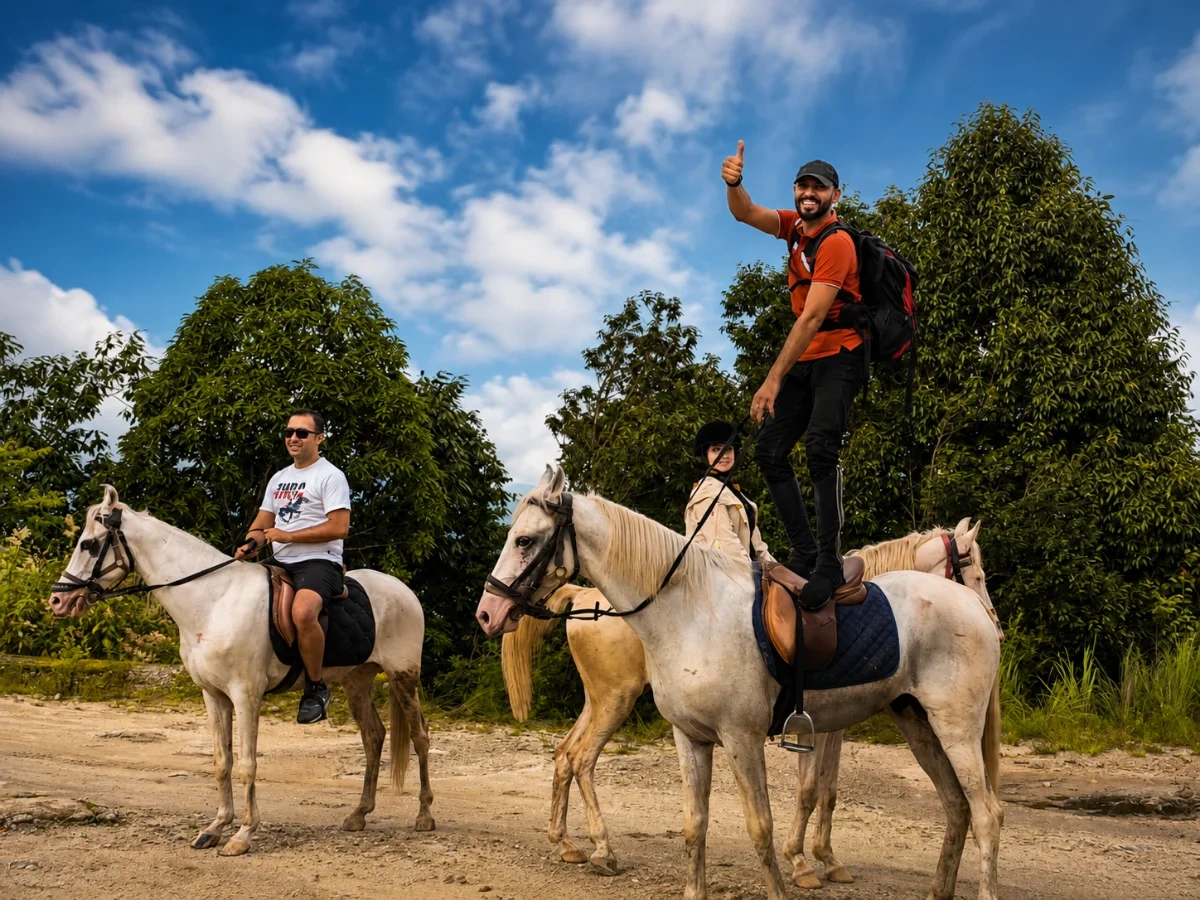
Suryachaur Horse Riding
Suryachaur is a good choice for travelers with a quieter countryside riding experience near Kathmandu. Suryachaur is a hill station in the Nuwakot district, which is northwest of the Kathmandu Valley. It is roughly 25 to 30 kilometers from Kathmandu, and the horse riding routes take us from the historic town of Tokha.
Suryachaur is also famous for day trips and birdwatching with families. Suryachaur horse riding offers views of the Langtang Himalayan range, Ganesh Himal, Manaslu, and Likhu Valley. Local homestays offer simple meals such as dhilo with local chicken soup.
Kakani Horse Riding
Kakani is one of the easiest options for a short horse riding experience near Kathmandu, particularly for beginners and families. Kakani lies on the northwest side of Kathmandu, roughly 25-29 kilometers away. It has long been famous as a day trip destination for families and a picnic spot.
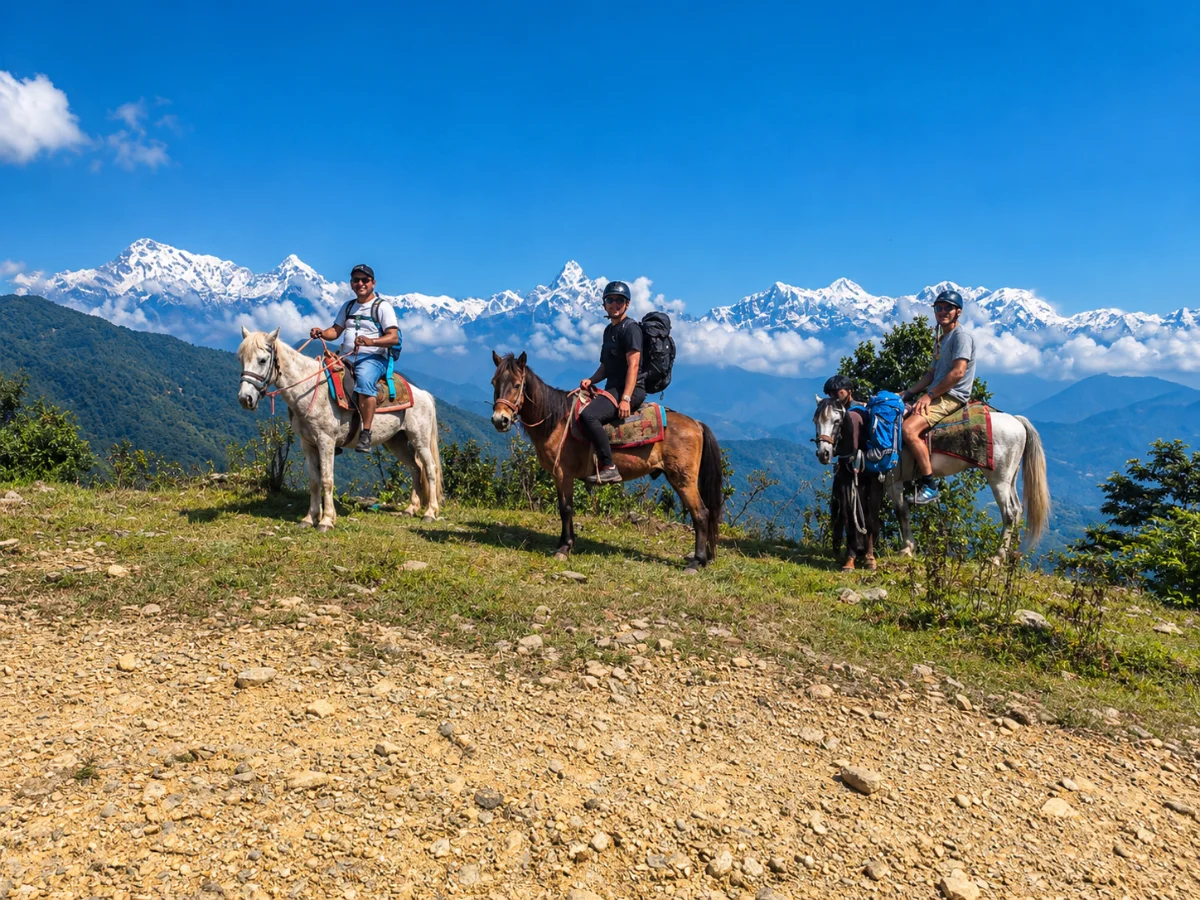
Kakani is also known for its pine forest, hill, viewpoint, and peaceful countryside. The area is also known for its strawberry farms, and Kakani has a shorter itinerary. Horse riding in Kakani offers views of surrounding peaks, including Ganesh Himal, Langtang Lirung, Himalchuli, and Mansalu.
Is Horse Riding in Kathmandu Suitable for Beginners?
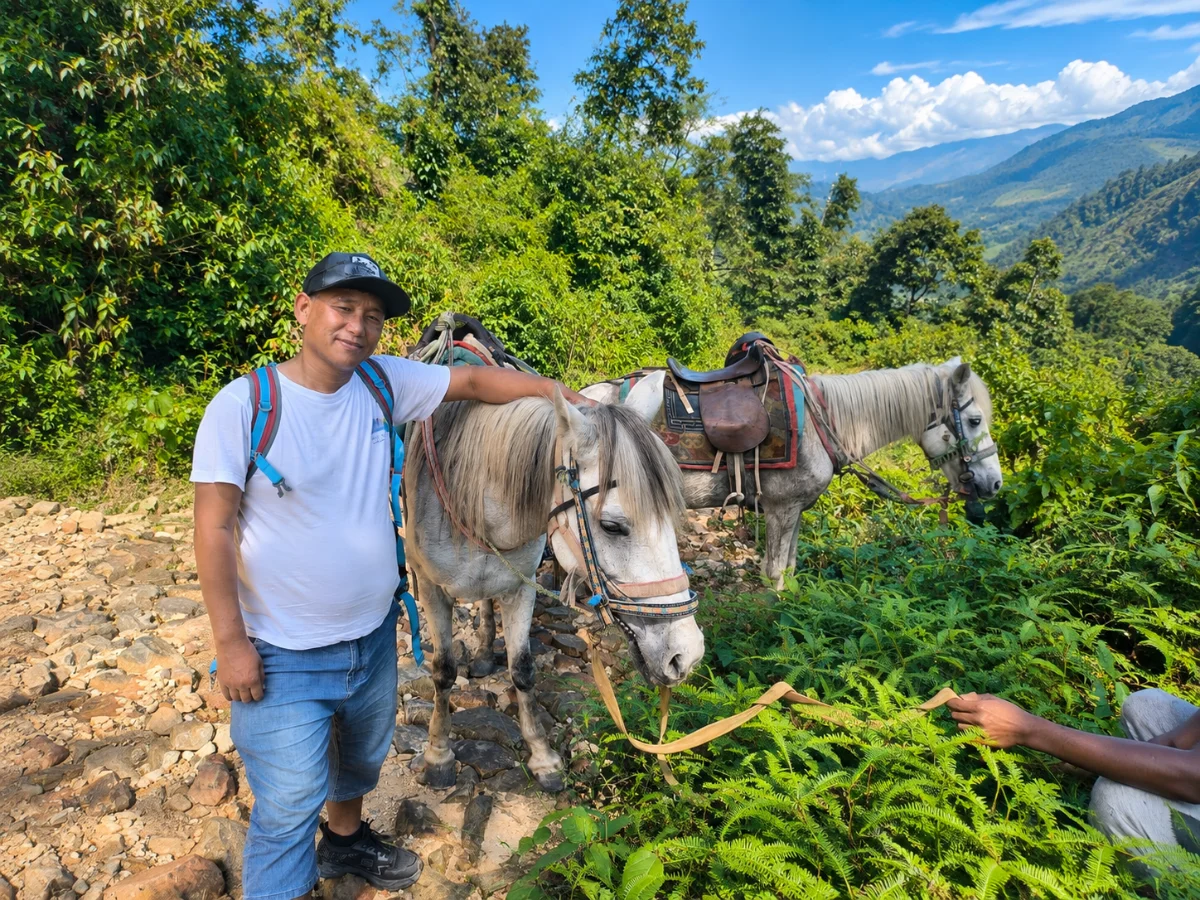
Yes, horse riding in Kathmandu is also suitable for beginners because none of the routes require advanced experience. The horses used for these short trips are trained for riding trails and are led by experienced local guides.
Guides manage the pacing, terrain, and any nervousness a first-time rider might feel. Also, for beginners, guides usually teach the basics: how to sit, how to hold the reins, and how to signal the horse to stop or slow down.
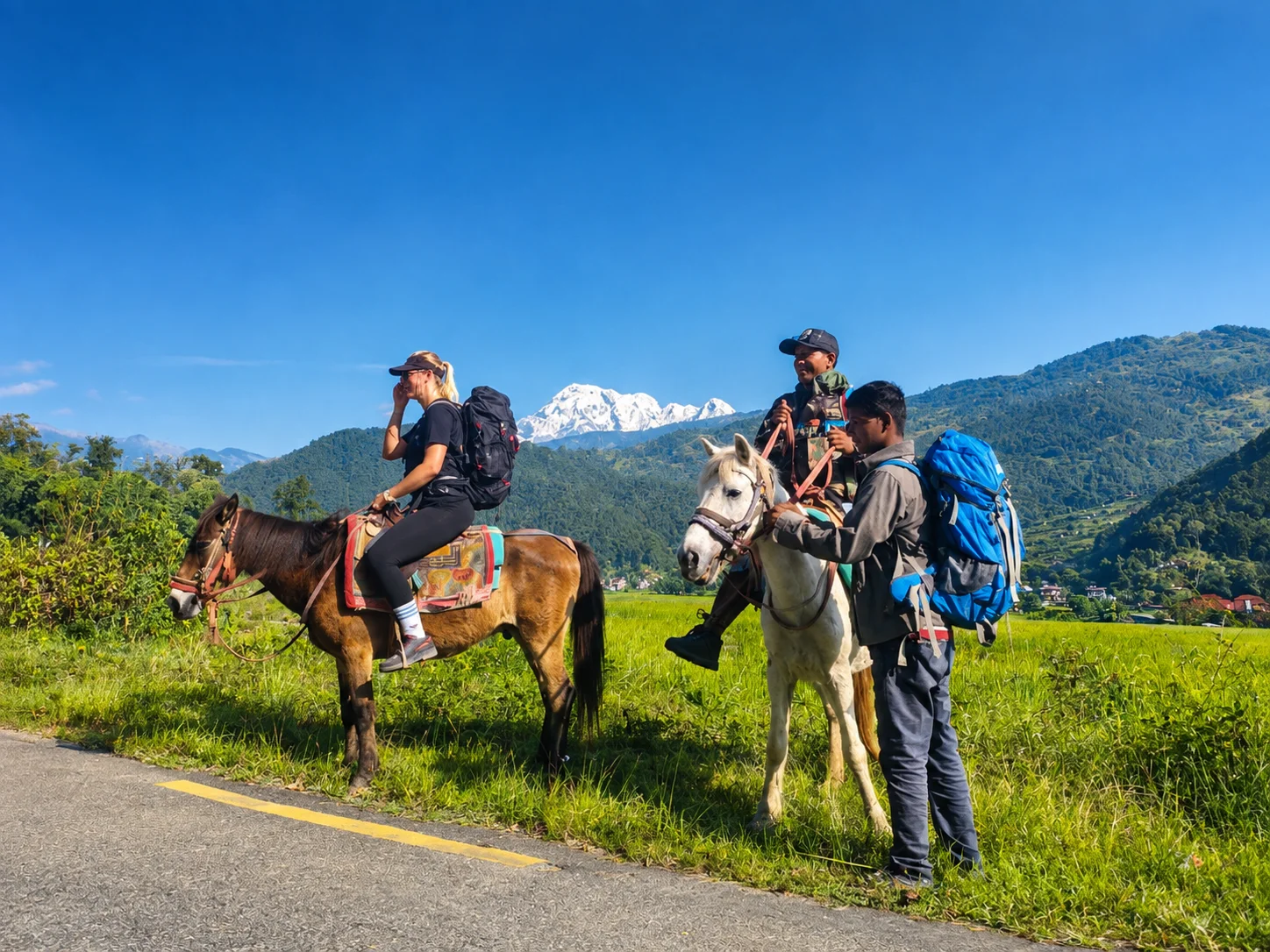
Note: For beginners, try Kakani or Suryachaur before the longer Chisapani to Nagarkot route.
Is Horse Riding in Kathmandu Good for Families?
Yes, horse riding is one of the easier outdoor activities to do as a family near Kathmandu. The trails are gentle, and horses are moved at a controlled walking pace. Kakani is a short-distance horse ride from the city and has easy terrain, making it the most popular choice for families with younger children or older relatives.
Suryachaur is also good for families wanting a slightly longer countryside ride combined with birdwatching. As for Chisapani to Nagarkot, it is best for families with older children who are comfortable with a multi-day itinerary and a full day of riding.
What Is the Best Time for Horse Riding in Kathmandu?
Undoubtedly, autumn and spring are the best seasons for horse riding in Kathmandu. Autumn provides the clearest skies with Himalayan views from Nagarkot, Suryachaur, and Kakani. Spring brings warmer temperatures with blooming rhododendrons on the hillside.
Winter is also good, but at lower elevations on Suryachaur and Kakani. It can be cold in the early mornings. The monsoon season brings the least reliable conditions, with muddy trails and reduced visibility due to fog.
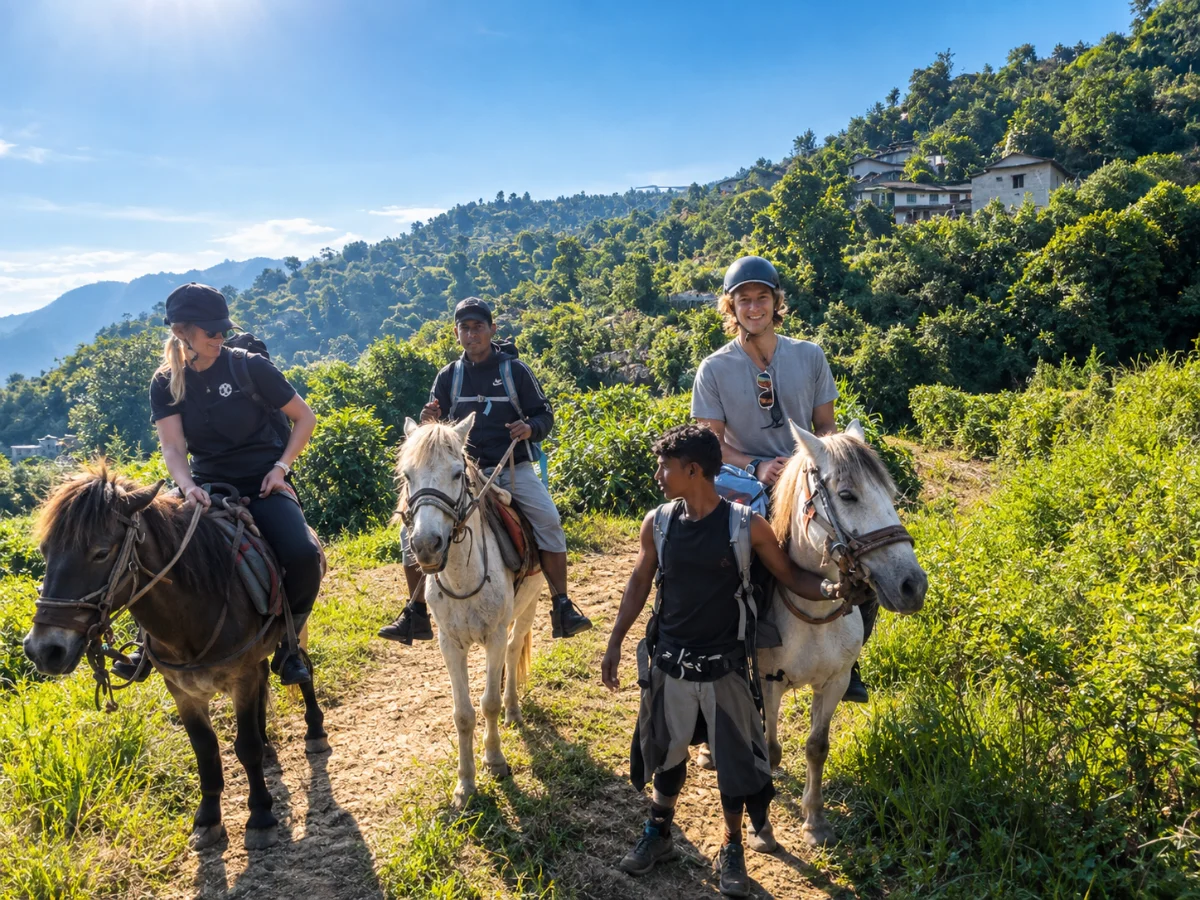
Note: Horse riding around Kathmandu is possible for most of the year.
What to expect on a horse riding tour in Kathmandu?
A typical tour begins after breakfast around 7:00 AM. Then a short briefing on horse handling, with a slow start to let both horse and rider settle. Usually, around 8:30 AM, the ride starts with the guide taking the lead or walking alongside each horse, especially for beginners to adjust pace and comfort level.
Around midday, you'll stop for lunch at a teahouse or viewpoint. After a relaxed break, the ride continues toward the next destination. By late afternoon, you reach your destination, such as Chisapani to Nagarkot, Kakani, or Suryachaur, then check in at the lodge and enjoy the sunset before dinner.
What kind of horses can be found while horse riding in Kathmandu?
During horse riding in Chisapani to Nagarkot, Suryachaur, and Kakani, experienced guides use well-trained horses. Also, before any horse riding in Kathmandu or other regions, the guides always teach us the safety measures and how to control the horses.
What Should You Wear for Horse Riding in Kathmandu?
Unlike Upper Mustang and other long horseback riding trips, Kathmandu offers shorter routes and fewer days. Here is a list of items to wear while visiting the best places for horse riding in Kathmandu.
- Long trousers to prevent chafing against the saddle.
- Closed, flat-soled shoes
- A layered top for cold mornings and warm afternoons in the hills
- A hat or cap for sun protection, along with sunscreen and sunglasses.
- A light jacket or windbreaker, especially for higher points like Nagarkot or Kakani.
- Gloves are optional but useful for riders who find the reins uncomfortable on bare hands.
Note: Avoid loose scarves, long open jackets, or anything that could catch on the saddle or spook the horse.
Safety Tips for Horse Riding in Kathmandu
Here are a few safety tips for horse riding in Kathmandu:
- Always ride with a licensed operator who provides trained horses and experienced guides.
- Listen to the guide's instructions on mounting, dismounting, and handling the reins, especially if it's your first time.
- Wear a helmet and keep a calm, steady posture so that sudden movements or loud noises can unsettle a horse
- Let your guide know in advance about any back pain problems or health conditions that could affect your ride
- Do not feed a horse without asking the guide
- Always stay hydrated and take breaks
- Check weather and trail conditions
How was horse riding introduced in Nepal?
Horse riding in Nepal traces back to the country's ancient trade and pilgrimage routes rather than a single documented starting point. Centuries ago, traders, pilgrims, and locals relied on Himalayan horses to navigate mountain trails, especially in regions like Mustang, where the kingdom's strategic location from the 15th to 17th centuries gave it control over trade between the Himalayas and India.
These sturdy, sure-footed animals became essential not just for moving people and cargo but also for connecting remote highland communities. Beyond everyday transport, horses grew into a defining part of Nepali culture and statecraft. Nepal's cavalry was formally established in 1849 by King Surendra Bir Bikram Shah. Bikram Shah, and horses were used in combat during the 1855AD to 1856AD war with Tibet. This showcases their strength and sturdiness for military importance.
Horse culture was already introduced into the Kathmandu Valley through major festivals like Ghode Jatra. Its roots trace back centuries to the Malla dynasty era between the 12th and 18th centuries. Marking the beginning of the Newar community before becoming a showcase of cavalry skill.
Even today, that same thread runs through both tradition and tourism: the Nepal Army's cavalry still performs at events like Ghode Jatra, while companies now offer horseback treks along old trade routes in places like Mustang, Pokhara, and other trekking areas.
Horse Riding or Trekking in Nepal?
Nepal offers two very different ways to explore its mountains and valleys. Trekking on foot or riding horseback. Trekking is the classic choice, walking through places like the Annapurna Circuit or Manaslu Circuit while staying in teahouses and pushing through high passes at your own pace. It demands solid fitness and time, but it rewards trekkers with deep immersion into village life and dramatic high-altitude scenery that only walking trails can reach.
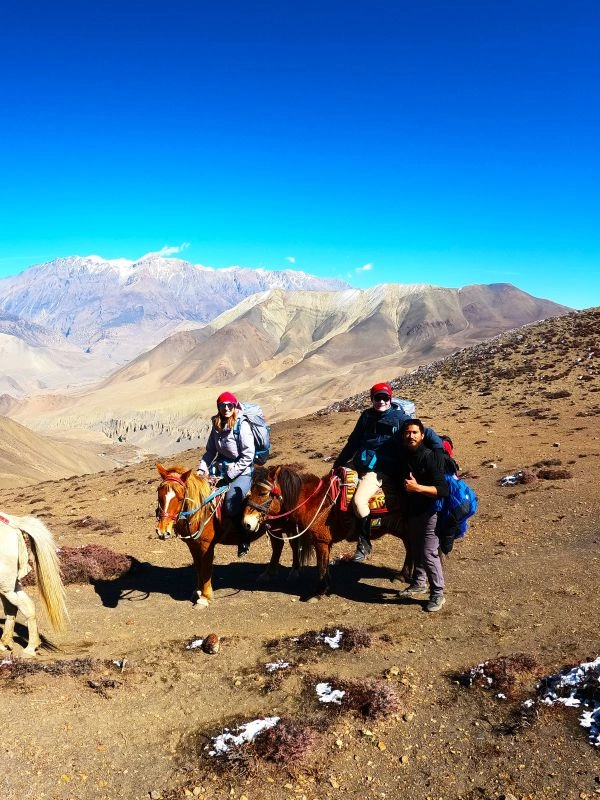
Horse riding, on the other hand, offers a gentler and more historic way to travel. In regions like Upper Mustang, riders travel through the old salt and trade routes once used by traders crossing into Tibet. Shorter rides around Kathmandu and Pokhara are suitable for travelers looking for a lighter adventure. It's far less physically demanding than trekking, making it a better option for families.
Ultimately, the choice comes down to what kind of experience you're after. If you want deep immersion and a high-altitude view and don't mind the physical challenge, trekking is the best option. If you'd rather enjoy Nepal's trails at a relaxed pace, a countryside experience, or history, then horse riding is for you.
Horse riding practice in Kathmandu
So, before long rides such as Chispani-Nagarkot and other places. You can add a buffer day to practice riding a horse. We have been running this campaign so that the horses and the riders can understand each other. You are provided with a well-trained horse and an experienced guide during the practice.
Horse Riding in Trekking Regions
Not only in Kathmandu, but we also provide horse riding in different trekking regions of Nepal. A few of them are listed below:
- Ghorepani Poon Hill
- Annapurna Base Camp
- Upper Mustang
- Everest Base Camp
- Langtang Valley
- Manaslu circuit
- Panchase
- Rara horse riding
- Upper Dolpo
Can horse riding in Kathmandu be added to other activities?
Yes, horse riding in Kathmandu can be combined with other activities like day hiking, UNESCO site visits, and more. Likewise, while visiting the UNESCO sites, there are the Swayambhunath Temple (Monkey Temple), Kathmandu Durbar Square, Pashupatinath Temple, and Boudha. Kathmandu has many places to explore, and a few of the best have been listed in the top 10 places to visit in Kathmandu. You can also try horse riding while visiting Kathmandu during famous festivals in Nepal. Jungle safaris around Chitwan can also be best combined with horse riding.
Conclusion
The best places for horse riding in Kathmandu are Chisapani to Nagarkot, Suryachaur, and Kakani. Each place offers a mix of adventure, forest trails, mountain views, a countryside lifestyle, a peaceful environment, birdwatching, and waterfalls. Whether it's the multi-day journey through Shivapuri National Park to Chisapani and Nagarkot, the quieter countryside and birdwatching around Suryachaur, or a relaxed family outing on the ridge at Kakani. If anyone is looking for the best places for horse riding in Kathmandu, these three destinations are the natural starting point.
Best places for horse riding in Kathmandu FAQs
What are the best places for horse riding in Kathmandu?
The best places for horse riding in Kathmandu are Chisapani, Nagarkot, Suryachaur, and Kakani.
Is horse riding in Kathmandu suitable for beginners?
Yes, beginners can go horse riding in Kathmandu by choosing shorter routes like Kakani or Suryachaur.
How much does horse riding in Kathmandu cost?
Horse riding usually costs around $500 to $800, depending on the route, duration, transportation, guide, horse, accommodation, meals, permits, and group size.
Is horse riding in Kathmandu safe?
Yes, horse riding in Kathmandu is safe because the horses are well-trained and guided by experienced riders.
Is horse riding around Kathmandu safe for children?
Yes, it is safe for children. Shorter, gentler routes like Kakani are generally the most suitable for younger children, with guides walking alongside the horse for extra control.