Riding Duration and Trail Conditions
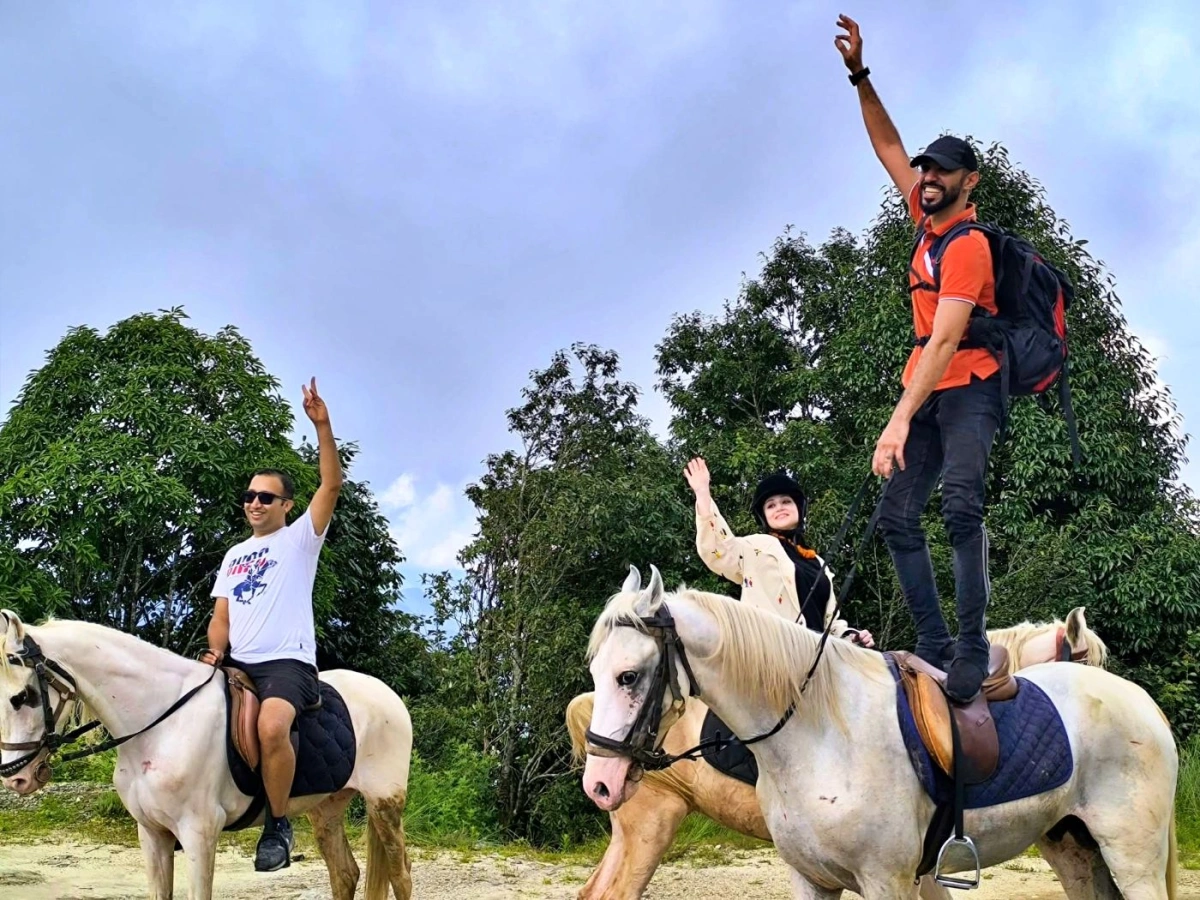
The Chisapani Nagarkot Horse Riding Tour is designed to be comfortable and enjoyable for beginner to intermediate riders, including those with little or no prior horse riding experience. On average, you will spend 4 to 6 hours riding per day, broken into manageable segments to ensure comfort for both riders and horses.
The trail conditions are generally gentle and well-suited for horseback travel. You will ride along dirt paths, forest trails, village tracks, and open ridgelines, with gradual ascents and descents rather than steep climbs. The route passes through shaded forests, terraced farmland, and traditional settlements, providing a smooth and scenic riding experience.
Your riding pace is carefully adjusted according to the group’s confidence and ability. Regular breaks are scheduled for rest, hydration, photography, sightseeing, and meals. No trekking on foot is required at any point, making this tour an ideal option for travelers who prefer a relaxed and immersive way to explore the hills surrounding Kathmandu Valley.
Horses, Gear, and Safety
All horses used on this tour are healthy, locally bred, and well-trained for mountain terrain. They are accustomed to forest trails, village paths, and uneven ground, and are selected specifically for their calm temperament and sure-footed nature. These qualities make them suitable for riders of varying experience levels.
Each horse is equipped with well-maintained and padded saddles to ensure rider comfort throughout the journey. Both English and Western-style saddles may be available upon request, depending on availability. Safety helmets are provided and are mandatory for all riders, regardless of experience level.
For safety and support, each riding group is accompanied by an experienced lead horse guide, along with support riders or horse handlers at a ratio of one staff member for every three to four participants. The team remains attentive throughout the ride, offering assistance, guidance, and reassurance when needed. In case of an emergency, local communication support and evacuation coordination are available along the route.
Best Seasons to Ride
The most favorable seasons for the Chisapani Nagarkot Horse Riding Tour are spring from March to May and autumn from September to November. During these months, the weather is stable, skies are generally clear, and mountain views are at their best. Spring offers blooming rhododendron forests and lush greenery, while autumn provides crisp air and excellent visibility of the Himalayan range.
The tour is also possible in winter from December to February, especially for travelers who enjoy quieter trails and clear morning views. However, temperatures can be cold, particularly in Chisapani and Nagarkot, so warm clothing is essential.
The monsoon season from June to August is not recommended for horse riding due to slippery trails, leeches, frequent rainfall, and limited mountain visibility.
Altitude and Weather Conditions
The riding route remains at moderate altitudes, ranging from approximately 1,400 meters at Sundarijal to around 2,200 meters at Nagarkot. At these elevations, there is no risk of altitude sickness, making the tour safe and accessible for most travelers.
Despite the moderate altitude, temperatures can vary significantly between daytime and nighttime, especially in Chisapani and Nagarkot. Even during warmer months, evenings and early mornings can be cool. Weather in the hills can change quickly, with occasional fog, wind, or light rain, so proper layering and rain protection are strongly recommended.
Connectivity, Charging, and Cash
Mobile phone coverage is limited or intermittent in Chisapani, though basic voice and text services usually function. In Nagarkot, 3G and 4G mobile networks are available, and most hotels and lodges offer Wi-Fi access, although speeds may vary.
Electricity is available at all accommodations, and power outlets are generally accessible in guest rooms or common areas. However, power interruptions can occur, so bringing a power bank is highly recommended to keep your devices charged throughout the tour.
ATMs and credit card facilities are available only in Kathmandu and Nagarkot. It is important to carry enough Nepali rupees to cover personal expenses such as snacks, drinks, souvenirs, and tips. Tipping is customary and appreciated, with a suggested amount of NRs 300 to 500 per day per crew member, depending on service and group size.
Health and Medical Information
No special vaccinations are required for this tour, but travelers are advised to be up to date with routine travel immunizations, including tetanus, hepatitis A and B, and typhoid. If you take any personal medications, be sure to bring a sufficient supply, as pharmacies are not available along the route.
Our team carries a basic first-aid kit at all times to handle minor injuries or discomfort. Clean drinking water is provided through bottled or filtered sources to ensure hygiene and safety. Travelers with specific medical conditions should inform us in advance so appropriate arrangements can be made.
Cultural Awareness and Etiquette
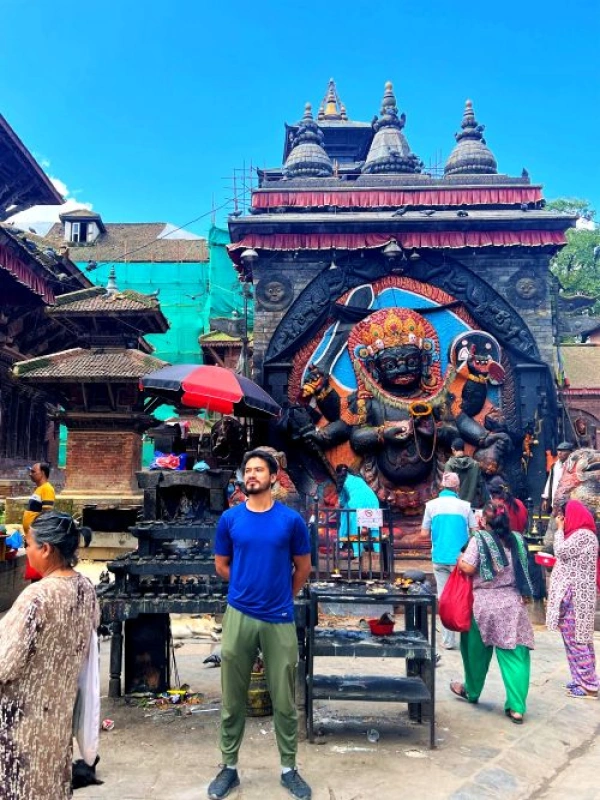
This tour passes through traditional villages where local customs and values are deeply respected. Travelers are encouraged to dress modestly, especially in villages, and to greet locals with a friendly “Namaste”. Always ask for permission before photographing people or private property.
We promote responsible and sustainable tourism. Guests are requested to avoid single-use plastics, carry reusable water bottles, and take all non-biodegradable waste back with them. Supporting local communities through ethical purchases is encouraged, while giving money or sweets directly to children is discouraged.
What to Pack for the Chisapani Nagarkot Horse Riding Tour
- Comfortable riding pants such as stretch trousers, jeans, or jodhpurs
- Long-sleeved shirts and warm layers including fleece or a light down jacket
- Lightweight rain jacket or poncho
- Riding boots or sturdy closed-toe walking shoes
- Sun hat, sunglasses, and high SPF sunscreen
- Personal toiletries and hand sanitizer
- Personal medications and basic travel essentials
- Power bank and mobile phone or camera with secure straps
- Reusable water bottle and personal snacks
- Small backpack or saddlebag for daily essentials