Everest Base Camp Trek with Island Peak Climbing - 17 Days

1700 Reviews in TripAdvisor
570 Reviews in Google

The 17-day Everest Base Camp Trek with Island Peak Climbing is a thrilling Himalayan adventure that combines scenic trekking with a beginner-friendly mountaineering experience. The journey begins with a flight to Lukla, followed by a trek through iconic Sherpa villages like Namche Bazaar, Tengboche, and Dingboche, leading to Everest Base Camp and Kala Patthar for breathtaking views of Mount Everest.

After proper acclimatization, the route heads toward Island Peak (6,189m), where climbers receive basic training before attempting the summit. The climb involves glacier travel, use of ropes, and a rewarding ascent to one of Nepal’s most popular trekking peaks. This trip is perfect for adventure seekers looking to step beyond trekking into real Himalayan climbing.

Duration
17 Days
Trip Grade
Strenuous
Country
Nepal
Max Altitude
6,189m / 20,305 ft. at Island Peak
Starts
Lukla
Ends
Lukla
Group Size
Private tours / Group departures
Activities
Trekking & Climbing
Best Time
March–May & September–November

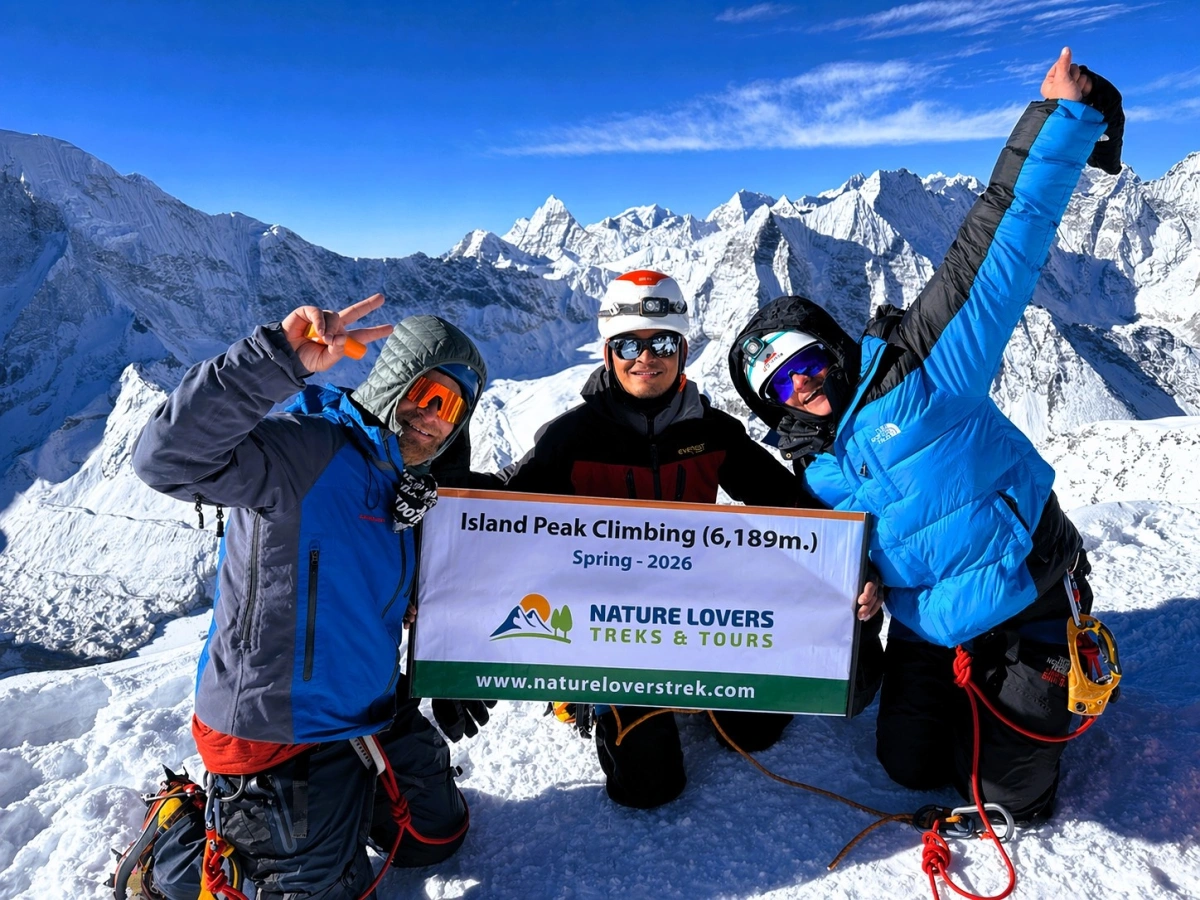
The Everest Base Camp Trek with Island Peak Climbing is one of the most rewarding high-altitude adventures available in Nepal. This 17-day package from Nature Lovers Treks and Tours combines two iconic objectives in a single, carefully structured itinerary: standing at Everest Base Camp (5,364 m) on the legendary Khumbu trail and reaching the summit of Island Peak, also known as Imja Tse, at 6,189 m above sea level.

Designed for both experienced trekkers and aspiring mountaineers, this Nepal trekking and climbing package takes you through the heart of the Khumbu Valley. You will trek past charming Sherpa villages, cross the famous Hillary Suspension Bridge, acclimatize in Namche Bazaar and Dingboche, visit the spiritual Tengboche Monastery, and witness the Khumbu Ice fall up close. After conquering Everest Base Camp and watching sunrise from Kala Patthar (5,555 m), the route continues to Chhukung and Island Peak Base Camp, where our certified climbing Sherpa guides lead you to the summit.

Island Peak is recognized by the Nepal Mountaineering Association as one of the most popular trekking peaks in Nepal. It is an ideal first mountaineering summit for trekkers wanting to experience high-altitude glacier climbing before attempting greater Himalayan peaks. Our all-inclusive package covers every permit, meal, guide, accommodation, and logistical detail so you can focus entirely on the adventure ahead.

Why Choose the Everest Base Camp Trek with Island Peak Climbing?

  • Reach Everest Base Camp at 5,364 m, the world-famous gathering point for Everest summit expeditions.
  • Summit Island Peak (Imja Tse) at 6,189 m, one of the most popular trekking peaks in Nepal, with a certified climbing guide.
  • Enjoy the iconic Kala Patthar sunrise at 5,555 m with panoramic views of Mount Everest, Lhotse, and Nuptse.
  • Trek through Sagarmatha National Park, a UNESCO World Heritage Site and home to the Khumbu Glacier.
  • Immerse yourself in authentic Sherpa culture, visit Tengboche Monastery, and discover the heritage of the Khumbu region.
  • Benefit from two dedicated acclimatization stops in Namche Bazaar and Dingboche, significantly reducing altitude sickness risk.
  • Travel with professional, government-licensed Nepali guides and IFMGA-standard climbing Sherpas throughout the expedition.
  • Enjoy a fully inclusive package: all permits, meals, teahouse lodging, and Lukla flights are covered.

A Typical Day on the Everest Base Camp Trek with Island Peak Climb

Each trekking day begins early to make full use of the stable morning mountain weather. Breakfast at your teahouse typically features local Himalayan staples such as Tibetan bread, tsampa porridge, or eggs with butter tea. Your professional guide leads the group at a steady, manageable pace along trails that transition from sub-tropical forest to high-altitude alpine desert as the elevation rises.

Around midday, the group stops at a trailside teahouse for a hearty serving warm lunch that provides lasting energy at altitude. After lunch, the trek continues through the breathtaking Khumbu Valley landscape with constant views of Himalayan giants including Ama Dablam, Lhotse, and Nuptse.

By late afternoon, the group reaches the designated overnight teahouse. Evenings are spent in the communal dining area, sharing stories with fellow trekkers from around the world. Your guide provides a thorough briefing for the next day before dinner. Your pulse oxygen level is monitored daily to help prevent acute mountain sickness (AMS).

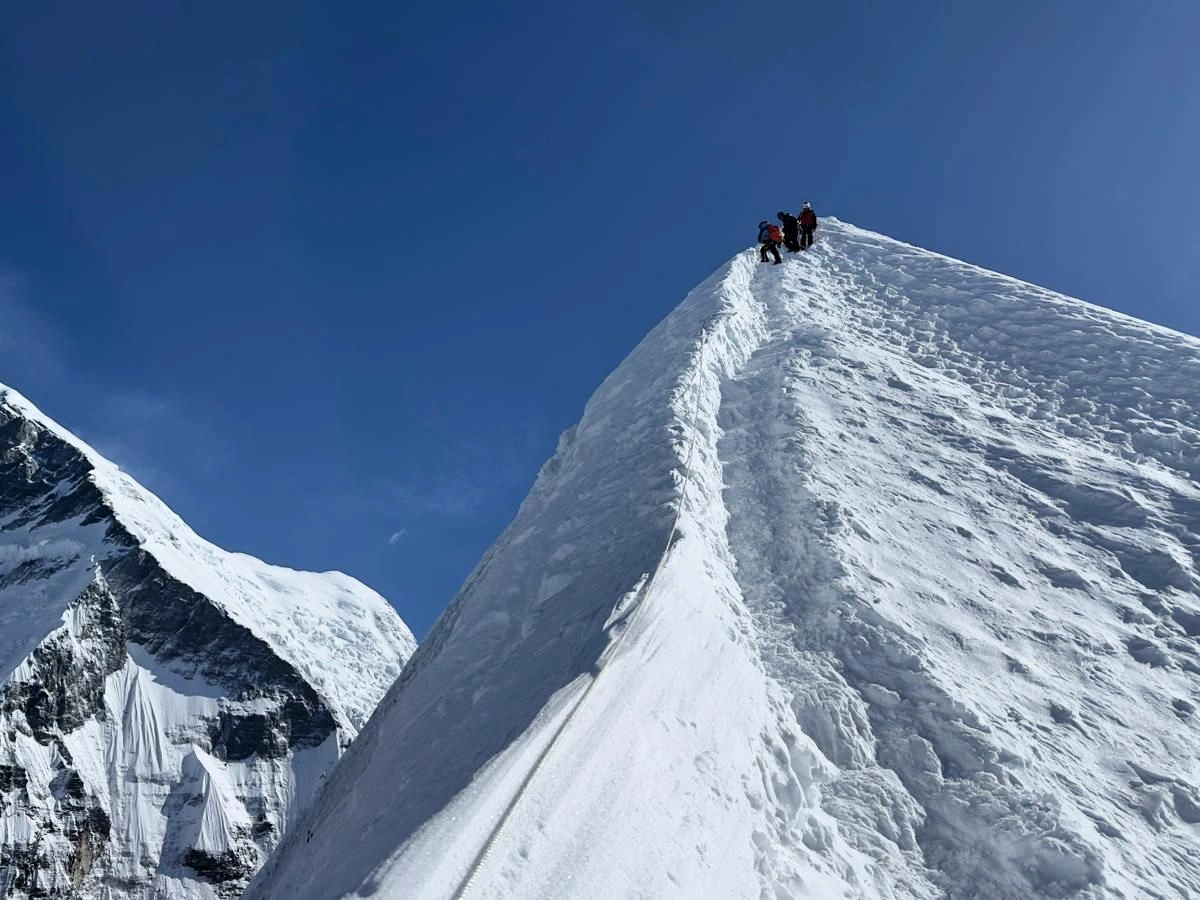
On Island Peak summit day, the schedule shifts significantly. The alpine start between midnight and 1:00 am allows the team to reach the summit before sunrise and descend in daylight. Your certified climbing Sherpa guides every step of the glacier traverse and fixed-rope headwall ascent.

About Island Peak Climbing in Nepal

Island Peak, locally known as Imja Tse, rises to 6,189 m in the Khumbu Himalaya of eastern Nepal. The peak sits within Sagarmatha National Park, south of the mighty Lhotse Glacier, in the Imja Valley near the Sherpa village of Chhukung. It was named Island Peak by Eric Shipton's 1952 British expedition because, when viewed from Dingboche, the mountain appears as a rocky island rising from a sea of glaciers.

Classified as a trekking peak by the Nepal Mountaineering Association, Island Peak is one of the most sought-after climbs in the Everest region. It serves as an excellent introduction to high-altitude mountaineering and is frequently used as a preparation peak for climbers targeting higher Himalayan summits above 7,000 m. Despite its classification, the climb involves genuine technical mountaineering skills including glacier travel, crampon use, ice axe technique, and fixed-rope ascent on steep snow and ice.

What to Expect on Island Peak Summit Day

  • Midnight departure from Island Peak Base Camp with headlamps and full technical climbing gear.
  • Initial approach across scree and glacial moraine toward the base of the headwall.
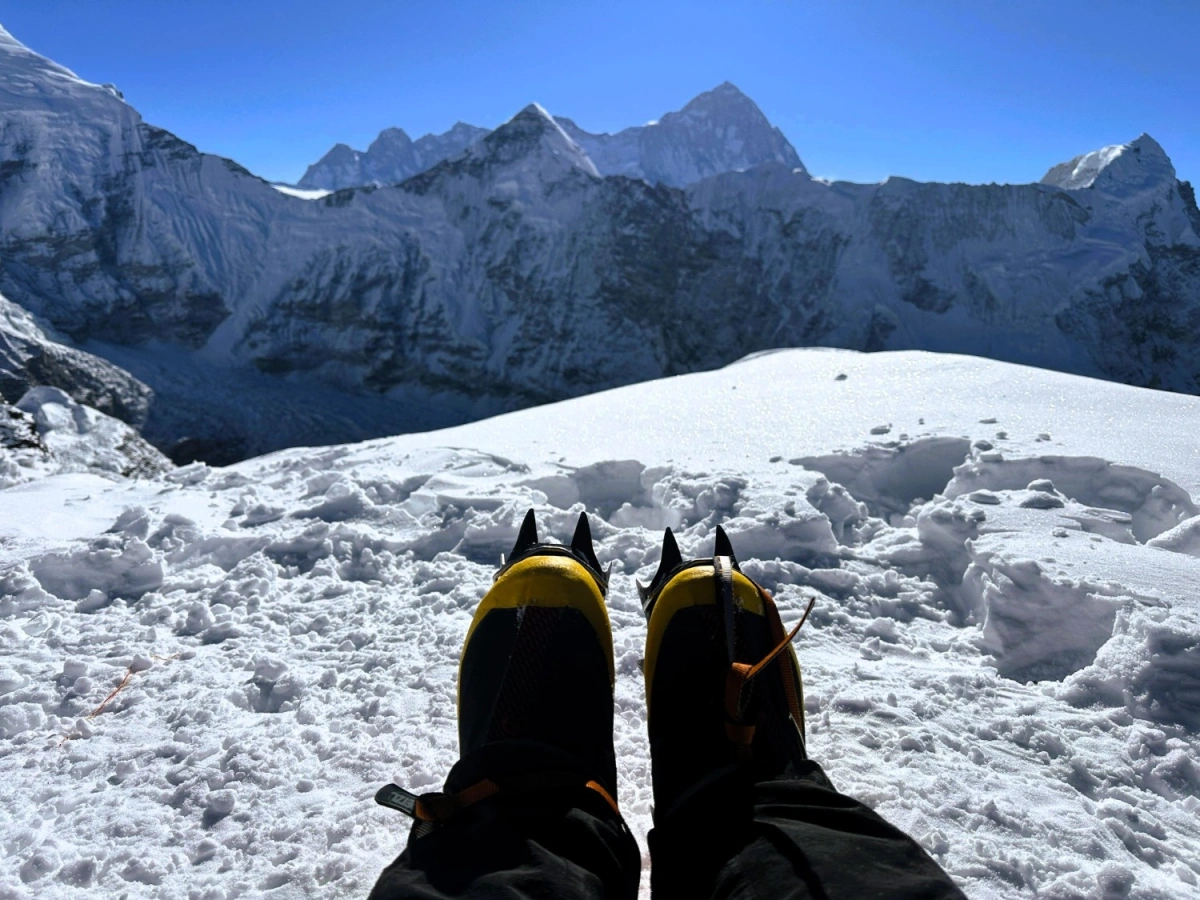
  • Crampons attached at the glacier edge for the high-angle snow and ice section.
  • Fixed-rope ascent up the steep headwall using your Jumar ascender, guided by experienced climbing Sherpas.
  • Summit ridge at 6,189 m offering breathtaking 360-degree views of Everest, Lhotse, Makalu, Baruntse, and Ama Dablam.
  • Descent via the same route, returning to Chhukung by early afternoon.

Lukla Flight Information

Every Everest Base Camp Trek and Island Peak Climbing package begins with a scenic mountain flight to Lukla's Tenzing-Hillary Airport, one of the most dramatic and short-runway airports in the world. The flight offers sweeping aerial views of the rolling Nepali hills, deep valleys, and the snow-capped peaks of the Himalaya before landing in the heart of the Everest region.

During peak Nepal trekking seasons in spring and autumn, most Lukla flights operate from Ramechhap (Manthali) Airport rather than Kathmandu due to air traffic management requirements. The flight takes approximately 30 to 35 minutes from Kathmandu and around 20 to 25 minutes from Ramechhap. Trekkers departing from Ramechhap must allow 3 to 4 hours for the pre-dawn road transfer from Kathmandu.

All Lukla flights are scheduled in the early morning when weather conditions are most stable. As these flights are highly weather-dependent, delays and cancellations can occur. We strongly recommend keeping at least one buffer day in your travel plan. Helicopter transfers to and from Lukla can be arranged as an alternative option at an additional cost, subject to weather conditions.

Why Trek with Nature Lovers Treks and Tours?

Nature Lovers Treks and Tours is a government-registered trekking company based in Kathmandu, Nepal. We specialize in designing responsible, safe, and culturally immersive Nepal trekking packages for travelers from all over the world. Our experienced team of trek leaders, climbing Sherpas, and logistics experts ensures every aspect of your Everest Base Camp and Island Peak expedition runs smoothly from day one to day seventeen.

  • All guides hold government licences and are first-aid certified.
  • Climbing Sherpas are trained to IFMGA-equivalent standards for high-altitude glacier and technical routes.
  • We monitor daily weather updates and flight schedules to minimise disruptions.
  • Sustainable and responsible travel practices are embedded in every itinerary we operate.

Short Itinerary & Altitude

Everest Base Camp Trek with Island Peak Climbing - 17 Days Detailed Itinerary

Day 1

Arrival in Tribhuvan International Airport (1,400m) and transfer to Hotel

Arrive at Tribhuvan International Airport in Kathmandu. Our representative meets you at the arrival gate and transfers you to your hotel. Spend the afternoon exploring vibrant Thamel. Attend an evening trek briefing with your lead guide.

Day 2

Fly from Kathmandu/Ramechhap to Lukla (2,860m) and trek to Phakding (2,610m)

Board a scenic mountain flight to Tenzing-Hillary Airport in Lukla, one of the most thrilling airports in the world. Begin trekking through rhododendron forests and descend along the Dudh Koshi River to the village of Phakding.

Day 3

Trek from Phakding to Namche Bazaar (3,440m)

Follow the banks of the Dudh Koshi River, cross the iconic Hillary Suspension Bridge, and enter Sagarmatha National Park, a UNESCO World Heritage Site. Ascend steeply through pine forests to reach Namche Bazaar, the Sherpa capital of the Khumbu region.

Day 4

Acclimatization day at Namche Bazaar | Hike to Hotel Everest View (3,880m)

A dedicated acclimatization day in Namche Bazaar reduces your risk of acute mountain sickness (AMS). Hike up to the Everest View Hotel using the proven climb-high, sleep-low strategy. Enjoy panoramic views of Everest, Ama Dablam, Lhotse, and Thamserku before descending to Namche for the night.

Day 5

Trek from Namche Bazaar to Tengboche (3,860m)

Trek along scenic ridgelines with sweeping views of the Khumbu Himalaya. Descend to the river at Phungi Thenga and climb through dense rhododendron forests to Tengboche. Visit the famous Tengboche Monastery, the spiritual heart of the Khumbu region, and watch the evening prayer ceremony.

Day 6

Trek from Tengboche to Dingboche (4,410m)

Cross the Imja Khola and pass through the traditional Sherpa village of Pangboche. The landscape gradually transforms as trees give way to hardy alpine shrubs. Continue into the wide Imja Valley and reach Dingboche, your gateway to the high Himalaya.

Day 7

Acclimatization day at Dingboche | Hike to Nangkartshang Peak (5,083m)

Your second acclimatization stop in the Everest Base Camp trek itinerary. Hike to the top of Nangkartshang Peak for spectacular views of the south face of Lhotse, the imposing Ama Dablam, and the sweeping Imja Valley. Return to Dingboche for an overnight rest.

Day 8

Trek from Dingboche to Lobuche (4,940m) via Thukla Pass

Head north through the wide valley toward Thukla, then make a steep climb over the terminal moraine of the Khumbu Glacier. At the top of Thukla Pass, pause at the stone memorial chortens erected in honour of climbers who lost their lives on Everest. Continue across flatter terrain to the small settlement of Lobuche.

Day 9

Trek from Lobuche to Gorakshep (5,164m) and hike to Everest Base Camp (5,364m)

Cross rocky glacial moraines to reach Gorakshep. Check in to your teahouse and take a quick lunch before the final push to Everest Base Camp at 5,364 m above sea level. Stand where the world's greatest mountaineers prepare for their Everest summit bid. Take in the dramatic Khumbu Icefall before returning to Gorakshep for the night.

Day 10

Hike to Kala Patthar (5,555m) and trek to Dingboche (4,410m)

Begin the pre-dawn ascent to Kala Patthar, the highest viewpoint on the Everest Base Camp trek route. Watch the golden sunrise wash over the summit of Mount Everest, Lhotse, and Nuptse in one of the most iconic panoramic Himalayan views in the world. Descend to Gorakshep for breakfast and continue down to Dingboche.

Day 11

Trek from Dingboche to Chhukung (4,730m)

Descend to more oxygen-rich altitude before branching off the main Everest Base Camp trail toward Chhukung, the base village for Island Peak. Register your climbing permit, meet your certified Island Peak climbing guide, and attend a comprehensive safety and gear briefing.

Day 12

Trek from Chhukung to Island Peak Base Camp (5,087m)

Trek across glacial moraines to reach Island Peak Base Camp, situated in the spectacular Imja Valley at over 5,000 m. Set up your high-altitude camp, complete a final equipment check for crampons, harness, ice axe, and ascender, and rest fully for summit day.

Day 13

Summit Island Peak (6,189m) and descend to Chhukung

Alpine start between midnight and 1:00 am. Your certified climbing Sherpa guides you across the glacier and up the fixed-rope headwall to the summit of Island Peak (Imja Tse) at 6,189 m above sea level. Enjoy a breathtaking 360-degree view of Everest, Lhotse, Makalu, Baruntse, and Ama Dablam. Descend to Chhukung and celebrate your summit achievement.

Day 14

Trek from Chhukung to Namche Bazaar (3,440m)

Retrace the Imja Valley trail through Pangboche and Tengboche as you descend to the warmer, forested altitudes of the Khumbu region. Arrive at Namche Bazaar and enjoy a well-deserved hot shower and celebratory dinner with your trekking team.

Day 15

Trek from Namche Bazaar to Lukla (2,860m)

The final trekking day of your 17-day Everest Base Camp and Island Peak Climbing adventure in Nepal. Cross familiar suspension bridges, pass through ancient Sherpa villages, and complete the last ascent to Lukla.

Day 16

Fly from Lukla to Kathmandu/Ramechhap and transfer to Hotel

Catch your early morning flight back to Kathmandu or Ramechhap. Transfer to your hotel in the Nepalese capital. Enjoy a farewell dinner with your guide and reflect on a remarkable high-altitude Himalayan expedition.

Day 17

Transfer to Tribhuvan International Airport for final departure

Your 17-day Everest Base Camp Trek with Island Peak Climbing package concludes today. Our representative arranges your private transfer to Tribhuvan International Airport for your onward flight. Arrive at least three hours before boarding.

Still Confused?
No worries. Our team is ready to guide you every step of the way.

Cost Details

Includes

  • Airport pick-up and drop in a private vehicle throughout the package.
  • Two nights in a premium hotel in Kathmandu on a bed and breakfast basis.
  • Domestic flights: Kathmandu or Manthali to Lukla and return, with a 10 kg plus 5 kg baggage allowance.
  • Sagarmatha (Everest) National Park entry permit.
  • Khumbu Pasang Lhamu Rural Municipality trekking permit.
  • Island Peak climbing permit issued by the Nepal Mountaineering Association.
  • TIMS (Trekkers Information Management System) card.
  • 14 nights of accommodation in the best available teahouses and lodges on a twin or double sharing basis.
  • Two nights of accommodation at Island Peak Base Camp with high-altitude tents.
  • All meals during the trek: breakfast, lunch, and dinner.
  • Daily seasonal fresh fruit.
  • Professional, government-licensed, English-speaking lead trek guide.
  • Certified Island Peak climbing guide and dedicated high-altitude climbing Sherpa.
  • Porter service, shareable between two trekkers.
  • Salary, meals, accommodation, insurance, and transport for all guide and support staff.
  • Group technical climbing equipment including fixed ropes, ice screws, snow pickets, and communal safety gear.
  • First aid medical kit with pulse oximeter, carried by the guide throughout the trek and climb.
  • Complimentary Nature Lovers Treks and Tours T-shirt, duffel bag, and route map.
  • Complimentary farewell dinner in Kathmandu.
  • Trek and summit completion certificate.
  • All applicable government taxes and service charges.

Excludes

  • International airfare and Nepal entry visa fee, payable on arrival at Kathmandu airport.
  • Meals and sightseeing costs during your time in Kathmandu.
  • Comprehensive travel insurance covering emergency helicopter evacuation, medical expenses, and mountaineering activities above 6,000 m. This is mandatory.
  • Personal trekking and climbing gear including crampons, harness, and ice axe.
  • Personal expenses on the trail such as laundry, phone calls, battery charging, Wi-Fi, hot showers, hot or cold beverages, snacks, and souvenirs.
  • Tips for guides, Sherpas, and support staff, which are highly recommended by the Nepali trekking industry.
  • Any extra nights or accommodation not specified in the itinerary.
  • Helicopter evacuation or rescue costs, which should be covered by your travel insurance.

Essential Information

Best Time for Everest Base Camp Trek with Island Peak Climbing

The best times to attempt the Everest Base Camp Trek with Island Peak Climbing are during the spring season from March to May and the autumn season from September to December. Both seasons offer the most stable weather conditions, the clearest mountain visibility, and the safest trekking and climbing windows in Nepal.
Spring brings warmer daytime temperatures, longer daylight hours, and the spectacular bloom of rhododendron forests in the lower Khumbu Valley. The clear pre-monsoon skies provide unobstructed views of Mount Everest, Lhotse, Ama Dablam, and the surrounding Himalayan giants.
Autumn is the peak Nepal trekking season and is particularly favoured for Island Peak Climbing because of crystal-clear post-monsoon skies and firm snow conditions on the summit headwall. Trails can be busier during this period, so early booking is strongly recommended to secure your preferred departure date.

Who Can Join the Everest Base Camp Trek with Island Peak Climbing?

This package is designed for a wide range of adventure travellers. You do not need to be a professional mountaineer to climb Island Peak. Our certified guides and high-altitude Sherpas provide comprehensive support from base camp to summit.

  • Experienced trekkers with prior high-altitude trekking experience above 4,500 m in the Himalaya or similar mountain ranges.
  • Aspiring mountaineers looking for their first technical Himalayan summit as a stepping stone to higher peaks.
  • Adventure travellers in excellent physical condition with strong cardiovascular endurance and mental resilience.
  • Cultural explorers seeking genuine immersion in Sherpa culture, traditional mountain lifestyle, and Buddhist heritage.

Island Peak Climbing Difficulty and Requirements

Island Peak is graded as a moderate technical climb, rated PD (peu difficile) on the French alpine scale. The NMA classifies it as a trekking peak, but it is important to note that the climb demands genuine mountaineering skills and physical fitness.

  • Prior high-altitude trekking experience above 4,500 m is strongly recommended.
  • Excellent cardiovascular fitness and mental resilience are required.
  • Basic rope work training is provided at Island Peak Base Camp before summit day.
  • No prior mountaineering experience is strictly required, but familiarity with crampons is an advantage.
  • Our certified climbing guides maintain a maximum ratio of one guide per three climbers on the mountain.

Gear and Equipment Checklist for Everest Base Camp Trek with Island Peak Climb

Packing the right gear is critical for a safe and successful Everest Base Camp and Island Peak climbing experience. In addition to standard high-altitude trekking equipment, this package requires certified technical mountaineering gear for the Island Peak summit attempt. The list below covers everything you need.

Head and Face

  • Climbing helmet (mandatory for Island Peak summit)
  • Headlamp or flashlight with extra batteries
  • Balaclava for summit night
  • Woolen hat or beanie for cold weather
  • Bandana or buff for dust and wind protection
  • High-altitude sunglasses with UV protection (Category 4)
  • Sunscreen SPF 50 or higher
  • Insect repellent for lower trekking elevations

Upper Body

  • Moisture-wicking base layer shirt, two pieces
  • Mid-layer fleece or down jacket
  • Summit-grade down jacket rated to at least minus 20 degrees Celsius
  • Waterproof and windproof hardshell jacket (Gore-Tex or equivalent)
  • Lightweight trekking jacket, one piece
  • Rain jacket or poncho

Lower Body

  • Convertible trekking pants, two pairs
  • Thermal leggings, one pair
  • Waterproof hardshell climbing pants for summit day
  • Gaiters, mandatory for Island Peak glacier section
  • Light inner gloves for lower-elevation trekking
  • Insulated down mittens or gloves for summit push
  • Waterproof outer gloves

Footwear

  • Waterproof trekking boots with ankle support for the EBC trail
  • High-altitude mountaineering boots compatible with 12-point crampons for Island Peak
  • 12-point crampons, UIAA certified
  • Thick merino wool or synthetic socks, three pairs
  • Lightweight liner socks, two pairs
  • Sandals or flip-flops for teahouse rest stops

Technical Climbing Equipment

  • Sit harness, UIAA certified
  • Jumar ascender for fixed-rope sections on Island Peak headwall
  • Ice axe for glacier travel
  • Locking carabiners, minimum four
  • Prusik loops, two pieces
  • Belay and rappel device (ATC or equivalent)
  • Collapsible trekking poles, two

Miscellaneous

  • Sleeping bag rated to minus 20 degrees Celsius
  • 60-litre rucksack with rain cover
  • Hydration system or water bottles, at least two litres capacity
  • Water purification tablets or personal filter
  • High-energy snacks such as energy bars, nuts, and dried fruit
  • Personal first aid kit
  • Portable power bank
  • Camera or smartphone for capturing Himalayan views
  • Biodegradable toiletries and wet wipes
  • Hand sanitiser
  • Emergency whistle
  • Dry bags to protect electronics and documents
  • Extra Nepali rupees for personal expenses on the trail
Need Help? Call Us+977 9851254172